ITBP Records Highest Number Of Vacant IPS Posts Among CAPFs, Nearly One-Third Posts Unfilled | Exclusive
The Indo-Tibetan Border Police (ITBP), responsible for guarding India’s border with China, has recorded vacancies of IPS officers, the highest among the five Central Armed Police Forces (CAPFs) including DG listed in the
By Ankur Sharma··30K reads
ITBP Records Highest Number Of Vacant IPS Posts Among CAPFs, Nearly One-Third Posts Unfilled | Exclusive
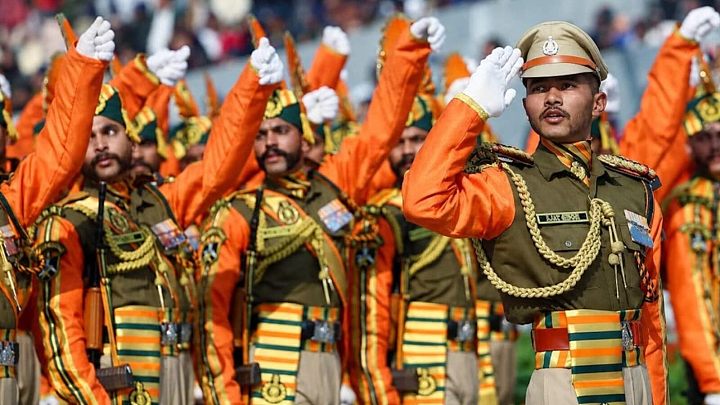
The Indo-Tibetan Border Police (ITBP), responsible for guarding India’s border with China, has recorded vacancies of IPS officers, the highest among the five Central Armed Police Forces (CAPFs) including DG listed in the latest government vacancy data dated November 6, 2026 reveals.
Against 24 sanctioned IPS posts in ITBP, eight are lying vacant, translating into a vacancy rate of 33.3 per cent. This means nearly one-third of the sanctioned IPS positions in the force are currently unoccupied.
The vacancy position is higher than that of other CAPFs listed in the data. The Central Industrial Security Force (CISF) has five vacant IPS posts, while the Border Security Force (BSF) and Central Reserve Police Force (CRPF) have four vacancies each. The Sashastra Seema Bal (SSB) has one vacancy.
The ITBP vacancies comprise one Director General (DG)-level post, three Inspector General (IG)-level posts and four Deputy Inspector General (DIG)-level posts. The force has two sanctioned Additional Director General-level posts, both of which are occupied.
The situation has deteriorated compared with July 6, 2026, when the force had five vacant IPS posts. The number has increased to eight in the latest assessment, representing a 60 per cent rise in four months.
Leadership transition amid vacancies
The vacancy figures come at a time when ITBP has also witnessed a change at the top leadership level. Shatrujeet Singh Kapoor, a 1990-batch Haryana-cadre IPS officer, who was appointed ITBP Director General in January 2026, retired on October 31, 2026, upon superannuation.
Following his retirement, the Ministry of Home Affairs approved an temporary appointment under which SSB Director General Sanjay Singhal was given additional charge of ITBP until a regular appointment is made or further orders are issued.
Singhal, a 1993-batch Uttar Pradesh-cadre IPS officer, had previously served in ITBP in senior positions between 2008 and 2015, first as Deputy Inspector General and subsequently as Inspector General.
Vacancies and continuing India-China border face-offs
The IPS vacancy position assumes significance against the backdrop of continuing tensions along the India-China border in Arunachal Pradesh.
On October 22, shortly before his retirement, then ITBP Director General Shatrujeet Singh Kapoor made a significant disclosure about the situation along the Line of Actual Control (LAC).
Addressing ITBP personnel at an official function in Alwar, Rajasthan, Kapoor said face-offs had taken place between Indian and Chinese forces at several locations in Arunachal Pradesh and that some of the situations were still continuing. He praised the force’s newly raised Shaurya Commando teams for their performance during the confrontations.
“Recently, a situation arose in Arunachal Pradesh where a face-off occurred at several places, which is still ongoing. There, our Shaurya Commando teams have done a tremendous job,” Kapoor said.
His remarks marked an important public confirmation by the head of the border guarding force of continuing face-offs in the eastern sector.
A day later, the Ministry of External Affairs also responded to the developments. MEA spokesperson Randhir Jaiswal said that situations along the India-China border get disturbed from time to time when Chinese forces deviate from established patrolling patterns. He added that both countries continue to use existing diplomatic and military mechanisms to resolve outstanding issues and prevent misunderstandings along the LAC.
ITBP also has over 12,000 vacancies in its overall manpower
Apart from the shortage of IPS officers, ITBP is also dealing with a substantial shortfall in its overall personnel strength.
According to Ministry of Home Affairs data placed before Parliament in February 2026, the force had a sanctioned strength of 1,05,136 personnel, against an actual strength of 92,803. This left 12,333 posts vacant.
The shortfall represents approximately 11.7 per cent of the sanctioned strength of the force.
The personnel shortage is distinct from the IPS deputation vacancies, which relate specifically to senior supervisory and leadership positions earmarked for IPS officers.
Expansion of specialised high-altitude capabilities
During his October 22 address, Kapoor also spoke about strengthening ITBP’s specialised operational capabilities, particularly in view of the challenges posed by the high-altitude India-China border.
He said the force was developing Shaurya Commando teams, with one such team being formed in every battalion and two additional teams also constituted. The plan was to eventually establish a full company of these commandos in every battalion and raise a dedicated battalion of Shaurya Commandos for high-altitude operations.
Kapoor also highlighted the need to strengthen the force’s capabilities in view of the modernisation of China’s People’s Liberation Army and Border Defence Regiments.
The developments bring into focus the challenges facing ITBP at a time when it is dealing with vacancies in IPS leadership positions, a substantial shortfall in overall manpower and continuing operational responsibilities along the sensitive Himalayan frontier.