Google, Crowdfunding & More: Out Of Options In India, Wife Imports Rs 3-Crore Cancer Drug For Her Husband
In late September this year, doctors at Mumbai-based Tata Memorial Centre told Rashmi Pandey, wife of 38-year-old Prakash Kumar Badal who was diagnosed with Stage 4 cancer, that his second line of treatment had failed. T
By Himani Chandna··35K reads
Google, Crowdfunding & More: Out Of Options In India, Wife Imports Rs 3-Crore Cancer Drug For Her Husband
In late September this year, doctors at Mumbai-based Tata Memorial Centre told Rashmi Pandey, wife of 38-year-old Prakash Kumar Badal who was diagnosed with Stage 4 cancer, that his second line of treatment had failed. They gently advised Rashmi to take him home as there were no options left for him.
Wife being a wife, 35-year-old Rashmi did not sleep that night. After seeing him fighting a rare stage 4 cancer near his pancreas for nearly a year, all her hopes crashed that day. Cut to 31 October, a little over a month later, Prakash took his first tablet of daraxonrasib – a cancer drug that is not sold in India and that the US Food and Drug Administration approved only on 26 August. Yes, Rashmi tracked it down with her relentless Google search, emailing and using the network of her friends, family and past and present colleagues. Eventually she arranged to import it, and friends, family and strangers have paid for it.
A six-month course costs about Rs 3 crore, including the medical evaluation, prescription and import. In under a month, a fundraiser on Ketto has raised about Rs 1.20 crore, and that money has gone into the medicine. The first month’s supply has arrived, and the order for the second month is about to be placed. The rest, about Rs 1.8 crore, still has to be raised.
“Holding this imported medicine in my hands feels like holding the moon,” Rashmi wrote on Facebook this week and told News18 that all the struggle means nothing if her husband, Prakash, starts recovering.
‘Everyone responded, even if it was to say no’
Sharing her journey of dealing with “a rare cancer”, Rashmi told News18 over a call that in the last month, starting September to the entire month of October, she had emailed and called researchers at Harvard, Johns Hopkins and Dana-Farber, hoping to get Prakash into a clinical trial or a compassionate-use programme. “Everyone responded, even if it was to say no,” she said while cooking food for her husband on a quiet Saturday afternoon when Prakash took his first dose of imported medicine.
‘No trial had a place for him’
She was chasing a medicine Prakash’s oncologist had first mentioned in June. “Genomic tests had found a rare mutation in the KRAS gene in his tumour, at codon 61, and no targeted drug for it had ever been approved anywhere in the world.” Chemotherapy, she said, could not target it.
While digging through the trials, she learnt that the drug had been approved in the US weeks earlier. Daraxonrasib, sold as Rasonque, is the first approved drug designed to block a broad range of RAS mutations, codon 61 among them. In the trial behind its approval, patients with previously treated pancreatic cancer lived a median of 13.2 months on it, against 6.7 months on chemotherapy.
The results of the medicine were exciting, and that is what Prakash needed most. “The medicine was now on sale in the US, and his oncology team at Tata Memorial advised that it was his only meaningful remaining option.” Rashmi got through to the chief medical officer of the pharmaceutical company making the drug – US-based Revolution Medicines– and, luckily, heard back within 48 hours. “There would be no concession on price, but the drug could be imported into India,” Rashmi understood after the entire exchange with the company.
She went back to Prakash’s oncologist at TMC. “The treatment isn’t available in India, but what if I bring it here,” Rashmi said, she told the doctors. The doctors told her that if she could get the medicine, Prakash would start feeling better. “This was the medicine for him. But we don’t come from wealthy families. There was no way we could have Rs 3 crore,” she said while adding that with a letter and a cost-estimate certificate from Tata Memorial, “I launched the fundraiser at the end of September.”
She called friends first, then family, and eventually strangers, and Prakash’s colleagues took charge of spreading the word. It crossed Rs 1 crore in two weeks. “Yes, by god’s grace, we managed to collect some funds.”
Seven Months Married
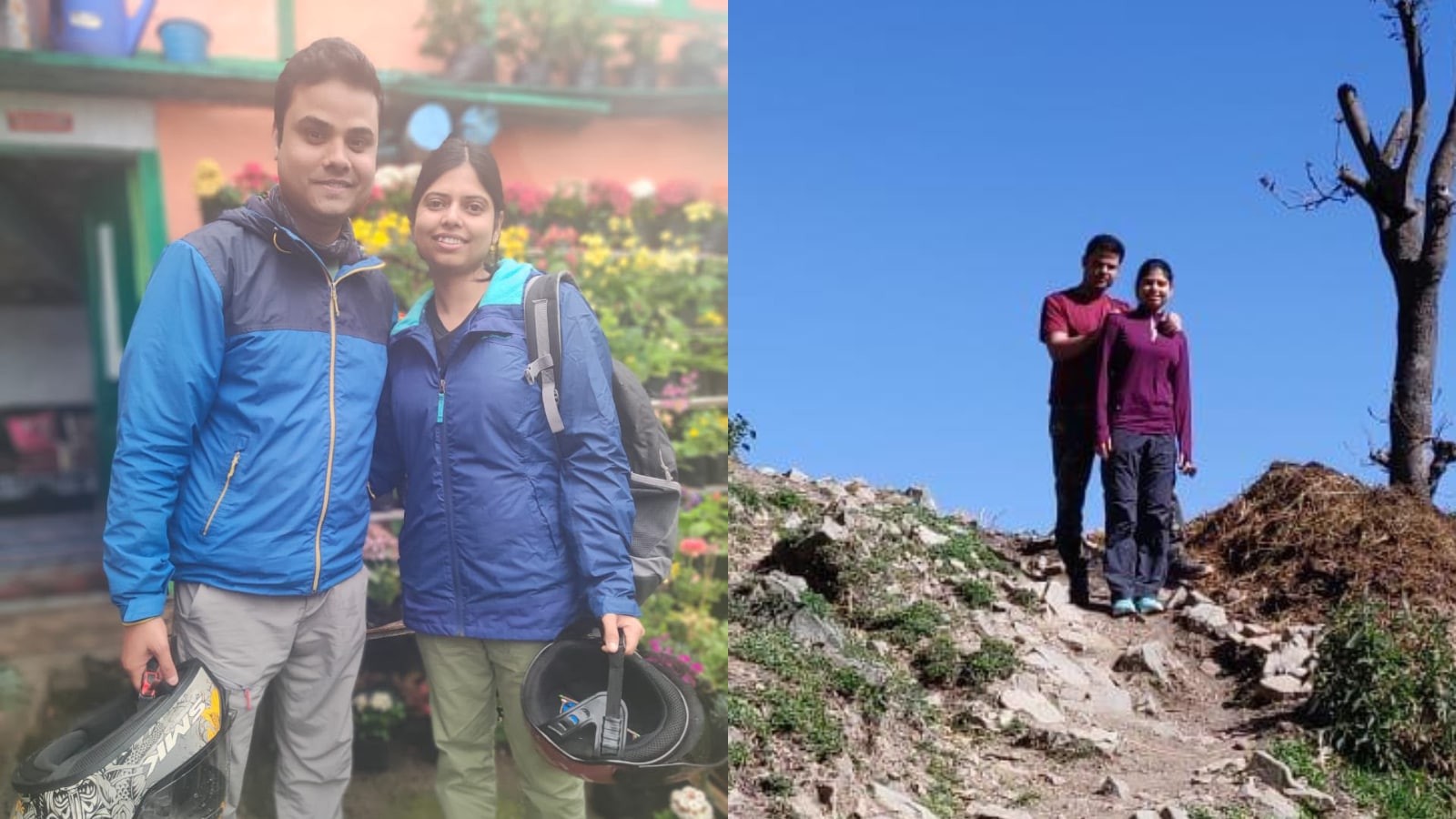
Prakash met Rashmi in Patna in 2010. An alumnus of the Indian Institute of Mass Communication (IIMC), he worked as a journalist with Navbharat Times, PTI and Dainik Bhaskar before moving into Hindi localisation for Google and Alibaba. Rashmi has spent 16 years in the non-profit sector.
Since 2020, Prakash has worked remotely and, mostly alone, rode his motorbike, “Samsara”, across Tamil Nadu, Nagaland, Kashmir and the Northeast, staying with local families and sharing their stories online. His family describes him as one of the healthiest, most active people in their circle. The two married in April 2025 at a courthouse, with no party and no reception. “We think alike,” Rashmi said while adding that “travelling” is one of their common interests.
But this is not what Rashmi imagined for her first year as a “newly wed couple”. There had been warnings: three attacks of pancreatitis since 2019, in Mussoorie, in Delhi and at home in Jharkhand, none with a clear cause. After the third, a doctor sent him to a specialist gastroenterology hospital.
“It was in November 2025; we sat outside a doctor’s room at AIG Hospitals in Hyderabad. We had expected stones of “the smallest kind.” Even the AI bot I was talking to pacified that whatever it is, it’s benign.”
This was the day when cancer was diagnosed. Rashmi walked out and typed “It’s cancer” into the tool. “Oh sorry, I overlooked that,” the bot replied. “Despite unimaginable heaviness, it was the moment; we both burst out laughing and then argued about whether AI would eventually replace all of us.”
“We still clung to the hope of a surgery and then, six months of recovery. But follow-up tests showed that the cancer was a rare periampullary adenocarcinoma and had already spread to his liver.”
Chemo On Weekends
Within a day, they had chosen Tata Memorial and moved to a tiny flat in Mumbai. A second opinion there confirmed the diagnosis, and Prakash has since been treated under Dr Anant Ramaswamy from TMC. So that both could keep working, they scheduled every chemotherapy session for the weekend, with chemo on Saturday and discharge on Sunday.
“We went from long-term vision to a really short time frame,” she said. “What we plan for tomorrow may not work out.” Reading about Stage 4 life expectancy online became so depressing that they stopped and watched TV series instead. “We watched many series together, felt like watching everything on OTT during the first few months after diagnosis only to distract ourselves from reading online.”
In January, after six rounds of chemotherapy and three of immunotherapy, a scan showed the cancer had grown. “That was our lowest point, because our hopes had grown alongside our expectations,” she said. Prakash moved to a new protocol of twelve more chemotherapy cycles, and lost a lot of weight.
By mid-August, after the twelfth cycle, a PET scan showed no new growth, but no shrinkage either. His doctor advised more chemotherapy, and Prakash was too tired and disappointed. He asked for just one thing: “Can I go to the mountains for a few days before the next cycle starts?”
His doctors agreed and gave him a week. In August, the couple left for the Northeast, his favourite place. Within 24 hours of landing, he had a high fever, and they flew back. All through September he ran a fever of 101–103°F and was in and out of hospital, and every test for infection came back negative. Then a repeat PET scan showed the cancer was growing again.
“I was never prepared for that stage,” Rashmi recounted.
‘We will not take from the underprivileged’
Finally, Rashmi and Prakash have the medicine that comes in bottles. Two of the twelve have arrived, and each order takes about three weeks. Whether the other ten arrive without a break depends on the fundraiser.
Most CSR funding is meant for the underprivileged, and Rashmi says that is how it should be. “We will not take from the underprivileged,” she says. She and Prakash have decided not to take anything from funds meant for them.
For the remaining Rs 1.8 crore, they are looking for larger donors such as HNIs and UHNIs, family offices, foundations and the Indian diaspora.
Reaching them has not been easy, she said. Rashmi has written to people in India and abroad, and many have yet to reply. But she is not stopping. “I don’t want any option to be left unexplored,” she said. For now, Rashmi said, they are taking it one day at a time.
In a statement released by Ketto, Rashmi said Prakash had spent his life climbing towards difficult peaks. “Today, I am asking for help so that he gets the chance to keep climbing.”
What doctors say
News18 reached out to oncologists and public health experts, who are not involved in Prakash’s treatment, for their perspective on the drug, its use in his case, and families turning to crowdfunding to pay for it.
According to Dr Mansi Khanderia, lead consultant, medical oncology, at Sparsh Hospital, Bengaluru, “Daraxonrasib (Rasonque) represents an important development in the treatment of cancers driven by RAS mutations, which have historically been challenging to target with precision medicines.”
The phase 3 RASolute trial behind the US approval showed the drug nearly doubled median overall survival in previously treated metastatic pancreatic cancer, she confirmed.
She also adds a caution. “FDA approval currently covers metastatic pancreatic adenocarcinoma, and its applicability to periampullary or ampullary adenocarcinoma requires careful clinical assessment,” she said.
Dr Khanderia also points to the bigger problem. “Access to innovative cancer medicines also remains a major challenge in India, particularly when treatment involves international procurement and substantial financial costs.”
Dr Pragya Shukla, head of the Department of Clinical Oncology at Delhi Cancer Institute, told News18 that while she was happy for Prakash and Rashmi, she added that she has not had a good experience with crowdfunding. “Two or three crowdfunding campaigns that I came across were all bogus. So, I don’t think crowdfunding should be an option, particularly when we are looking for giving free cancer care to the poorest of the poor. So, my dictum is to make the recommended treatment available to the poorest of the poor, irrespective of their socio-economic status. We have to design a system that will ensure that everybody gets the recommended treatment.”