Goldy Brar Not Just A Criminal, He Is Part Of A Network: Former Indian High Commissioner To Canada | Exclusive
Former Indian High Commissioner to Canada Sanjay Kumar Verma has described the reported action against gangster-terrorist Goldy Brar by Canadian and US authorities as a significant success for Indian diplomacy, intellige
By Aman Sharma··118K reads
Goldy Brar Not Just A Criminal, He Is Part Of A Network: Former Indian High Commissioner To Canada | Exclusive
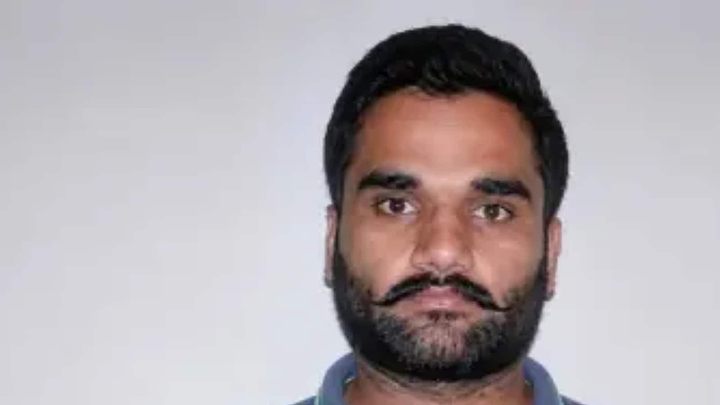
Former Indian High Commissioner to Canada Sanjay Kumar Verma has described the reported action against gangster-terrorist Goldy Brar by Canadian and US authorities as a significant success for Indian diplomacy, intelligence cooperation and sustained efforts to pursue transnational criminal networks.
Speaking to CNN-News18, Verma said India had been pursuing cases against Brar for several years, sharing evidence of his alleged criminal activities and links with Babbar Khalsa International with Canadian authorities, while seeking their cooperation.
“India had been following up such cases for quite some time, including having Red Corner Notices issued through Interpol, non-bailable warrants issued by Indian courts, as well as putting them on the UAPA individual terrorist list,” Verma said.
He pointed out that Brar had been designated an individual terrorist by India and that New Delhi had provided Canadian authorities with details of his links and criminal activities, particularly those connected to India.
Verma, who served as India’s High Commissioner to Canada, said that during his tenure, diplomatic persuasion had helped convince Canadian authorities to place Brar on their BOLO list, which includes Canada’s most-wanted criminals. However, no arrest followed at the time.
He also highlighted the ease with which gangsters could move across the US-Canada border, particularly when they possessed passports of either or both countries.
Reacting to the action against Brar by both Canada and the United States, Verma called it a positive outcome of sustained diplomatic engagement and intelligence cooperation.
“I think that’s the success of Indian diplomacy and the cooperation that intelligence agencies have with each other. I would consider this a success for both countries,” he said.
Verma said cooperation between Indian agencies and their counterparts, including the FBI, the Royal Canadian Mounted Police (RCMP) and the Canadian Security Intelligence Service (CSIS), had improved.
With political will now visible in both countries to pursue transnational criminals and gangsters, he expressed optimism about stronger security cooperation in the coming months.
Asked whether Canada’s approach towards anti-India criminal networks had changed under Prime Minister Mark Carney, Verma said it was too early to describe the developments as a complete policy reset.
However, he acknowledged a noticeable improvement in cooperation between investigating agencies and law enforcement bodies since Carney took office.
“During his predecessor’s tenure, we did not see the same warmth, the same approach and the same understanding of the concerns of not only India but also the concerns regarding these transnational criminals and gangsters who have made Canada their refuge,” he said.
Verma suggested that the change in political leadership in Ottawa had contributed to greater convergence between the two countries on tackling organised crime and transnational criminal networks.
India has repeatedly flagged the activities of criminal networks operating overseas, including the alleged nexus between gangsters, extortion networks and Khalistani extremist elements.
Verma said such criminal activities were not in the interests of any country or society, making cooperation between nations essential.
He expressed hope that the improved understanding between India and Western security agencies would translate into concrete action, including extradition, intelligence sharing and dismantling of criminal networks.
Emphasising that the challenge went beyond the arrest or identification of individual gangsters, Verma said governments needed to focus on dismantling the larger networks that sustain terrorism and extortion.
“When we are talking about Goldy Brar, you are not talking about an individual criminal. You are talking about a network,” he said.
He added that while individual criminals and gangsters had been identified, the larger task for countries was to dismantle the networks operating across terrorism and extortion.
On the prospect of Prime Minister Narendra Modi’s expected visit to Canada next month, Verma said the recent developments should not necessarily be seen as a direct consequence of the proposed visit.
Instead, he suggested that Canadian authorities had begun recognising the merit in India’s longstanding complaints and extradition requests against wanted gangsters.
“They have seen the reason for our complaints and requests for extradition of these wanted gangsters. Probably now it has gone into their system, and they will follow it up with some decisiveness and move ahead with cooperation on intelligence sharing with India,” he said.
Verma’s assessment points to a potentially significant shift in India-Canada security engagement, with both sides increasingly recognising the need to act against transnational criminal networks operating across borders.