From Jailer To Jailbird: The Prison Paradox Of Karnataka DIG M Somashekar
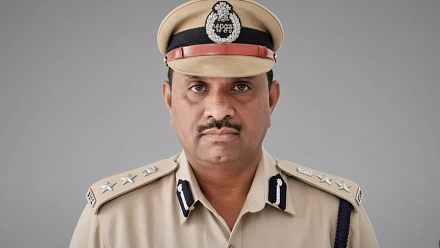
There is an extraordinary irony in the story of the now-arrested Karnataka DIG (Prisons), M Somashekar.
By Rohini Swamy··79K reads
From Jailer To Jailbird: The Prison Paradox Of Karnataka DIG M Somashekar
There is an extraordinary irony in the story of the now-arrested Karnataka DIG (Prisons), M Somashekar.
An officer who once headed Bengaluru’s Central Prison at Parappana Agrahara — a place where he was responsible for maintaining discipline, monitoring prisoners and ensuring that the prison system functioned by the book — is now himself behind bars.
Somashekar, who was serving as a DIG in the Karnataka Prisons and Correctional Services Department, has been arrested in connection with the alleged release of a life convict from Parappana Agrahara on the basis of a forged Supreme Court order.
But there is another chapter to Somashekar’s association with the same prison that makes his present situation particularly striking.
Just two years ago, it was Somashekar who was on the other side of an investigation when actor Darshan Thoogudeepa was accused of receiving VIP treatment inside Parappana Agrahara. He was then investigating alleged irregularities within the prison system. Now, he is the one facing allegations of corruption.
The Darshan Controversy
Let’s go back a couple of years. In August 2024, a photograph emerged showing Darshan, then in judicial custody in the Renukaswamy murder case, sitting on a chair inside the prison with a coffee mug and a cigarette, alongside history-sheeters including Wilson Garden Naga.
Soon after, a video of Darshan allegedly making a video call from inside the prison also surfaced. The photograph and video triggered a political and public storm, raising serious questions about how a high-profile prisoner could allegedly receive privileges inside one of Karnataka’s most closely watched prisons.
And it was Somashekar, then DIG (Prisons), who filed three complaints at the Parappana Agrahara police station, paving the way for criminal cases and a detailed investigation.
Five teams were constituted to investigate the alleged lapses. CCTV footage, visitor records and the conduct of prison officials were examined. Nine prison officials were eventually suspended, and Darshan was shifted from Parappana Agrahara to Ballari jail.
At that point, Somashekar was the senior prison official demanding accountability from within the system.
The Darshan controversy raised questions about cigarettes, coffee, chairs, mobile phones, photographs and access.
The Shankar case raises a far more fundamental question — who checked the court order before the prison gates were opened?
A prison is built around layers of verification. Prison records are supposed to be maintained. Officials are expected to verify whether an order is genuine before acting on it. A life convict cannot ordinarily walk out simply because someone produces a document claiming to have come from the country’s highest court. There should have been checks at every stage.
The Case That Led To Somashekar’s Arrest
Today, the equation has completely changed. Somashekar is himself the subject of a criminal investigation involving another prisoner and another alleged failure of the prison system.
This time, the case goes back to November 13, 2018. A life convict, A Shankar, walked out of Parappana Agrahara after prison authorities acted on what was presented as a Supreme Court order directing his release. Investigators now allege that the order was forged.
Shankar was serving a life sentence in connection with a 2001 kidnapping-for-ransom case, and his conviction and sentence had been upheld by the Karnataka High Court and subsequently the Supreme Court.
Yet he walked out of prison.
Not on parole. Not after a sentence reduction. Not following a fresh, genuine judicial order. But on the strength of a document that investigators now allege was fabricated.
And the most startling part is that the alleged fraud did not come to light immediately.
It was only in May 2026, nearly eight years after Shankar walked out, that the prison authorities reportedly verified the document and approached the Parappana Agrahara police. The Supreme Court authorities subsequently confirmed that the purported order did not exist.
The investigation initially led to S Srikanth, then a Second Division Assistant working in the Convict Prisoner Section. Investigators allege that he was involved in the forged document and that money — reportedly around Rs 6 lakh — changed hands in connection with the release.
But that only opened up a bigger question: How does a forged Supreme Court order enter a prison, pass through the official system and ultimately result in a life convict walking out of the gates?
This question brought the prison administration itself under scrutiny and eventually led investigators to Somashekar.
He was the chief superintendent of Parappana Agrahara when Shankar was released.
Police allege that he had a role in facilitating the release and have questioned his conduct in connection with the case. There are also allegations relating to Shankar’s parole and the manner in which prison procedures were followed.
The investigation has thrown up another serious allegation against Somashekar. Police have said that Shankar’s wife alleged that the officer sexually exploited her in connection with assurances of helping secure her husband’s release.
That allegation remains part of the investigation and is yet to be established by a court.
From Demanding Accountability To Facing Investigation
This is not simply a story about one officer and one prisoner. It is about a system where a life convict allegedly walked through the gates of a major prison on the strength of a document that did not exist.
And it is about an officer who, in another chapter of his career, had himself been demanding answers over alleged irregularities inside that very prison.
There is, of course, a crucial distinction between the two cases. One raises questions about the checks and safeguards meant to prevent an unlawful release, while the other concerns accountability for alleged irregularities within the prison system.