'Friends Can Become Foes': India Must Prepare For Geopolitical Shifts, Says Ashwini Vaishnaw
India is identifying critical areas where dependence on other countries could leave its production and economy vulnerable to geopolitical tensions, with Union minister Ashwini Vaishnaw saying that changing global equatio
By Apoorva Misra··42K reads
'Friends Can Become Foes': India Must Prepare For Geopolitical Shifts, Says Ashwini Vaishnaw
India is identifying critical areas where dependence on other countries could leave its production and economy vulnerable to geopolitical tensions, with Union minister Ashwini Vaishnaw saying that changing global equations require a constant reassessment of the country’s technology strategy. He added that the government is working on a long-term roadmap spanning 20 to 25 years to strengthen domestic capabilities in strategically important sectors while remaining integrated with global technology supply chains.
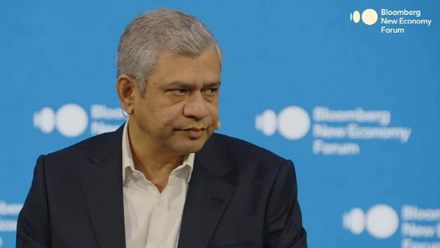
“Things change, politics change, and geopolitics plays a big role. So, we have to constantly calibrate our approach,” Vaishnaw said at the Bloomberg New Economy Forum in New Delhi on Wednesday.
“There are times when friends become foes, so it is very important to identify the factors that could make your production and economy vulnerable to someone else’s policies,” the minister said, underlining the need to anticipate shifts in international relations and their potential impact on domestic manufacturing and economic activity.
The remarks point to a strategy focused not on cutting off international partnerships, but on identifying areas where excessive dependence on external suppliers or policy decisions could expose India to disruption. Vaishnaw stressed that technological self-reliance should be approached with a clear understanding of which capabilities India needs to build domestically and where collaboration with other countries would remain beneficial.
India’s 20-25 Year Technology Roadmap
Explaining the government’s planning framework, Vaishnaw said India was working with three timelines: short-term goals covering three to five years, medium-term objectives spanning five to 15 years, and long-term targets extending 20 to 25 years.
The approach is intended to help India prepare for changes in the geopolitical and economic environment while steadily developing capabilities in critical technology segments. Rather than attempting to manufacture every product or develop every technology independently, the focus is on strengthening domestic capacity in areas that are strategically important.
“Technology is always a global value chain. We want to be deeply embedded in this global value chain and be able to add value to those parts of the value chain where we play the best role,” Vaishnaw said.
The minister’s remarks reflect a distinction between technological self-sufficiency and resilience. India intends to remain part of international production networks, but also wants to reduce the risk of being caught off guard by changes in trade policies, international partnerships or access to critical technologies.
From Assembling Products To Building The Ecosystem
Vaishnaw also emphasised that expanding manufacturing capacity would require more than assembling finished products. India needs to develop capabilities across the entire production chain, including modules, components, raw materials and the equipment required to manufacture them.
He said the government was following this approach across sectors such as semiconductors, railways and defence, where domestic capabilities need to extend beyond the final product to the supporting industrial ecosystem.
“Without ecosystem, no manufacturing effort will ever pay off,” Vaishnaw said, citing India’s mobile phone industry as an example of the gradual shift from assembling finished devices towards manufacturing components and modules.
In semiconductors, the effort involves building capabilities across chip design and manufacturing as well as materials, chemicals, gases and substrate materials. Developing these segments is a longer-term undertaking that requires sustained investment and the creation of supporting infrastructure.
The emphasis on the broader ecosystem is significant because domestic assembly alone does not eliminate vulnerabilities if key components, materials or manufacturing equipment remain dependent on overseas suppliers. Building capabilities across these stages could give India greater control over critical parts of production while enabling it to contribute more value to global supply chains.
Trust Becomes Key Factor In Technology Partnerships
Vaishnaw also highlighted the growing importance of trust in global technology supply chains, where cybersecurity concerns are influencing decisions about suppliers and business partners.
“Trust is going to be a very important part of the global value chain now. It is no longer just about cost,” he said.
The minister said India was positioning itself as a trusted partner in design, manufacturing and the comprehensive evaluation of finished products. The shift, he suggested, creates an opportunity for India to strengthen its role in international supply chains while developing capabilities that can support its own strategic requirements.
The approach, however, does not imply an end to technological interdependence. Instead, it seeks to balance international collaboration with the need to ensure that dependence on any single country or external policy does not become a source of economic vulnerability.
Vaishnaw’s comments come amid wider global efforts to secure technology supply chains and build domestic capacity in strategically important industries. For India, the challenge is to identify which dependencies pose the greatest risks, develop alternatives where necessary and continue to participate in global networks where international partnerships offer clear advantages.