The debate over Merchant Discount Rate (MDR) on high-value UPI transactions has now moved beyond retailers and fintech companies, with Zerodha co-founder and CEO Nithin Kamath highlighting the impact on stockbrokers and
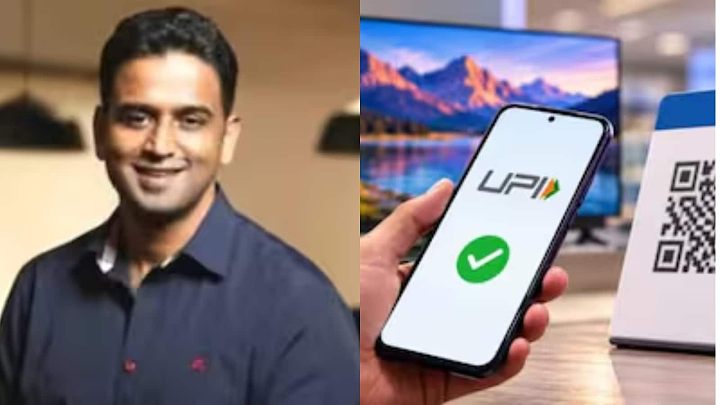
The debate over Merchant Discount Rate (MDR) on high-value UPI transactions has now moved beyond retailers and fintech companies, with Zerodha co-founder and CEO Nithin Kamath highlighting the impact on stockbrokers and investors and how the charges won’t make sense in their current proposed form.
Kamath said that while some form of MDR may have become inevitable as UPI has grown into India’s dominant digital payments network, the proposed structure could create significant costs for brokers even when customers transfer money without actually making a trade.
Under the new UPI framework announced by the National Payments Corporation of India (NPCI), select person-to-merchant (P2M) transactions above Rs 2,000 will attract an MDR of 0.4 per cent from October 15, 2026, subject to a maximum charge of Rs 300. Importantly, the charge is imposed within the merchant-payment ecosystem and is not meant to be paid directly by consumers. Person-to-person transfers will continue to remain free.
For capital-market transactions involving mutual funds, securities, stockbrokers and dealers, however, the framework provides for a much lower MDR of 0.02 per cent, capped at Rs 300. It is this structure that Kamath has questioned.
Why Brokers Could Face A Unique Problem
In a post on X, Kamath said MDR on UPI was “probably inevitable” given the platform’s widespread adoption and argued that it could potentially bring more competition to a market where three apps account for more than 95 per cent of UPI transactions.
But he said investing and broking present a different challenge because transferring money into a brokerage account does not necessarily mean a transaction will follow. “The problem with broking is that there is no guarantee that money transferred to a broker will actually result in a transaction,” Kamath said.
He illustrated the potential impact with a hypothetical example: if 10,000 customers each made 50 UPI transfers of Rs 2 lakh in a month without executing a single trade, the resulting MDR could potentially cost a broker around Rs 2 crore without generating any corresponding business revenue.
I think MDR on UPI was probably inevitable at some point, especially given how widespread UPI adoption has become. It could also lead to more competition, instead of just three apps accounting for more than 95% of the market.
That being said, there are some use cases, like…
— Nithin Kamath (@Nithin0dha) September 16, 2026
The issue becomes more complicated because of SEBI’s quarterly settlement (QS) requirements. Brokers are required to return unused client funds periodically. Customers may subsequently transfer that money back into their brokerage accounts, with Kamath saying more than half of such transfers take place through UPI.
In such cases, he argued, the broker could repeatedly bear payment-related costs even though the movement of funds itself does not generate brokerage revenue.
Impact On Zerodha’s Zero-Brokerage Model
Kamath also connected the issue to Zerodha’s business model. “We currently don’t charge brokerage on equity delivery trades because the economics allow us to offer them for free,” he said.
However, if brokers begin incurring a UPI cost every time money moves into an account, regardless of whether the customer eventually trades, Kamath said the economics could become difficult to sustain indefinitely.
His proposed solution is not to eliminate MDR altogether, but to structure it differently for broking. “I think having an MDR is okay,” Kamath said, suggesting 0.02 per cent with a cap of Rs 5 or Rs 10 per transaction as a more reasonable structure for broking, instead of a cap as high as Rs 300.
Earlier, BharatPe co-founder Ashneer Grover had criticised the prospect of introducing MDR on higher-value UPI transactions. Grover argued that India should be encouraging UPI adoption rather than making the digital payment system more expensive. In his remarks, he questioned the need for possible charges on transactions above Rs 2,000 and suggested that the country should instead reduce its dependence on cash infrastructure and ATMs.
The government’s position, however, is that the new framework does not mean ordinary UPI users will suddenly start paying for transactions. The Finance Ministry has stressed that P2P payments remain free, while payments to merchants up to Rs 2,000 and transactions covered under the zero-MDR framework for small merchants will also remain free. The government estimates that around 96 per cent of P2M transactions will remain unaffected.
The policy is aimed at creating a sustainable revenue mechanism for UPI infrastructure, including its banking, technology and payment ecosystem. UPI processed about 2,451 crore transactions worth Rs 29.9 lakh crore in August 2026, underscoring the enormous scale of the network.
For investors, therefore, the more specific question is who ultimately bears the cost when UPI becomes the channel through which money repeatedly moves into and out of investment accounts. This is the gap Kamath’s intervention has brought into sharper focus as India prepares for the new MDR regime from October 15.