Delimitation Numbers: When Every Vote Counts, These 16 Single-MP Parties May Be Key
With Parliament set to reconvene on Monday, the Centre’s renewed push to advance women’s reservation through a proposed delimitation exercise is bringing the numbers game into sharp focus. The BJP-led National Democratic
By Pragati Ratti··125K reads
Delimitation Numbers: When Every Vote Counts, These 16 Single-MP Parties May Be Key
With Parliament set to reconvene on Monday, the Centre’s renewed push to advance women’s reservation through a proposed delimitation exercise is bringing the numbers game into sharp focus. The BJP-led National Democratic Alliance (NDA) is looking to secure the two-thirds majority required to pass a constitutional amendment, and while attention has largely centred on larger regional parties such as the DMK and the Nationalist Congress Party (Sharadchandra Pawar), 16 smaller parties with just one Lok Sabha MP each could change the game when every vote counts.
Read More: BJP’s Delimitation Push 2.0: DMK’s Possible Shift, Pawar’s Stand And The New Numbers Game
Their individual strength may appear modest, but in a closely contested constitutional vote, every MP counts. More importantly, these 16 parties are not a politically uniform group. Six were aligned with the NDA when the earlier legislation was put to a vote in April. Five were grouped with the INDIA bloc, while the remaining five were outside the two principal alliances. Since then, the political landscape has changed, most notably with the Shiromani Akali Dal (SAD) formally returning to the NDA.
Read More: Delimitation Bill 2.0: From Promise To Constitutional Guarantee, Will 50% Seat Hike Become Reality?
The government has already experienced how difficult the numbers can be. On April 17, the Constitution (131st Amendment) Bill, 2026, which sought to facilitate delimitation and advance the implementation of 33 per cent reservation for women in the Lok Sabha and state Assemblies, was defeated after securing 298 votes in favour and 230 against. With 528 members present and voting, it needed 352 votes to clear the two-thirds threshold.
The Centre is now preparing a fresh legislative push, with Parliament scheduled to meet from November 30 to December 3. According to reports, the proposed framework could expand the Lok Sabha’s strength from 543 to 850 seats, with every state receiving a uniform 50 per cent increase over its existing representation. The final legislative text, however, has not yet been made public.
The latest numbers suggest that the NDA could muster 319 votes with the support of the 20 Trinamool Congress MPs who have broken away from the party and the lone SAD MP. The tally could rise to 353 if the DMK’s 22 MPs, NCP (Sharadchandra Pawar)’s eight and YSR Congress Party’s four MPs also support the proposal.
With the current effective strength of the Lok Sabha, the government would need 360 votes if all eligible members participate. This makes smaller parties, conditional supporters and potential cross-voting particularly important.
Here is where the 16 single-MP parties stand, based on their political alignments, April voting records and publicly articulated positions:
Parties That Were Aligned With The NDA In April
1. Apna Dal (Sonelal)
Apna Dal (Sonelal) is an NDA constituent and was among the parties that supported the government’s April constitutional amendment. Its lone Lok Sabha MP was part of the ruling coalition’s affirmative vote count. The party has not publicly indicated any change in its position on the revised proposal.
2. Asom Gana Parishad (AGP)
The Assam-based AGP is another longstanding NDA ally that backed the April amendment. However, delimitation in the Northeast involves considerations beyond population, including geographical realities, ethnic diversity and the political representation of smaller communities. While AGP supported the earlier legislation, its response to the revised framework will be important.
3. AJSU Party
The Jharkhand-based AJSU Party is aligned with the NDA and supported the April bill. Its lone Lok Sabha MP was included in the government’s affirmative vote count. There has been no publicly established change in the party’s position since then.
4. Hindustani Awam Morcha (Secular)
Led by Union Minister Jitan Ram Manjhi, HAM(S) is part of the NDA and supported the April amendment. Its political alignment places it within the government’s supporting camp, although a separate commitment on the revised provisions has not been established.
5. Nationalist Congress Party (NCP)
The NCP Ajit Pawar faction supported the April amendment and was included in the government’s affirmative vote count.
6. Sikkim Krantikari Morcha (SKM)
The Sikkim-based SKM is an NDA ally and supported the earlier amendment. However, the representation of smaller northeastern states remains an important consideration in the delimitation debate. Its April vote establishes support for the earlier bill, but its position on the revised draft remains to be seen.
Parties That Grouped With INDIA Bloc In April
1. Bharat Adivasi Party (BAP)
The Bharat Adivasi Party, represented by Rajkumar Roat, was grouped with the INDIA bloc in the April parliamentary arithmetic. Its concerns have focused on the representation of tribal and marginalised communities. Roat joined Rajasthan MP Hanuman Beniwal in demanding an all-party discussion on the proposed exercise. Their concerns included the implications of delimitation for communities that could be inadequately represented in the political process.
2. Kerala Congress
Kerala Congress is associated with the Congress-led political camp in Kerala. Its broader political alignment places it closer to the Opposition’s position, which has supported women’s reservation while objecting to the proposed linkage with delimitation.
3. Marumalarchi Dravida Munnetra Kazhagam (MDMK)
The MDMK, led by Vaiko, has been among the vocal critics of population-based delimitation. Its MP Durai Vaiko opposed the April proposal, arguing that southern states such as Tamil Nadu could lose their relative political influence despite having made progress in population control.
The party was grouped with the INDIA bloc in the April parliamentary arithmetic. However, Tamil Nadu’s political alignments have evolved following the Assembly elections, with the MDMK extending support to the TVK-led government.
4. Rashtriya Loktantrik Party (RLP)
Led by Hanuman Beniwal, the RLP is an independent regional party that has aligned with the Opposition on several issues. Beniwal joined Rajkumar Roat in seeking an all-party discussion on delimitation, particularly over its potential implications for marginalised communities. The party’s position on the revised proposal will depend on the safeguards and the final distribution formula.
5. Revolutionary Socialist Party (RSP)
The RSP, a Left party aligned with the INDIA bloc, was among the more explicit opponents of the April legislation. Its MP NK Premachandran made it clear in Parliament that the party supported women’s reservation but opposed linking its implementation to the proposed delimitation exercise.
Parties That Were Outside The Two Alliances In April
1. All India Majlis-e-Ittehadul Muslimeen (AIMIM)
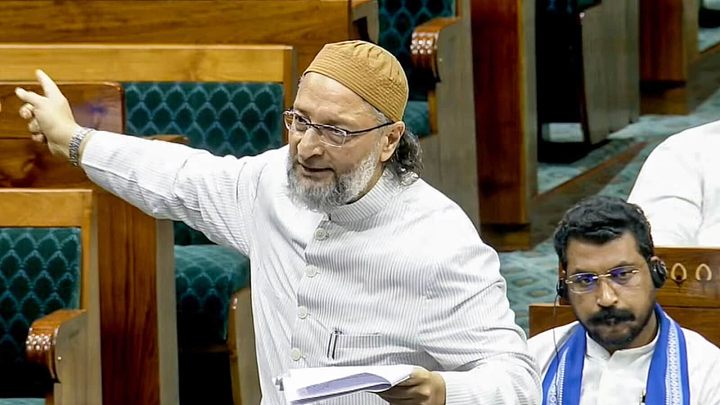
AIMIM, led by Asaduddin Owaisi, is not part of either the NDA or INDIA bloc. It was firmly opposed to the April legislation. Owaisi argued that population-based delimitation could undermine federalism and disadvantage states that had successfully controlled population growth.
2. Shiromani Akali Dal (SAD)
The SAD is the most politically significant party in this group because its alignment has changed dramatically since April. The party, which had initially opposed the proposed delimitation exercise over concerns that Punjab would be disadvantaged, has now returned to the BJP-led NDA.
On November 24, Union Home Minister Amit Shah and SAD chief Sukhbir Singh Badal announced their alliance for the 2027 Punjab Assembly elections, ending a six-year separation. Shah confirmed that the Akali Dal was officially back in the NDA, describing it as the alliance’s elder partner. He also said that the Chief Minister would be from the SAD if the coalition won the Assembly elections.
On delimitation, Sukhbir Badal had announced conditional support on August 8, saying the party would back the exercise if every state received a uniform 50 per cent increase in parliamentary seats. With the BJP-SAD alliance now formally restored, the Akali Dal’s vote assumes added significance.
3. Azad Samaj Party (Kanshi Ram)
Chandrashekhar Azad’s Azad Samaj Party is not formally part of either the NDA or INDIA bloc. The party has not established a definitive public position on the revised delimitation proposal. However, its political positioning has become clearer in recent weeks. On November 12, Azad and Owaisi announced the formation of the Samajik Parivartan Morcha for the 2027 Uttar Pradesh Assembly elections, with Azad as its chief ministerial face. The alliance has positioned itself as an alternative to the BJP in Uttar Pradesh and has invited other Opposition parties to join it.
4. United People’s Party Liberal (UPPL)
The UPPL, which has historically been aligned with the NDA in Assam, has raised specific concerns about the implications of delimitation for the Northeast. In April, its leaders, including Lok Sabha MP Joyanta Basumatary, called for the region’s historical, geographical, demographic, cultural and strategic realities to be taken into account. The party has also pushed for safeguards for Sixth Schedule areas and communities that could be politically marginalised by a purely population-based exercise.
The UPPL’s position is therefore more conditional than an unconditional endorsement of the Centre’s proposal. Its support could depend on whether the revised legislation addresses the concerns of smaller northeastern states.
5. Zoram People’s Movement (ZPM)
The Mizoram-based ZPM is an independent regional party and is not formally part of either major national alliance. Given the sensitivity around political representation in smaller northeastern states, the party’s response to the revised proposal will be important, particularly if the new framework includes explicit safeguards for the region.
Numbers Game: SAD’s Return And The Larger Regional Players
The return of the SAD to the NDA is one of the most important political developments since the April vote. Its lone MP, Harsimrat Kaur Badal, is now part of the government’s potential support base. This is not merely a question of one additional MP: the alliance signals a wider political realignment ahead of the 2027 Punjab elections.
According to reports, the NDA could muster 319 votes with the support of 20 Trinamool Congress MPs who have broken away from the party and Harsimrat Kaur Badal. The number could rise to 353 if the DMK, NCP (Sharadchandra Pawar) and YSRCP also support the legislation.
The DMK, with 22 Lok Sabha MPs, is particularly important. It had opposed the April proposal over concerns that Tamil Nadu’s parliamentary representation could be diluted. However, the party has indicated that it could reconsider its position if the Centre provides written assurances protecting the state’s share of seats.
The NCP (Sharadchandra Pawar), with eight MPs, has also signalled conditional support for a uniform 50 per cent increase in seats for every state. Its position has attracted attention after the party issued a whip directing all its Lok Sabha MPs to attend Parliament during the November 30-December 4 period.
The YSRCP, with four MPs, is another party whose support could make a difference to the government’s arithmetic. The party has signalled support for the bill.
However, the numbers remain dependent on the final legislative text, the participation of MPs and the position taken by parties that have not yet made a definitive commitment. The two-thirds requirement under Article 368 also means that abstentions could alter the number of votes needed, depending on the total number of members present and voting.
As Parliament reconvenes on November 30, the debate will therefore be about more than the proposed expansion of the Lok Sabha or the implementation of women’s reservation. It will also test the Centre’s ability to build consensus across India’s diverse political and regional landscape. And in a constitutional vote where the margin is measured in MPs rather than percentages, even a party with just one representative could become part of the larger political equation.