Delhi-NCR Pollution Plan: 50% WFH, Vehicle Checks And Construction Curbs – What Has The Govt Ordered Ahead Of Diwali?
Delhi’s air quality is deteriorating ahead of Diwali, prompting authorities to introduce a series of precautionary measures to prevent pollution levels from rising further during the winter season. With the overall Air Q
By Parishmita Saikia··140K reads
Delhi-NCR Pollution Plan: 50% WFH, Vehicle Checks And Construction Curbs – What Has The Govt Ordered Ahead Of Diwali?
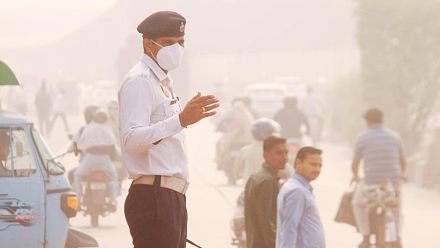
Delhi’s air quality is deteriorating ahead of Diwali, prompting authorities to introduce a series of precautionary measures to prevent pollution levels from rising further during the winter season. With the overall Air Quality Index (AQI) touching 261, placing it in the ‘Poor’ category, the Commission for Air Quality Management (CAQM) has ordered restrictions on dust-generating construction activities and advised offices in Delhi and five NCR districts to allow only 50% of their staff to work from office.
The latest directions will remain in force from November 5 to November 20, 2026. The measures are intended to curb emissions before the seasonal deterioration in air quality intensifies, with Diwali-related firecracker pollution and stubble burning in neighbouring states adding to concerns.
#ORDER | CAQM DIRECTIVES FOR AIR POLLUTION CONTROL | 05–20 NOVEMBER 2026
In view of the anticipated seasonal rise in air pollution across Delhi-NCR, the Commission for Air Quality Management (CAQM) has directed the implementation of precautionary measures from 05 November to 20 November 2026 to prevent and control air pollution.
Key measures to be implemented in Gurugram:
�️ Restrictions on Construction Activities
✔️ Dust-generating demolition and outdoor construction activities will remain restricted across NCR.
✔️ Exemptions will apply to essential projects, including Railways, Metro, Airports, Hospitals, Water Supply, Sanitation, National Security and other projects of national importance.
✔️ Restrictions will also cover linear infrastructure projects such as highways, roads, flyovers, power transmission lines and pipelines.
� Work From Home Advisory
✔️Government and private offices in Gurugram will operate with up to 50% of staff attending physically.
✔️The remaining staff will work from home.
✔️ Exemptions will apply to essential services and industrial establishments where this arrangement is not feasible.
� Implementation Period: 05 November to 20 November 2026
All concerned departments, agencies and establishments are directed to ensure strict compliance with the CAQM instructions.
Several pollution hotspots have recorded considerably higher readings than the city-wide average. Jahangirpuri, for instance, reported an AQI of 378, bringing it close to the ‘Severe’ category. Fine particulate matter, particularly PM2.5, continues to contribute significantly to the pollution burden.
Delhi Air Pollution: Why CAQM Has Announced Pre-Emptive Measures
The latest restrictions mark an unusual step in the region’s pollution-control efforts because they have been introduced as precautionary and anticipatory measures rather than as part of the usual response under the Graded Response Action Plan (GRAP).
While GRAP measures are activated depending on prevailing air quality and forecasts, the latest CAQM directions have been issued ahead of the expected seasonal deterioration. The commission has invoked Section 12 of the CAQM Act, 2021, which empowers it to issue directions considered necessary to protect and improve air quality across the National Capital Region and adjoining areas.
Officials considered several factors before announcing the restrictions, including changing weather conditions, the progress of paddy harvesting in Punjab and Haryana, historical pollution trends and the approaching Diwali festival. The possibility of increased emissions from firecrackers and agricultural residue burning also influenced the decision.
According to officials, around 55 to 60% of paddy harvesting in Punjab and approximately 50% in Haryana had been completed at the time of the assessment. Efforts are underway to provide farmers with machinery and assistance for managing crop residue and reducing stubble burning.
#WATCH दिल्ली: CPCB (केंद्रीय प्रदूषण नियंत्रण बोर्ड) के अनुसार, आरके पुरम के आसपास के इलाके में एयर क्वालिटी इंडेक्स (AQI) 370 है, जिसे ‘बहुत खराब’ की श्रेणी में रखा गया है।
(वीडियो सुबह 7:35 बजे शूट किया गया है।) https://t.co/GsoT4pGmuG
— ANI_HindiNews (@AHindinews) November 2, 2026
A CAQM official said the pre-emptive approach was being attempted for the first time, adding that state chief secretaries would need to coordinate with municipal commissioners and district magistrates to ensure compliance with the construction restrictions and work-from-home directions.
CAQM Construction Ban: What Activities Are Restricted?
The CAQM has directed restrictions on dust-generating demolition and outdoor construction activities across the NCR from November 5 to November 20. The curbs also cover linear infrastructure projects, including highways, roads, flyovers, power transmission lines and pipelines, which can generate significant dust during construction.
However, exemptions have been provided for essential and strategically important projects. These include works related to:
Railways and Metro infrastructure
Airports
Hospitals
Water supply and sanitation
National security
Other projects considered nationally important
Authorities and implementing agencies have been directed to ensure that the restrictions are followed during the specified period.
Work From Home In Delhi-NCR: 50% Office Attendance Rule
The CAQM has also advised government and private establishments in Delhi and five NCR districts to restrict physical office attendance to 50% of their workforce. The remaining employees are expected to work from home during the implementation period.
The directions are intended to reduce daily commuting and traffic-related emissions. Essential services and industrial establishments where remote working is not feasible are exempted from the arrangement.
In Gurugram, government and private offices have been directed to operate with up to half their staff attending physically, while the remaining employees work remotely, subject to the applicable exemptions.
Delhi Vehicle Checks At 13 Entry Points Trigger Traffic Jams
Alongside the CAQM’s anticipatory restrictions, Delhi authorities have intensified checks on vehicles entering the capital to curb emissions from older and more polluting vehicles.
Inspections are being conducted at 13 major entry points, including the DND Flyway, Rajokri on NH-48, Ghazipur, Singhu and Badarpur. Nearly 250 enforcement personnel, organised into 39 specialised teams, have been deployed for the exercise.
Officials are using Automatic Number Plate Recognition (ANPR) cameras and manual inspections to identify vehicles that do not meet the prescribed emission standards. Vehicles found violating the applicable restrictions may be turned away or fined.
The checks have contributed to traffic congestion at several border crossings, particularly during morning rush hours, affecting commuters travelling between Delhi, Gurugram and Noida.
Delhi’s Winter Pollution Plan: Parking Fees, Office Timings And Dust Control
The latest restrictions come as Delhi’s 10-point winter pollution-control plan gets underway. The broader strategy includes measures targeting vehicular emissions, road dust, construction activity and private vehicle use.
Among the steps being implemented are:
Restrictions on vehicle entry: Non-compliant vehicles are being checked at major entry points, with restrictions applicable to out-of-state private vehicles and light commercial vehicles below BS-VI emission standards, subject to exemptions for essential commodities.
Higher parking charges: Parking fees at authorised Municipal Corporation of Delhi (MCD) parking facilities have been doubled to discourage private vehicle use.
Staggered office timings: MCD offices are operating from 8:30 am to 5 pm, while Delhi government offices are following a 10 am to 6:30 pm schedule.
Dust control: Authorities are enforcing measures to limit dust from construction and demolition activities.
Work from home: Office attendance restrictions are intended to reduce commuting and traffic emissions.
The measures are aimed at reducing pollution from multiple sources rather than relying solely on restrictions imposed after air quality deteriorates.
Diwali Pollution Alert: Stubble Burning And Weather Conditions Add To Concerns
The approaching Diwali celebrations are another concern for pollution-control authorities, as firecracker emissions could add to the existing pollution load. Seasonal stubble burning in Punjab and Haryana may further affect air quality across Delhi-NCR during the remaining harvest period.
It is here. Delhi’s AQI levels are now above 400.
Second image is from NASA’s live fires map. We are helpless against agricultural stubble burning. https://t.co/WUAbkMUzBj
— Sparsh Sehgal (@sparsh_sehgal) November 1, 2026
Unfavourable meteorological conditions, including stagnant winds and limited dispersion of pollutants, could also contribute to the accumulation of particulate matter over the region.
Authorities have urged residents to take precautions, particularly children, older people and those with respiratory or cardiovascular conditions. People have been advised to avoid prolonged outdoor exposure during periods of high pollution and consider wearing N95 masks when stepping outside. Strenuous outdoor exercise should also be limited when air quality is poor.
With the CAQM’s precautionary restrictions scheduled to continue until November 20, authorities are seeking to contain pollution before Diwali-related emissions and winter weather conditions place further pressure on Delhi-NCR’s air quality.