Cross-Border Terror Concerns, If Not Fully Understood, Impact Our Ties: Jaishankar On India-US Relations
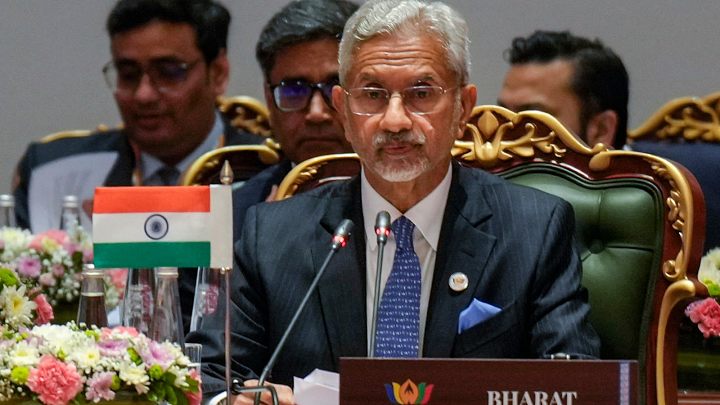
External Affairs Minister S Jaishankar on Monday said that cross-border terrorism is one of India’s primary concerns. He added that if New Delhi’s partners fail to fully appreciate it, then it can impact bilateral ties.
By Prisha Vibhavari··85K reads
Cross-Border Terror Concerns, If Not Fully Understood, Impact Our Ties: Jaishankar On India-US Relations
External Affairs Minister S Jaishankar on Monday said that cross-border terrorism is one of India’s primary concerns. He added that if New Delhi’s partners fail to fully appreciate it, then it can impact bilateral ties.
The remarks were made by Jaishankar while speaking about India-US relations and an upswing in Washington-Islamabad ties.
Speaking at a conversation hosted by the Asia Society in New York, Jaishankar was asked about the trajectory of India-US relations amid differences over trade, tariffs and Washington’s renewed engagement with Pakistan.
Jaishankar said the relationship needed to be viewed against a broader global backdrop, noting that several countries have faced difficulties in their ties with the US.
“Well, I think if I stand back and look at the relationship,… I note that much of the world has had a more difficult relationship with the US. I mean that may not be a consolation, but that’s a reality,” he said.
Issue Of Terrorism Important For India: Jaishankar
Jaishankar then alluded to ties between the US and Pakistan, which have seen an upswing over the past year since Trump came to power.
“What for us in India is particularly important is the issue of terrorism. That we feel that…as a country perhaps there are very few countries which have been subjected to the kind of terrorism that we have from a neighbour as part of a deliberate, conscious policy over many, many decades,” he said, referring to Pakistan.
Jaishankar said the relationship could be affected when India’s concerns are not sufficiently understood by its partners.
“Now, if something which matters so deeply to us, there isn’t enough understanding or appreciation or empathy of that, I think that creates a problem too. That you know if… one of my primary concerns is not fully appreciated by my partner, then clearly there is an impact of that on the relationship,” he said.
His remarks come amid closer US-Pakistan engagement under the Trump administration. India has also repeatedly rejected US President Donald Trump’s claims that he played a role in stopping the 2025 India-Pakistan conflict.
India-US Trade Agreement Would Improve Bilateral Ties: Jaishankar
The foreign minister further said that a trade agreement between India and the US, if finalised, would contribute to “better” bilateral ties.
He further noted that expectations of rapid progress in the ongoing negotiations had been “tested” against a much more complex ground reality.
“Bear in mind, India is a society of small producers, small agriculture producers, small factories. Apart from the per capita gap between India and the United States, the nature of production, nature of society is very different,” Jaishankar said.
“A trade negotiation required a certain amount of … patience and detailing to see it through… The expectation that it could rapidly move forward, I think, was tested against a ground reality which was much more complex,” he said.
Jaishankar said there was now “more or less an understanding on the trade agreement”, while noting that questions remained around the ongoing US Section 301 process.
“The 301 process is still in the works, it’s still unfolding. So the issue for us is at what point do you close out an agreement which is very, very far advanced,” he said.
“But the period that it took to reach it, that did create bumps last year for the relationship. So presumably, if that agreement is closed out, that would be one point which would contribute to a better relationship,” he added.
US Section 301: Bottleneck In US-India Trade Deal
The proposed India-US trade deal has remained under negotiation as both sides work through changes to Washington’s tariff regime. The two countries had agreed in February on a framework for the first phase of the pact, but subsequent shifts in US tariff policy necessitated further discussions.
The tariff landscape changed after the US Supreme Court struck down reciprocal tariffs imposed by President Donald Trump under emergency powers, following which Washington moved towards a different framework.
The US later announced an additional 10% duty on Indian imports under Section 301 of the Trade Act in July, following a probe into India’s measures related to goods produced using forced labour.
Negotiations have continued since then, with both countries working to resolve the outstanding issues and finalise the agreement.
Jaishankar said India wanted the relationship to progress despite the challenges.
“So yes, we would certainly hope for and expect the relationship to move on an upward trajectory. But I have to be real about the issues that we confront, and to the extent we are able to move ahead on some of these issues, I think we’ll have a better relationship,” he said.