CJP Has The Crowd, Rahul Gandhi Wants The Credit: Who Is Winning The Delhi Dangal For Democracy?
Who owns the fight for democracy? The Cockroach Janta Party (CJP), which has brought protesters onto the streets, or Rahul Gandhi and the Congress, which are determined not to let the movement become someone else’s polit
By Pallavi Ghosh··193K reads
CJP Has The Crowd, Rahul Gandhi Wants The Credit: Who Is Winning The Delhi Dangal For Democracy?
Who owns the fight for democracy? The Cockroach Janta Party (CJP), which has brought protesters onto the streets, or Rahul Gandhi and the Congress, which are determined not to let the movement become someone else’s political victory?
The Congress’s sustained presence at the protests for over two days has surprised many observers. Rahul Gandhi has often been accused of launching political battles without seeing them through. This time, however, the party appears determined to stay the course. The reason may have as much to do with containing the CJP’s growing influence as with challenging the Bharatiya Janata Party (BJP).
CONVICTION AND THE CJP
Part of the answer lies in Rahul Gandhi’s conviction that he has knocked on the right door this time. He believes this is the way to discredit the BJP’s many electoral victories—to argue that Prime Minister Narendra Modi is in office not because he won elections, but because he “stole” them.
ALSO READ | ‘They Can’t Suppress Voice Of India’: Rahul Gandhi Attacks Govt Ahead Of Supreme Court March
But the sustained protests are also about the CJP as well as the Congress’s determination not to let the organisation steal the narrative.
Sources say there was considerable ‘manthan’ over the protests and the direction they should take. Other opposition parties were convinced that this could not be a one-off event. So, the battle would have to be a long haul.
And while many in the Opposition initially appeared to support the CJP, most are now wary. They know that the CJP’s politics could strike at the heart of their own voter bases.
Take Mamata Banerjee, for instance. When she flew down to Delhi, she had planned to participate in the protests called by the CJP. But she was subsequently persuaded that this could boomerang on the TMC, which, under Abhishek Banerjee, is looking to target Bengal’s youth.
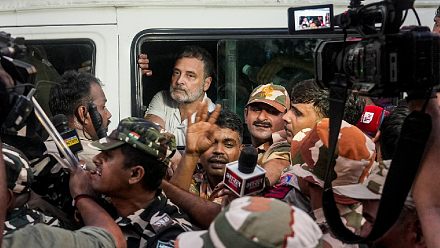
ALSO READ | A Small Gate, A Flying Kiss And Samosas: How Rahul Gandhi Stumped Cops At Akashvani Bhavan
Much the same dilemma confronts other opposition parties, particularly the Congress. Sources say Rahul Gandhi was advised that the CJP would need to be countered even as its issues were supported. The students who joined the CJP’s protests, too, needed to be backed, but a distance had to be maintained from the CJP leadership.
The CJP may not yet be a political party, but it operates like a pressure group. The thinking within the Congress was that it needed to activate its own organisational arms, such as the Seva Dal and the NSUI, and get its workers out on the streets.
That is what the party tried to do on the second day of the protests. From holding placards and confronting the police to climbing onto buses, the Congress was careful to ensure that it was not just its top leadership but also its young workers and karyakartas who were present on the ground.
RAHUL GANDHI CAN’T AFFORD TO LOSE THE YOUTH
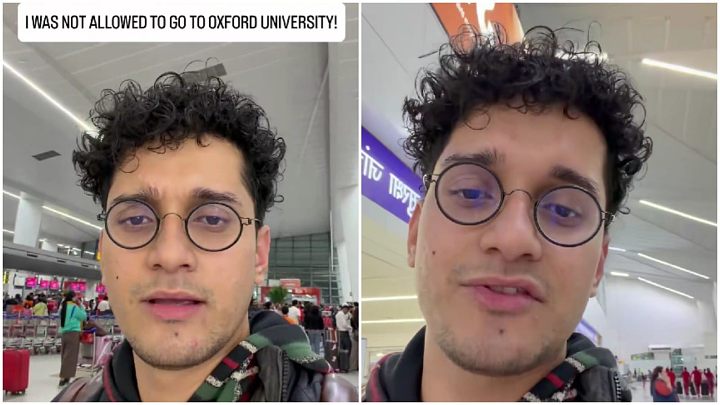
As pictures of Dipke and Saurav Das went viral, the Congress wanted to ensure that Rahul Gandhi was not overshadowed. His political journey began with his projection as a youth icon, and this is one voter base the party cannot afford to lose.
The Congress knows that the CJP’s appeal, particularly among young protesters, could pose a challenge if the organisation begins to occupy political space that the party hopes to reclaim. Supporting the issues that have brought people onto the streets, therefore, is only one part of the Congress’s strategy. The other is ensuring that the party’s own leadership and workers remain visible throughout the agitation.
This also explains the emphasis on getting younger Congress workers on the ground. The party is not merely looking to demonstrate solidarity with the protesters; it wants to show that it, too, has the organisational strength to sustain a movement.
For Rahul Gandhi, the stakes are particularly high. The Congress has repeatedly tried to position him as a leader who can challenge the BJP on questions of democracy and constitutional institutions. But if another organisation comes to be seen as the principal face of that fight, the political dividends may not accrue to the Congress.
THE CONGRESS WANTS TO BE THE ALTERNATIVE
The Congress wants to capitalise on the fact that the CJP is not yet a political alternative and wants to position itself as that alternative.
The distinction is important. The party can support the CJP’s issues and stand alongside those protesting without necessarily endorsing the organisation’s leadership or allowing it to dictate the political direction of the movement.
For the Congress, the challenge is to walk that fine line: sustain pressure on the BJP, support the concerns that have mobilised protesters, and prevent the CJP from emerging as the sole political beneficiary.
It is a strategy that carries its own risks. Maintaining a distance from the CJP leadership while backing the movement could prove difficult if the organisation’s influence grows or if its supporters begin to see the Congress as an opportunistic participant rather than a committed ally.
But the Congress appears to believe that staying away would be even more damaging. It could leave the party watching from the sidelines as another organisation claims ownership of an issue that Rahul Gandhi has made central to his politics.
The party’s calculation is that, when the time comes to make a political choice, voters will see the Congress—and Rahul Gandhi—as the more credible political alternative.
For now, the protests are about more than the stated cause. They are also becoming a contest over leadership, visibility and political ownership. The CJP may have helped bring people onto the streets, but the Congress is determined to ensure that Rahul Gandhi is not left watching from the sidelines.