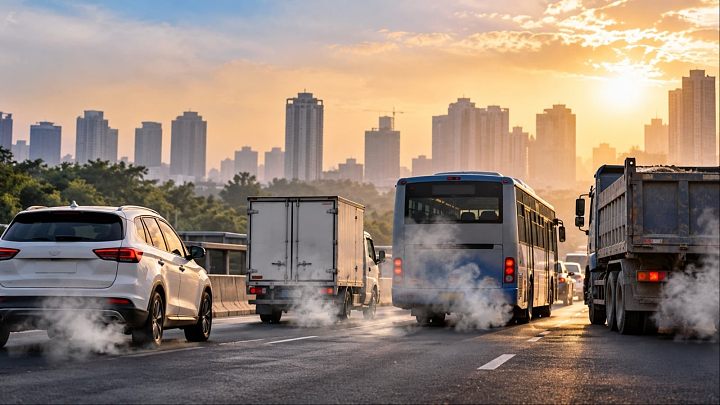
BS-VII Emission Norms To Roll Out In 3 Phases From April 2029; Rules To Target Cars, Heavy-Duty Vehicles
India is set to introduce Bharat Stage VII (BS-VII) emission standards in three phases between April 2029 and April 2035, with stricter regulations aimed at reducing harmful pollutants emitted by vehicles, according to a
By Vani Mehrotra··87K reads
BS-VII Emission Norms To Roll Out In 3 Phases From April 2029; Rules To Target Cars, Heavy-Duty Vehicles
India is set to introduce Bharat Stage VII (BS-VII) emission standards in three phases between April 2029 and April 2035, with stricter regulations aimed at reducing harmful pollutants emitted by vehicles, according to a report by the Times of India.
The proposed standards will be aligned with Euro 7 norms and are expected to cover cars, SUVs, goods vehicles, buses and heavy-duty vehicles in a phased manner.
The report said the road transport ministry has approved the proposed implementation timeline, with draft notifications for three categories of vehicles expected over the next few days.
The rollout will begin with new cars and SUVs manufactured from April 2029, followed by small goods delivery vehicles and pick-up vans from 2030.
Buses and heavy-duty vehicles will come under the new standards from April 2031.
The proposed standards seek to tighten controls on pollutants such as nitrogen oxides, hydrocarbons and particulate matter amid growing concerns over pollution in Indian cities.
The new norms for two-wheelers, described in the report as the biggest contributor to pollution, will be notified separately at a later stage.
BS-VII Norms To Require Engine Upgrades, Not Refinery Changes
Unlike the transition to BS-VI emission standards, which came into effect in April 2020, the shift to BS-VII will not require changes in refinery infrastructure to produce petrol and diesel compatible with the upgraded norms, the report mentioned.
However, automobile manufacturers will need to upgrade engines to comply with the proposed requirements.
The six-year implementation window is intended to provide sufficient time for the automotive industry and testing agencies to prepare for the transition.
The report also clarified that the proposed standards will not affect existing vehicles or their operational life, including vehicles that comply with BS-VI norms.
BS-VII To Target Ultrafine Particles
Under the proposed standards, the emission cut-off limits for various pollutants from cars and SUVs will remain unchanged compared with BS-VI. However, the permitted particulate number measurement threshold will be reduced from 23 nanometres to 10 nanometres, the report said.
The change is intended to improve the filtration and monitoring of smaller, ultrafine particles that have not been regulated under the existing framework.
Such particles can penetrate deeper into the lungs, making their control an important aspect of efforts to address vehicular pollution.
A person aware of the matter told the publication that the proposed change would make the regulations more stringent by bringing ultrafine particles within the regulatory framework.
Trucks, Heavy Vehicles Face Stricter Emission Requirements
The transition from BS-VI to BS-VII is expected to have a greater impact on trucks and other heavy-duty vehicles. The proposed standards aim to reduce emissions across pollutants by 20-50 per cent, with particular emphasis on emissions under on-road driving conditions, according to the report.
The new framework will also go beyond conventional tailpipe emissions. People involved in framing the norms told the publication that BS-VII will regulate non-exhaust sources of pollution, including brake wear and tyre abrasion.
These provisions would expand the scope of emission regulation beyond pollutants released directly through vehicle exhaust systems.
Real-World Emission Monitoring To Be Strengthened
The proposed standards will strengthen emissions monitoring beyond controlled laboratory testing to assess whether vehicles remain compliant under real-world driving conditions and throughout their operational life.
The report said the framework would also introduce market surveillance, under which independent testing agencies would conduct compliance checks on vehicles already in use.
This approach is intended to assess emissions performance beyond the testing conditions under which vehicles are initially certified.
BS-VII Rollout To Be Completed By 2035
The implementation of the new standards will take place in three phases over six years, from April 2029 to April 2035, according to the report. The phased approach is expected to give vehicle manufacturers and testing agencies time to make the technical and operational changes required under the new regime.
The proposed Indian standards are fully aligned with Euro 7 norms, the report said.
The European framework is also being implemented in phases, beginning in November 2026 for light-duty vehicles and May 2028 for heavy-duty vehicles, with the full rollout extending up to 2035.