'Book For Attempt To Murder': Karnataka Minister Seeks Tough Action On Fake Drug Racket | Exclusive
Karnataka health minister UT Khader has sought the intervention of the Union government in the state’s fake drug racket, demanding stringent criminal action against those manufacturing and selling spurious medicines, sta
By Rohini Swamy··167K reads
'Book For Attempt To Murder': Karnataka Minister Seeks Tough Action On Fake Drug Racket | Exclusive
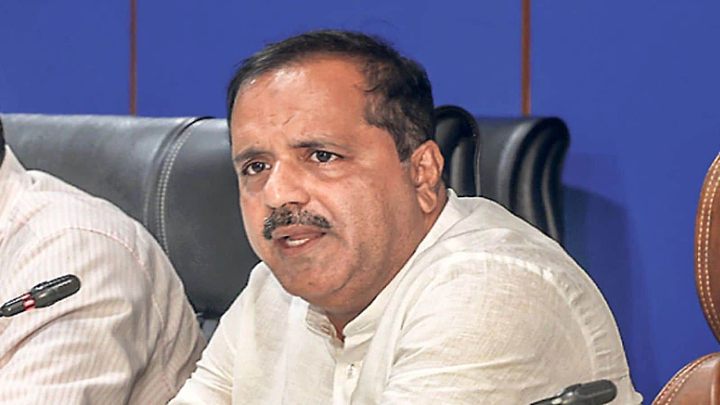
Karnataka health minister UT Khader has sought the intervention of the Union government in the state’s fake drug racket, demanding stringent criminal action against those manufacturing and selling spurious medicines, stating anybody arrested for such an act should be booked under “attempt to murder” under IPC.
A Special Investigation Team (SIT) set up by Khader has traced the alleged kingpin of a major spurious drug racket to Azerbaijan and has begun the process to bring him back to India.
The main accused, Prashant, is said to have fled the country soon after the racket was busted by Karnataka FDA. The investigation has since uncovered an alleged supply chain run by the accused spanning multiple states, with spurious medicines being repackaged and relabelled before being supplied to pharmacies, hospitals and clinics.
The suspected network is also being probed for allegedly supplying counterfeit cancer medicines, ICU injections and other life-saving drugs, with investigators examining links to more than 90 hospitals and clinics in Bengaluru.
Speaking exclusively to News18, Khader said regulatory action alone would not be enough to dismantle such a network. “This should be treated as a case of attempt to murder under the relevant sections of the IPC and CrPC,” Khader said.
The minister said merely cancelling licences and imposing financial penalties could allow operators to restart their businesses under different names. “What has happened now is that the licence and finance are being cancelled. He may go and open another company in his relatives’ names. And when he is caught, he gets let off by paying a little fine. We need to weed out his entire network,” he said.
Khader said while the SIT was working to expose the larger machinery behind the manufacture and movement of spurious medicines, the Centre also needed to step in. “Let the Centre formulate stringent action. All the states will support them because it is a matter of human life and safety,” Khader said.
Main Accused Traced To Azerbaijan
The tracing of the accused Prashant is a key development in the investigation.
Officials said the SIT is now initiating the process required to secure his return to India. Investigators believe questioning him could help establish the full extent of the alleged network—from sourcing and repackaging medicines to relabelling, storage and distribution.
Sources tell News18 that Prashant’s visa expired on September 9 and that his passport has reportedly been seized by immigration authorities in Azerbaijan.
Karnataka Health Dept Exposé
The racket was first exposed by the Karnataka health department on August 18, when the Enforcement Wing of the state’s Food Safety and Drug Administration (FSDA), along with the police, raided a farmhouse near the Bidadi toll gate in Ramanagara district.
Acting on information, officials found an alleged operation involving the repackaging and relabelling of medicines in the names of prominent multinational pharmaceutical companies. The facility did not have a valid licence to manufacture medicines.
The raid resulted in the seizure of suspected fake and expired medicines and related material worth nearly Rs 5 crore. Officials also recovered material allegedly used in the repackaging operation, including counterfeit labels and injection-filling equipment.
What initially appeared to be an illegal manufacturing unit soon emerged as a suspected wider supply-chain operation.
According to the government’s preliminary investigation, the network was allegedly procuring cheaper bulk drugs from manufacturing hubs in Telangana and Himachal Pradesh. These were allegedly brought to the Bidadi facility, refilled into new vials and relabelled as premium imported products of reputed multinational pharmaceutical companies.
The suspected products included medicines meant for critical medical use, including ICU injections, life-saving drugs and medicines used in cancer treatment.
Investigators are also examining allegations that expired medicines were repackaged in fresh containers and sold with counterfeit labels resembling those of established pharmaceutical companies, while cheaper medicines were allegedly rebranded and sold under different names.
SIT Formed
The Karnataka government moved quickly following the Bidadi raid.
On August 19, it constituted a six-member SIT to investigate the suspected interstate network. The team is headed by senior IPS officer C Vamshi Krishna, with officials from the Food Safety and Drug Administration and Commercial Taxes Department also part of the probe.
“We did not wait a single day. On August 19, after discussion with chief minister DK Shivakumar and home minister Priyank Kharge, we constituted a six-member SIT headed by a senior IPS officer to lead a major inter-state investigation, with officers of the Food Safety & Drug Administration and Commercial Taxes Departments on the team,” Khader said.
The investigation subsequently widened beyond Bengaluru.
The SIT and Drugs Control Department later raided Krupa Healthcare near Minerva Circle, where officials seized a large stock of suspected counterfeit medicines.
The pharmacy owner, Veeresh Kumar Jain, was arrested. Investigators are now probing his alleged links with Prashant and suspect that the pharmacy was being used as a storage point before the medicines were distributed to medical shops, hospitals and clinics.
The investigation is examining purchase and sale records, bank transactions and other documents to establish how the medicines and money moved through the suspected network.
Over 90-Plus Hospitals, Cancer Drugs Under Scanner
The SIT is probing allegations that counterfeit cancer medicines, other life-saving drugs and ICU injections were supplied to more than 90 hospitals and clinics in Bengaluru, allegedly at discounts of around 50 per cent. Even the role of medical representatives is being probed. Investigators are now trying to establish where the medicines went, who purchased and distributed them, and whether any of the suspected counterfeit products were administered to patients.
Accused Prashant’s Operations Across States
A source familiar with the investigation told News18 that Prashant had earlier operated from Bengaluru before shifting his operations to Chennai.
“A few years back, he had the same office in Bengaluru. He started in Bengaluru, but at that time, he was operating on a very small scale. He was caught. Then he went to Chennai and started the same company in his wife’s name, operating from there,” the source said.
The source said Prashant allegedly had a wider wholesale network. “He is a wholesale dealer for all these big hospitals. Through him, they used to supply to other states and other parts of the country as well. So, that inquiry is going on and more details will be revealed,” the source said.
The source also alleged that the suspected spurious medicines were being supplied through hospitals.
Following the seizures, Karnataka communicated the list of suspected spurious and counterfeit medicines to the Union government and all state governments. Hospitals and nursing homes across Karnataka were also directed not to use the seized medicines in case any of the products had entered their stocks.
On August 19, Khader wrote to Union health minister JP Nadda, seeking the assistance of the Central Drugs Standard Control Organisation (CDSCO) and other central regulatory agencies to map the suspected supply chain and prevent further distribution across the country.