Baraat Vs Badebandi: Why Rajasthan's Winning Netas Have Nowhere To Hide This Wedding Season
In Rajasthan and many places beyond, people often say and believe, “Haare ka sahara, Baba Khatu Shyam hamara” (Baba Khatu Shyam is the support of the defeated). In this state right now, however, trouble isn’t looming ove
By Sudheer Sharma··35K reads
Baraat Vs Badebandi: Why Rajasthan's Winning Netas Have Nowhere To Hide This Wedding Season
In Rajasthan and many places beyond, people often say and believe, “Haare ka sahara, Baba Khatu Shyam hamara” (Baba Khatu Shyam is the support of the defeated). In this state right now, however, trouble isn’t looming over the losers — it is hanging over the heads of the winners.
Under Rajasthan’s ‘One State, One Election’ initiative, thousands upon thousands of people are contesting elections for panchayats, zila panchayats (district councils), and other local bodies. Votes will be counted on November 20.
To shield their candidates from bargaining, buying and selling, or horse-trading, political parties hide them away in different hotels and resorts. In some places, this is called ‘resort politics’; elsewhere, it is known as ‘badebandi’ (political corralling). Winning candidates—and very often their families — are put up in the finest hotels and resorts and treated to lavish hospitality.
Money is no object here; the real focus is making sure the winning netaji (politician) or neta-pati (husband of an elected woman representative) doesn’t strike a quiet deal with someone and slip away. They aren’t even allowed anywhere near a phone; mobile phones are confiscated, and they are kept in ‘royal captivity’ (shahi qaid) until they cast their vote in the right place.
This time, however, pulling this off is tough — because this festival of democracy is clashing straight with the wedding season.
PAMPERED LIKE A SON-IN-LAW—AND THE FEAR OF THE ‘VOICE OF CONSCIENCE’
Around 9,500 public representatives will emerge victorious, half of whom will be women due to women’s reservation. Senior political analyst SP Mittal from Ajmer told News 18. Every winning candidate expects to be pampered like a new damaad (son-in-law), and their displeasure can overturn the fortunes of many.
The biggest reason for this is that the anti-defection law does not apply to these panchayat elections. That means even if you win on one party’s ticket, you can still answer your ‘voice of conscience’ (aatma ki aawaz) and vote for another party’s candidate—no matter what allegations of selling out are levelled against you.
THE DATE CLASH: BARAATS ON ONE SIDE, BADEBANDI ON THE OTHER
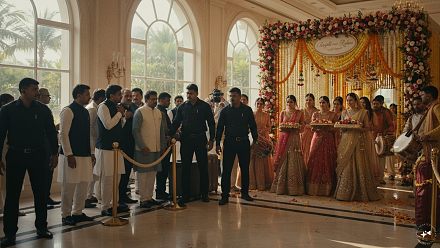
This puts political parties in a direct clash with wedding families. For starters, hotel rooms are completely booked out, and even where rooms are available, keeping winning candidates isolated from crowds and phones is extremely difficult.
Pandit Bhudev Shastri told this correspondent that the first sava (auspicious wedding date) after July 12, 2026, falls on November 20 and 21. This wedding muhurat is the Devuthani Ekadashi sava, a major wedding date following the four-month Chaturmas period.
This is followed by major wedding muhurats on November 25 and 26, and then further wedding dates on December 2, 3, 4, 5, 11, and 12. After that, the month-long Kharmas period sets in, meaning the next wedding muhurat will only fall on January 15, 2027.
Meanwhile, on the election calendar, votes for Zila Parishad and Panchayat Samiti members will be counted on November 20, the election for Zila Pramukh will take place on November 25, and the election for Pradhan will be held on November 27. Understandably, these exact same wedding dates apply not just in Rajasthan, but across neighbouring states as well.
NO ROOM, NO ENTRY: A VIP SECURITY CRISIS IN PEAK TOURIST SEASON
Wherever political badebandi happens, no outsiders are allowed entry. Whenever political parties sequester their members, they throw a tight security cordon around the hotel or resort so that the corralled members cannot mingle or speak with any outsider under any circumstances. Party office-bearers are put in charge of enforcing this. As a result, political parties have to book out entire hotels and resorts—which simply aren’t available right now.
Vinod Kumar Sharma, who owns Hari Van, a banquet in the state capital Jaipur, while talking to this reporter explained that resorts and hotels are already booked out for weddings. At the same time, the tourist season has begun, drawing large numbers of both domestic and international tourists to Rajasthan during this window. Finding so many hotels or resorts in Rajasthan—especially ones suited for tight security arrangements—will be difficult.
FLASHBACK: THIS GAME OF ‘HOTEL POLITICS’ HAS BEEN RUNNING SINCE 1967
This scramble for hotel rooms isn’t without reason. The history of badebandi in Rajasthan politics goes back decades, and parties know all too well that if their guard slips even slightly, it takes no time for the tables to turn.
This political corralling began in 1967, when the Congress led by Mohanlal Sukhadia failed to win a clear majority in the Legislative Assembly. At the time, to gather support from MLAs of other parties and keep them in the fold, the strategy of housing them together in one place was adopted for the first time.
Later, in 1990, when the BJP formed a government with the support of the Janata Dal and Bhairon Singh Shekhawat became Chief Minister, the BJP had 85 seats and the Janata Dal had 55 MLAs. A split occurred in the Janata Dal, and one faction backed the Shekhawat government. At that delicate juncture too, keeping camp MLAs united by housing them at a secret location under badebandi was widely talked about.
The same game of chess was repeated during the 2016 Rajya Sabha elections, when the BJP sequestered its MLAs in a hotel near Jaipur.
SCALING THE HOTEL WALL TO ESCAPE: WHEN THE GUARD FAILED
No matter how tight the security, stories of breaching the badebandi have been just as dramatic. The most talked-about example played out during the 2019 Jaipur Municipal Corporation election. Amid the BJP’s strict badebandi, councillor Vishnu Lata scaled the hotel wall, escaped, and went straight on to sit in the Mayor’s chair with Congress support.
It was this very fear of wall-jumping and side-switching that led then-Chief Minister Ashok Gehlot to enforce a long badebandi during the state’s major political crisis in 2020. That same year, when elections were completed across six municipal corporations in the state, both the Congress and the BJP immediately locked their councillors inside hotels to avoid taking any risks.
Clearly, while this tactic of ‘royal captivity’ is an old move in Rajasthan politics, this time around, wedding savas and packed hotels have put up the biggest wall yet in front of this political showdown of democracy.