Azam Khan's Release Brings SP's 2027 Poll Strategy Into Focus: Will Akhilesh Yadav Make Him Star Campaigner?
The possibility of Samajwadi Party veteran Azam Khan returning to active politics has acquired fresh significance with the Allahabad High Court granting him bail in the dual PAN card case, bringing his prolonged incarcer
By Oliver Fredrick··175K reads
Azam Khan's Release Brings SP's 2027 Poll Strategy Into Focus: Will Akhilesh Yadav Make Him Star Campaigner?
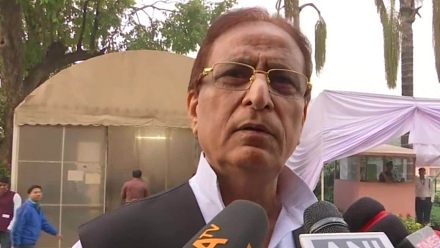
The possibility of Samajwadi Party veteran Azam Khan returning to active politics has acquired fresh significance with the Allahabad High Court granting him bail in the dual PAN card case, bringing his prolonged incarceration closer to an end.
For the Samajwadi Party, the development comes at a politically crucial juncture as it prepares for the 2027 Uttar Pradesh assembly election raising questions about whether Azam Khan will once again become one of its principal campaign faces.
The Allahabad High Court on October 29 suspended the sentences of Azam Khan and his son Abdullah Azam in the dual PAN card case and granted them bail. The court, however, refused to stay their convictions meaning both remain disqualified from contesting elections.
As of Saturday (October 31), the release process was underway in Rampur. Courts had issued release warrants in five cases involving Khan, while warrants in more than 50 other pending matters were still awaited.
The legal process concerning Abdullah Azam was also continuing. An ED-related remand application is scheduled for consideration on November 2, adding another uncertainty to the release process.
The legal relief has nevertheless changed the political conversation around Khan’s future. His release could give the SP an opportunity to bring back one of its most influential Muslim leaders into its organisational and electoral preparations, particularly in western Uttar Pradesh.
The development follows SP president Akhilesh Yadav’s October 22 meeting with Khan at Rampur jail. The approximately hour-long interaction was widely interpreted as an attempt to reaffirm the veteran leader’s importance within the party ahead of the assembly election.
After the meeting, Akhilesh said: “Azam was, Azam is, and Azam will remain.”
The statement was seen as a message to Khan’s supporters that the party leadership continued to consider him an important part of its political identity.
The biggest question following the latest legal development is whether Khan will return as a statewide campaigner or concentrate on rebuilding the SP’s political network in Rampur and neighbouring districts. There is no formal announcement yet about his appointment as a star campaigner for the 2027 assembly polls. His political standing and influence among sections of the Muslim electorate make him a potentially important figure in the party’s electoral calculations.
The SP has previously included Khan in its star campaigner list even when he was in jail. During the 2024 assembly bypoll, his inclusion generated considerable political discussion with some party leaders questioning whether the leadership was using his name to consolidate Muslim votes without adequately supporting him politically.
A senior SP leader, while commenting on Khan’s stature in the party, described him as the party’s most prominent Muslim face and warned that alienating his followers could damage the party’s prospects. Another SP leader from Rampur, Ajay Sagar highlighted his continuing influence, saying, “We will suffer in the elections if we ignore Azam.”
Political analyst Dr Shashikant Pandey, head of the Department of Political Science at Dr Bhimrao Ambedkar University, Lucknow, believes that Akhilesh Yadav’s outreach to Khan has both organisational and political significance.
“Akhilesh Yadav’s meeting with Azam Khan is significant because it addresses both an organisational concern and a political perception. The SP must reassure Khan’s supporters while also demonstrating that it can convert symbolic solidarity into a broader strategy for western Uttar Pradesh. The meeting alone will not determine the party’s 2027 prospects, but the manner in which Khan’s network is integrated into regional planning could have electoral consequences,” Pandey said.
Political analysts from Uttar Pradesh, however, said Khan’s return could strengthen the party’s political messaging among Muslim voters. The leadership will have to ensure that his supporters receive adequate representation in organisational decisions and candidate selection, they said.
They further said his influence could be particularly important in the Moradabad division, where the SP has traditionally maintained a strong political presence. His return could also reopen the question of his role in deciding candidates for the upcoming elections, they added.
Earlier this month, Khan reportedly sent a list of 15 names to Yadav, seeking consideration for constituencies in Rampur and other parts of western UP.
A senior SP leader said Khan wanted Yadav to consult him before selecting candidates in Rampur, Sambhal, Moradabad, Saharanpur, Meerut and Badaun. Rampur SP district president Ajay Sagar, in his recent statement, backed Khan’s role in candidate selection.
“The candidates in both the seats would be decided by Azam Khan sahab,” Sagar said.
The 2024 Lok Sabha election had exposed differences between Khan and the party leadership when Yadav fielded Mohibullah Nadvi from Rampur despite opposition from Khan and his supporters. Nadvi eventually won the seat, demonstrating that the SP leadership could also secure electoral victories without Khan’s active backing.
The contrasting positions within the party suggest that his return may not automatically restore his earlier authority over local political decisions. Also Khan’s return could complicate the political calculations of AIMIM chief Asaduddin Owaisi, who has been attempting to expand his party’s presence in UP.
Owaisi’s October 18 rally in Rampur and his criticism of Yadav over the treatment of Muslim leaders have added another dimension to the SP’s political concerns.
“The Owaisi factor cannot be ruled out. Akhilesh is hoping for consolidation of Muslims in favour of the SP-Congress alliance. But if Owaisi capitalised on sympathy for Azam and cut into Muslim votes, that will be an advantage for the BJP in Rampur and adjoining districts of western UP,” an SP leader said.
This makes Khan’s political rehabilitation important for Yadav beyond the question of personal loyalty. The SP will need to prevent dissatisfaction among Khan’s supporters from becoming an electoral liability.
Despite his political stature, his return will not necessarily restore the dominance he once enjoyed in Rampur. The BJP’s victories in the Rampur and Suar bypolls following the disqualification of him and his son exposed the vulnerabilities in the family’s political network.
The Lok Sabha polls further demonstrated that the SP could win Rampur even without Khan’s active support. These developments raise questions about whether his personal influence can still translate into electoral gains across the region.
His legal circumstances also remain important. Although bail has been granted in the dual PAN card case, the convictions have not been stayed.
Consequently, he cannot contest the 2027 polls unless the relevant convictions are subsequently stayed or overturned. His ability to campaign, meanwhile, is a separate question and will depend on the legal position and any applicable restrictions.
For Yadav, the immediate challenge will be to balance Khan’s political influence with the ambitions of other regional leaders and the party’s broader electoral strategy. The real significance of his possible return may, therefore, lie less in whether he gets a star campaigner designation and more in whether Yadav is prepared to give him a meaningful role in the SP’s 2027 political and organisational planning.