'AAP, Congress Allowed Sewage In Yamuna': Amit Shah Vows To Clean River, Restore Its Purity By May 2029
Union Home Minister Amit Shah on Thursday said the BJP governments in Delhi, Uttar Pradesh and Haryana have prepared a time-bound roadmap to clean the Yamuna, setting a target of restoring the river’s purity by May 2029.
By Vani Mehrotra··152K reads
'AAP, Congress Allowed Sewage In Yamuna': Amit Shah Vows To Clean River, Restore Its Purity By May 2029
Union Home Minister Amit Shah on Thursday said the BJP governments in Delhi, Uttar Pradesh and Haryana have prepared a time-bound roadmap to clean the Yamuna, setting a target of restoring the river’s purity by May 2029.
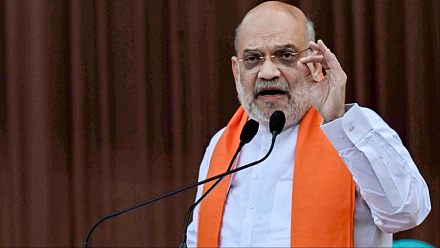
Shah made the remarks while inaugurating and laying the foundation stones for 43 Delhi Jal Board (DJB) projects worth Rs 8,941.22 crore aimed at rejuvenating the river.
Addressing the event in Dwarka, Shah said Prime Minister Narendra Modi had convened a meeting with the Delhi government and the Ministry of Home Affairs within a month of the BJP forming the government in the national capital to outline his vision for cleaning the Yamuna.
“I am pleased that we have completed more than 40 per cent of the work to curb pollution in such a short time,” Shah said, adding that the projects would focus on wastewater treatment and drinking water infrastructure.
Shah also accused successive Congress and Aam Aadmi Party (AAP) governments of allowing sewage to flow into the Yamuna.
He said the BJP governments in Delhi, Uttar Pradesh and Haryana would work together to address pollution entering the river from the three states.
BJP Targets Yamuna’s Rejuvenation By May 2029
Shah said the BJP governments had developed a coordinated plan to clean the river, which receives sewage and industrial waste from different areas.
He alleged that Congress governments and the Arvind Kejriwal-led AAP government had allowed sewage discharge into the Yamuna over the past three decades.
He also referred to pollution entering the river from Haryana and Uttar Pradesh, including industrial waste and sewage, respectively.
Shah said the change in governments across Delhi, Uttar Pradesh and Haryana had created an opportunity for the three administrations to work together on a time-bound plan.
The stated target is to restore the Yamuna’s purity by May 2029. The projects announced on Thursday are intended to strengthen sewage treatment, expand sewer infrastructure and improve drinking water facilities.
43 DJB Projects Worth Rs 8,941 Crore
Amit Shah’s programme covers 43 DJB projects with a combined value of Rs 8,941.22 crore.
Of these, 10 projects worth Rs 2,827.11 crore will be inaugurated, while foundation stones will be laid for 33 projects worth Rs 6,114.11 crore.
The major components include a new 124 million gallons per day (MGD) sewage treatment plant (STP) at Okhla, costing Rs 1,161 crore, and upgrades to eight existing STPs worth Rs 1,041 crore.
The upgrades are expected to increase their combined treatment capacity from 78.2 MGD to 140.8 MGD and benefit around 78.5 lakh people.
Another package of 29 decentralised STPs and sewage pumping stations, valued at Rs 3,113.67 crore, will cover 358 unauthorised colonies and 113 villages, serving an estimated 36.29 lakh residents.
The programme also includes a 1,034-km sewer network worth Rs 1,691 crore, a 477 MLD water treatment plant at Chandrawal costing Rs 298.3 crore, and a 4.5-km trunk drain in Mundka worth Rs 225.02 crore.
The Chandrawal plant is intended to replace facilities built in 1935 and 1955 and is expected to serve around 22 lakh people.
‘Chalo Yamuna’ Campaign Removes Over 76 Tonnes Of Waste
The project announcement follows the ‘Chalo Yamuna’ cleanliness campaign held on October 18. According to news agency ANI, more than 35,000 people participated in the drive, cleaning 70 locations along the river and removing 76,755 kg of waste in a single morning.
The campaign covered stretches from Soor Ghat in Wazirabad and Signature Bridge to Yamuna Bazar, ITO, Nizamuddin, Sarai Kale Khan and Chilla.
Participants included 20,000 citizens, families and resident welfare association members, 10,500 party workers, 2,500 students and 2,000 NGO volunteers.
Students from more than 25 Delhi University colleges also took part, including over 400 students from Deshbandhu College.
The cleanup operation involved 26 JCB machines, 19 tractor-trolleys, 24 boats, seven weed harvesters and trash skimmers, along with 269 Public Works Department maintenance vans.
More than 10 departments, including the Irrigation and Flood Control Department, PWD, Municipal Corporation of Delhi, DJB, DUSIB, Delhi Police and Delhi Disaster Management Authority, participated in the exercise.
Around seven tonnes of waste were collected from Usmanpur village and more than 5.6 tonnes from Sonia Vihar.