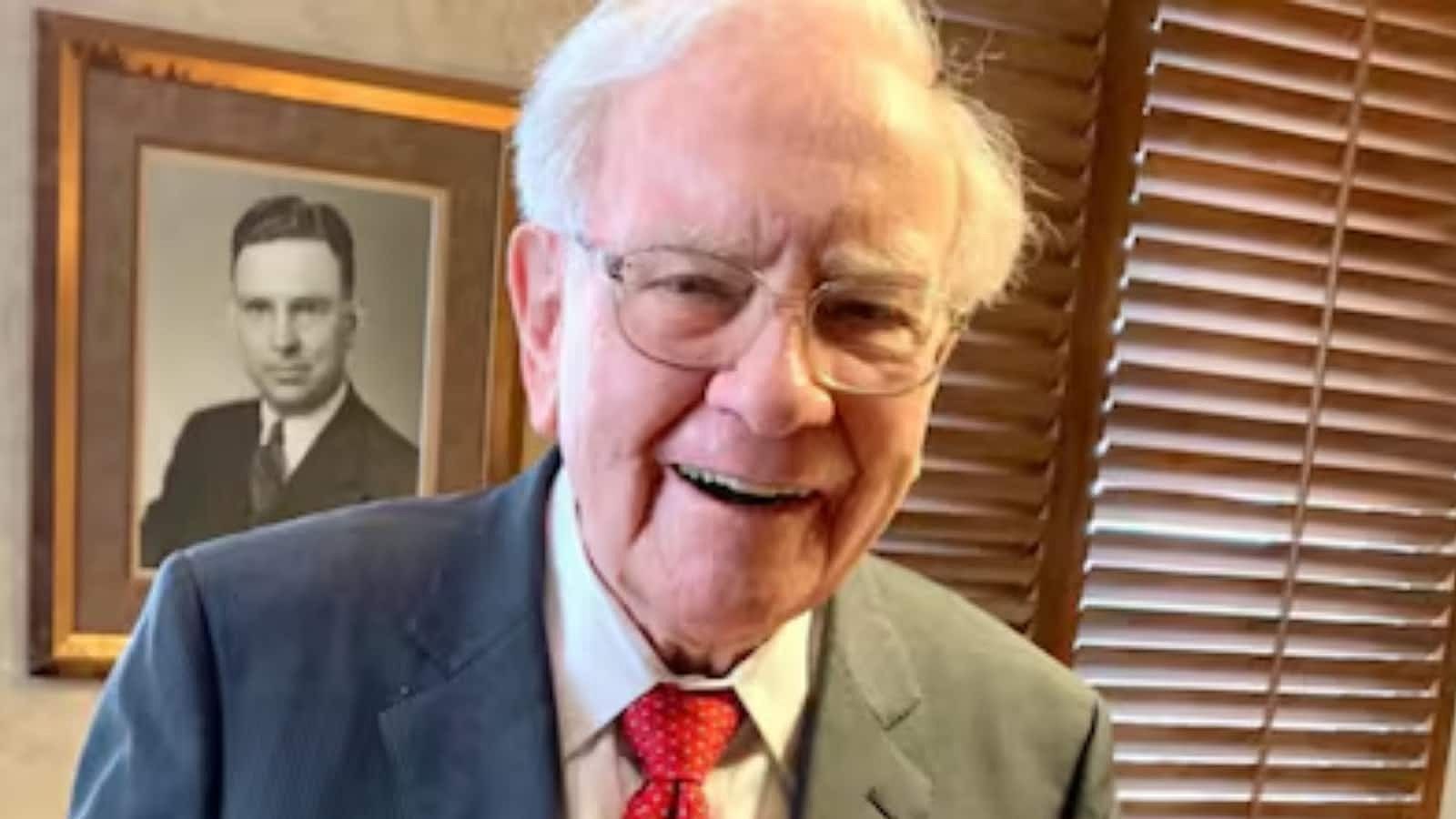
Warren Buffett Credits Luck For His Success: 'Out Of Eight Billion People, I May Be One Of The 10 Luckiest'
Legendary investor Warren Buffett has built one of the most successful investing careers in history, but he says the biggest reason behind his achievements is not exceptional talent alone — it’s luck.
By Business Desk··24K reads
Warren Buffett Credits Luck For His Success: 'Out Of Eight Billion People, I May Be One Of The 10 Luckiest'
Legendary investor Warren Buffett has built one of the most successful investing careers in history, but he says the biggest reason behind his achievements is not exceptional talent alone — it’s luck.
Speaking in an interview with CNBC, the Berkshire Hathaway chairman reflected on the circumstances that shaped his life, saying he believes fortune played a defining role in where he ended up.
“Out of eight billion people, I may be one of the 10 luckiest in the world,” Buffett said.
The billionaire investor, whose net worth is estimated at about $147 billion, also joked that living a long life has significantly boosted his investment record.
“I’m losing marbles at this point. I accumulated marbles for a longer time than I deserved. That’s just a matter of luck,” he said, as he approaches his 96th birthday.
Buffett believes his investing journey began because of an accident of birth rather than a carefully planned path. His father, Howard Homan Buffett, worked as a stockbroker and introduced him to the stock market at a young age. Looking back, Buffett said discovering investing so early in life was largely a stroke of luck.
“Fortunately I got exposed, partly accidentally, to what I liked to do very early on, and that was just an accident,” he told CNBC.
He summed up the role his family background played with a simple observation: “If my father had been a plumber, I would not have.”
That early exposure eventually led Buffett to buy his first shares at the age of 11, laying the foundation for a career that would make him one of the world’s most celebrated investors.
Why Buffett Says Birth Matters More Than Talent
Buffett has repeatedly argued that success depends heavily on circumstances outside an individual’s control. For decades, he has spoken about what he calls the “ovarian lottery”—the idea that where a person is born, the family they are born into and the opportunities they receive often have a greater influence on success than ability alone.
He first popularised the concept during Berkshire Hathaway’s 1997 shareholder meeting and revisited the idea in his 2024 letter to shareholders.
In that letter, Buffett acknowledged that being born in the United States and benefiting from the societal advantages of being a white male contributed meaningfully to his success.
“So favored by my male status, very early on I had confidence that I would become rich,” he wrote.
Buffett’s Role At Berkshire Hathaway
Although Buffett stepped down as Berkshire Hathaway’s CEO last year after leading the company for decades, he continues to play an active role in the conglomerate. The company’s leadership has been handed over to Vice Chairman Greg Abel, who is expected to guide Berkshire Hathaway into its next phase.
Buffett earned his first million dollars at the age of 32 before transforming Berkshire Hathaway into one of the world’s most valuable companies.
A New Direction For Buffett’s Philanthropy
Buffett has also made a major change to his charitable giving strategy. After joining The Giving Pledge in 2010 and committing to donate 99% of his fortune, he has now ended what had been a nearly two-decade partnership with the Bill & Melinda Gates Foundation.
Since 2006, Buffett had donated more than $47 billion to the foundation. Going forward, his Berkshire Hathaway share donations will instead be directed to charities run by or associated with his family, including the Susan Thompson Buffett Foundation, the Sherwood Foundation, the Howard G. Buffett Foundation and the NoVo Foundation.
Buffett said he informed Bill Gates of his decision several weeks before making it public.
Commenting on Gates’ past association with convicted sex offender Jeffrey Epstein, Buffett said people can make mistakes when evaluating others.
“While it’s distasteful, while he made mistakes, I made mistakes in hiring all kinds of people or choosing friends, and then finding out later that they weren’t what I thought they were,” Buffett said.
“I found nothing in there that was beyond what I could picture myself doing.”
He added, “No one bats a thousand in the business of choosing people.”
Wants Fortune Distributed Within Eight Years
Buffett has also accelerated plans for distributing his wealth. Last year, he announced that the Gates Foundation would no longer receive donations after his death, with responsibility for allocating the remainder of his fortune shifting to his three children.
More recently, he said he hopes the process can be completed within eight years.
“My children are unfortunately growing older. I have every hope that the three of them are able to carry out the disposal of my shares by December 31, 2034,” Buffett said.