Money
If You Don't Have Third-Party Insurance For Cars And Bikes, You May Not Get Fuel: Here’s Why
Imagine pulling into a petrol pump, ready to fill up your car or bike, only to be told you cannot get fuel because your vehicle does not have valid third-party insurance. That could be the case now as in a significant ru
38K reads
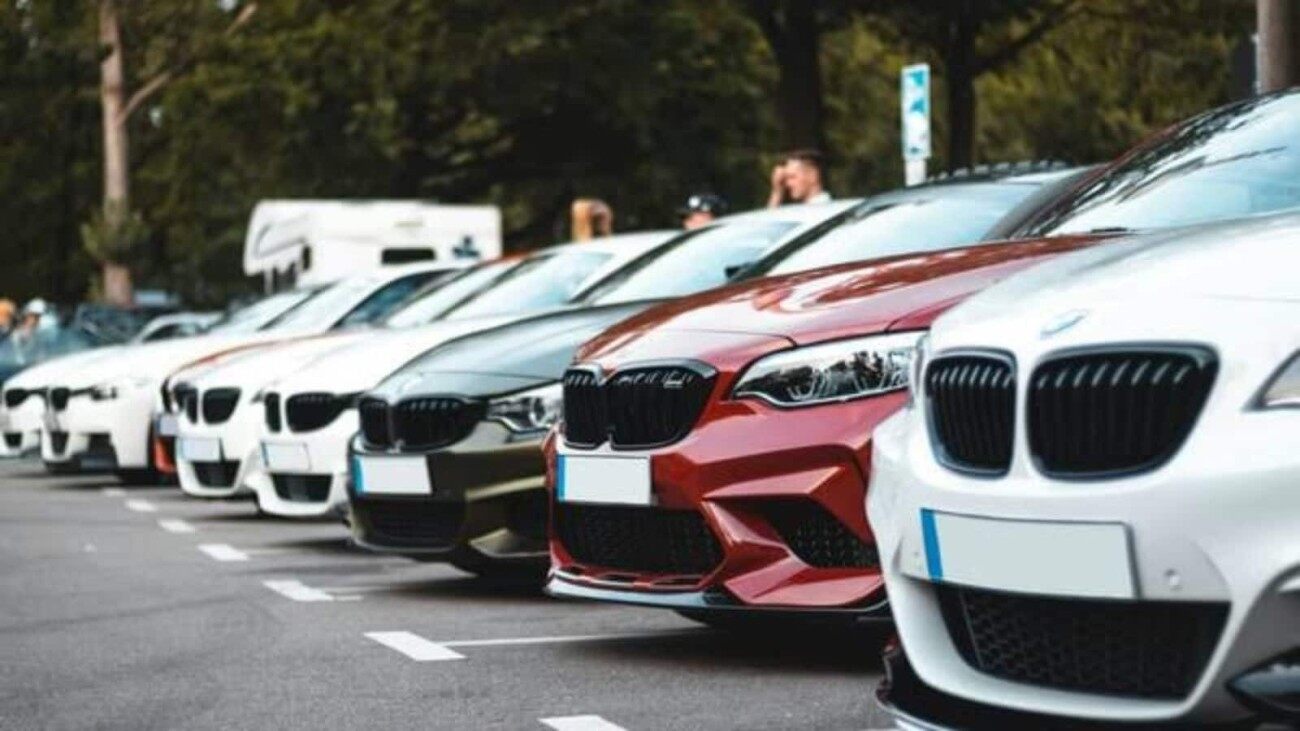
Imagine pulling into a petrol pump, ready to fill up your car or bike, only to be told you cannot get fuel because your vehicle does not have valid third-party insurance. That could be the case now as in a significant ruling, the Supreme Court has directed the Centre to explore a pilot project under which vehicles without valid third-party insurance could be denied fuel at petrol pumps.
A bench of Justice Sanjay Karol and Justice Prashant Kumar Mishra took serious note of the large number of vehicles plying without third-party insurance cover and asked the Insurance Regulatory and Development Authority of India (IRDAI), in consultation with the Ministry of Road Transport and Highways (MoRTH), to work out a mechanism linking fuel purchases with the insurance status of vehicles.
Under the proposed system, vehicles found without valid insurance could be refused fuel until the required policy is obtained.
The bench which flagged the lack of compliance of provisions of the Motor Vehicles Act requiring all vehicles to have a valid insurance policy covering third parties, said it is shocking to learn that nearly 56 per cent of vehicles plying on Indian roads remain uninsured according to the Report of the Standing Committee on Finance 2024–25.
The top court said that such a mechanism would serve two purposes — help identify uninsured or unregistered vehicles and encourage owners to maintain valid insurance.
“Such projects would ensure ground-level compliance with the statutory mandate of Section 146 of the MVA. This may be done through the use of ANPR (Automatic Number Plate Recognition) cameras,” it said, adding that the Ministry of Petroleum and Natural Gas has, in principle, no objection to the same.
The top court noted that in 2018, the top court mandated purchase of third-party insurance for three years for new cars and five years for two-wheelers, at the time of purchase or registration of new vehicles.
“We notice that despite eight years having passed from the said direction, a large number of vehicles remain uninsured. While the IRDA and GIC (General Insurance Council) have recommended that this period not be enhanced, we are of the view that it is in the interest of road safety that the period be enhanced by one year,” it observed.
The bench said, “Therefore, it is directed that henceforth, third-party insurance for four years for new cars and six years for new two-wheelers be required to be purchased. IRDA to immediately issue necessary directions.” It said in absolute terms, the stark figure of uninsured vehicles stands at 16.54 crore vehicles out of 30.48 crore vehicles and the consequent effect is that the statutory safeguard of victim compensation is often delayed, if not defeated.
It said the lack of insurance can leave accident victims and their families struggling to secure compensation and often forces them into prolonged litigation over liability and the quantum of compensation.
“The object behind mandatory insurance under Section 146 of the MVA is not just that victims of road accidents are compensated, it is also that they are not drawn into prolonged litigation,” the bench observed.
The top court noted they often have to enter into prolonged litigation concerning the quantum as well as liability for compensation and the consequence is even more severe for families where the victim is deceased or has suffered permanent disability, as the financial impact on the family is significantly heightened.
In wake of this, the bench also directed IRDAI and MoRTH to deploy ANPR cameras in selected states and integrate them with the Insurance Information Bureau’s database and the VAHAN portal.
The system would enable automatic e-challans to be issued to vehicles found without valid insurance.
The bench further directed that state police be provided with handheld devices or applications linked to the relevant databases so that officers can verify insurance status in real time and take action against violators.
The Supreme Court also took note of road accidents on national highways and congestion caused by long queues at toll plazas.
It directed the Centre to implement pilot projects on selected corridors where automatic vehicle detection could replace the existing process of stopping at toll plazas. It said that technology-based enforcement could help improve compliance with statutory requirements while reducing the need for physical checks.
Share
Tags