Why 108 Diyas And 108 Lotus Flowers Are Offered During Sandhi Puja
Durga Puja is a festival shaped as much by its rituals as by the stories behind them. From the sound of dhak drums filling the streets to the elaborate offerings made before Maa Durga, every tradition carries a meaning t
By Lifestyle Desk··17K reads
Why 108 Diyas And 108 Lotus Flowers Are Offered During Sandhi Puja
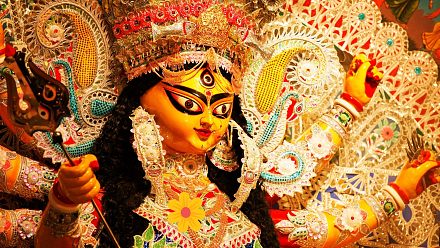
Durga Puja is a festival shaped as much by its rituals as by the stories behind them. From the sound of dhak drums filling the streets to the elaborate offerings made before Maa Durga, every tradition carries a meaning that has been passed down through generations.
As Maha Ashtami draws to a close and Maha Navami approaches, one of the most sacred moments of the festival unfolds: Sandhi Puja. For a brief, auspicious window, devotees gather before the goddess as 108 earthen lamps are lit and 108 lotus flowers are offered in worship.
Yet Sandhi Puja is more than a striking display of lamps and flowers. Its significance is rooted in the belief that this precise juncture marks a decisive moment in Goddess Durga’s battle against the forces of evil. Then there is the number 108, which recurs across spiritual practices and adds another layer of meaning to the ritual. What connects these elements, and why have they remained central to Sandhi Puja? The answers lie in the mythology and beliefs that have shaped one of Durga Puja’s most revered traditions.
What Is Sandhi Puja?
The word Sandhi means a junction or transition. Sandhi Puja is performed at the meeting point of Maha Ashtami and Maha Navami, the eighth and ninth days of Durga Puja. This auspicious period lasts 48 minutes: the final 24 minutes of Ashtami and the first 24 minutes of Navami. Because the ritual must be observed within this precise window, the preparations are made in advance, and the timing is determined according to the festival’s ritual calendar.
In Hindu tradition, this juncture is associated with the moment Goddess Durga took the fierce form of Chamunda to defeat the demons Chanda and Munda. As the story goes, the demons were sent into battle against the goddess, who manifested her formidable power to destroy them. Sandhi Puja commemorates this pivotal moment in the larger battle against the forces of evil and honours the goddess’s power to protect the world and restore balance.
The ritual’s timing is central to its significance. It marks a transition between two sacred days while recalling a decisive turning point in the goddess’s battle. For devotees, Sandhi Puja is therefore a moment of intense prayer, when offerings are made to honour Maa Durga’s strength and seek her blessings.
Why Are 108 Lamps Lit During Sandhi Puja?
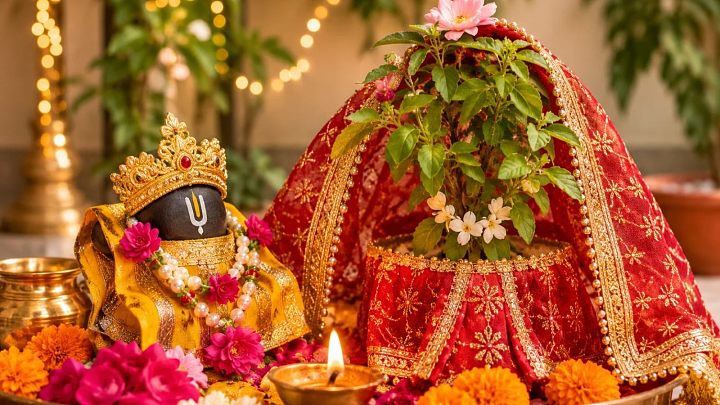
One of the defining sights of Sandhi Puja is the lighting of 108 earthen lamps, or diyas, before the goddess. The lamps illuminate the space around the idol, creating a striking display of light during one of the most sacred moments of the festival. Their significance, however, extends beyond the visual spectacle.
In Hindu worship, light is often associated with knowledge, hope and the triumph of good over evil. A lit diya symbolises the removal of darkness, both in the physical sense and as a spiritual metaphor for overcoming ignorance and negativity. During Sandhi Puja, the lamps become offerings of devotion to Maa Durga, whose victory over the demons represents the destruction of destructive forces.
The number 108 adds another layer of meaning. It is considered sacred across several Hindu spiritual traditions and appears in practices such as the chanting of a deity’s 108 names and the use of a 108-bead mala for mantra recitation. Goddess Durga, too, is worshipped through 108 names that reflect her many attributes and forms. Lighting 108 lamps during Sandhi Puja can thus be understood as an expression of reverence for the goddess and the completeness of the devotee’s offering.
Why Are 108 Lotus Flowers Offered To Maa Durga?
Alongside the lamps, 108 lotus flowers hold a special place in the Sandhi Puja ritual. The lotus has long been revered in Hinduism, appearing in religious art, mythology and worship. Its ability to bloom in muddy water while retaining its beauty has made it a symbol of purity, spiritual awakening and the ability to rise above worldly impurities. Offering lotus flowers to Maa Durga expresses devotion and reverence for the goddess.
The tradition is also connected to a popular account of Lord Rama’s worship of Durga before his battle with Ravana. According to the story, Rama performed a special invocation of the goddess, offering 108 blue lotuses to seek her blessings for victory. When he discovered that one flower was missing, he resolved to offer one of his own eyes, which were often compared to lotus petals. Moved by his devotion, the goddess appeared and blessed him.
This story is associated with Akal Bodhan, the invocation of Goddess Durga outside the customary period of her worship. It is often recalled during the autumnal Durga Puja celebrations, connecting the offering of lotuses with devotion, sacrifice and the goddess’s blessings.
While the details of the ritual and its interpretation may vary across regional traditions, the 108 lotus flowers remain a powerful symbol of devotion during Sandhi Puja. Each flower forms part of an offering that honours Maa Durga and acknowledges her divine power.
What Is The Significance Of The Number 108?
The number 108 appears repeatedly in Hindu religious and spiritual practices, from the beads used for chanting mantras to the recitation of a deity’s 108 names. Its significance is interpreted in different ways across traditions, but it is widely associated with spiritual completeness and wholeness.
In the worship of Maa Durga, the number connects the offerings to the many names and attributes through which devotees understand and honour the goddess. The 108 lamps and 108 lotus flowers are not simply counted offerings; together, they form a ritual expression of devotion that draws on a number deeply embedded in Hindu spiritual life.
It is worth noting that there is no single explanation for the number’s significance that applies uniformly across every Hindu tradition. Its meaning is layered, shaped by religious texts, ritual practices and regional beliefs. During Sandhi Puja, its importance lies in the way it brings a sense of completeness to the offerings made at this auspicious juncture.
A Ritual That Brings Mythology And Devotion Together
As the lamps flicker before Maa Durga and the lotus flowers are arranged in worship, Sandhi Puja brings together the mythology of the goddess’s victory, the symbolism of sacred offerings and the devotion of those gathered before her. Its precise timing lends the ritual a sense of urgency, while the 108 lamps and flowers give it a visual language that devotees have cherished across generations.
At its heart, Sandhi Puja honours the moment when the goddess’s fierce power overcame the forces threatening the world. The lamps represent the movement from darkness towards light, the lotus flowers express purity and reverence, and the number 108 lends the offerings their spiritual significance. Together, they make Sandhi Puja one of the most meaningful rituals of Durga Puja, rooted in stories and beliefs that continue to shape the festival today.