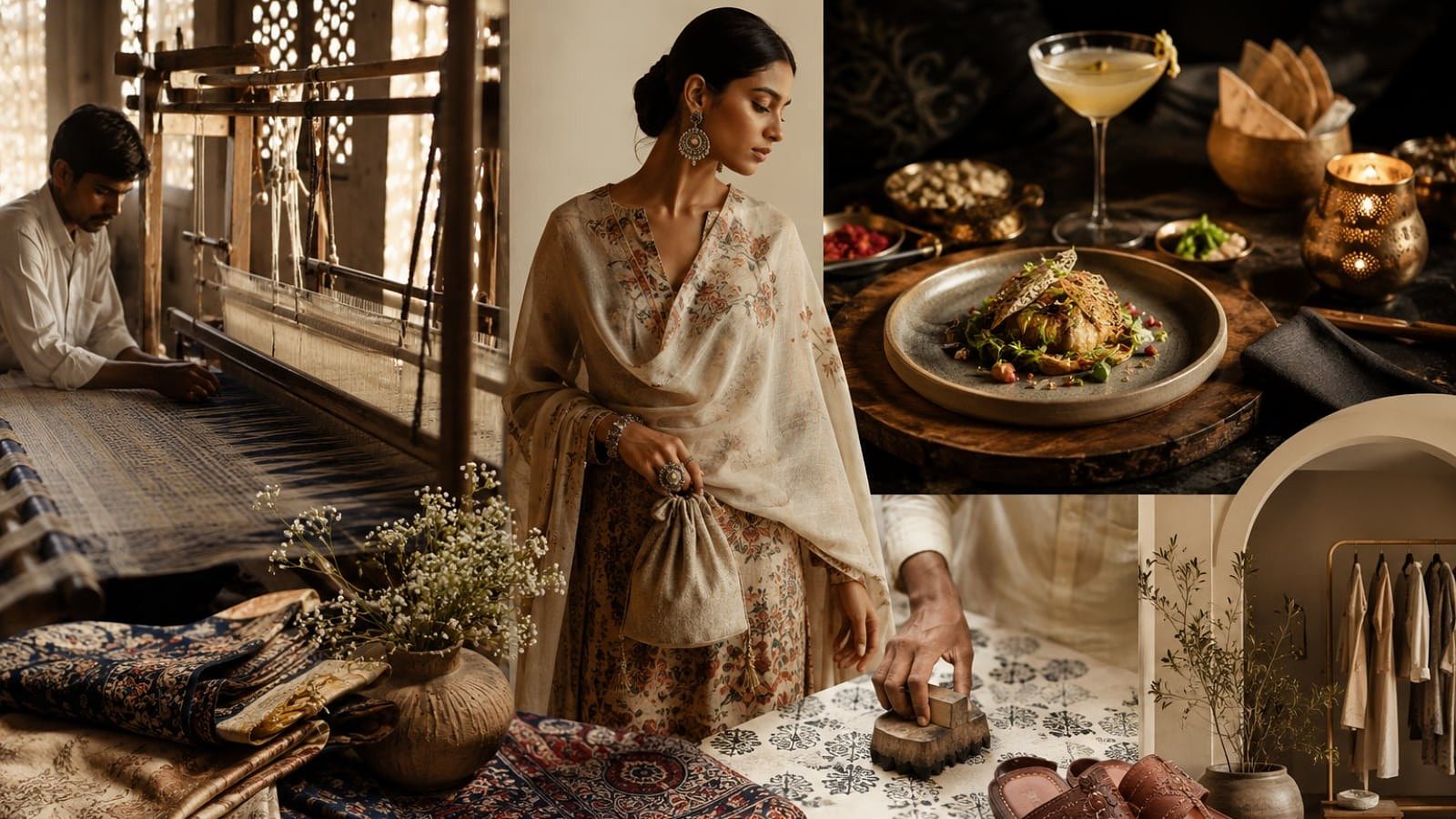
The Indian Luxury Blueprint: How Heritage, Craft And Gourmet Experiences Are Redefining Premium Living
Luxury in India is undergoing a quiet but significant transformation. While international maisons and global labels continue to hold aspirational value, a growing number of consumers are turning their attention towards s
By Swati Chaturvedi··20K reads
The Indian Luxury Blueprint: How Heritage, Craft And Gourmet Experiences Are Redefining Premium Living
Luxury in India is undergoing a quiet but significant transformation. While international maisons and global labels continue to hold aspirational value, a growing number of consumers are turning their attention towards something closer to home, brands rooted in Indian heritage, craftsmanship and storytelling.
Across fashion, hospitality and lifestyle, the conversation around luxury has shifted beyond exclusivity and price. Today’s discerning consumers are increasingly looking for authenticity, quality and experiences that feel personal. Whether it is a handcrafted textile, a thoughtfully designed garment or a meal inspired by regional culinary traditions, luxury is becoming less about status symbols and more about cultural connection.
This changing mindset is encouraging Indian brands to reinterpret traditional crafts and regional narratives for a contemporary audience, proving that heritage is not something to preserve behind glass but something to be experienced every day.
Luxury Is Becoming More Personal Than Prestigious
One of the biggest shifts is the growing emphasis on experiences over extravagance. Consumers today are no longer impressed by lavish settings alone; they are equally interested in understanding the story behind what they are consuming.
This evolution is particularly visible in hospitality, where restaurants are increasingly celebrating regional cuisines, forgotten recipes and indigenous ingredients.
Yogesh Sharma, Managing Director, Karigari Ventures Ltd., believes diners today want to engage with more than just the food on their plates. They are curious about the inspiration behind dishes, the culinary traditions they represent and the people responsible for creating those experiences.
“Luxury in India is no longer defined solely by premium ingredients or lavish settings; it is increasingly measured by authenticity, craftsmanship and memorable experiences,” Sharma says.
He believes India’s culinary diversity remains one of its greatest strengths, with every region offering recipes and techniques refined over generations. The challenge, he says, lies in presenting that heritage in ways that resonate with today’s consumers without losing its authenticity.
Equally important is recognising the people behind those experiences, from chefs and artisans to hospitality professionals. Their craftsmanship and human touch, Sharma notes, are becoming defining markers of modern luxury.
From Fine Dining To Everyday Indulgence
The evolving definition of luxury is not limited to premium restaurants. It is also reshaping everyday dining.
Consumers today expect exceptional ingredients and transparency regardless of whether they are enjoying a tasting menu or ordering takeaway.
Akriti Malhotra, Founder of Aku’s – The Burger Co., believes this marks one of the biggest changes in India’s food industry over the past few years.
“The definition of luxury in India’s food space has shifted dramatically,” she says. “Today, a customer standing at a takeaway window expects the same quality of ingredients that a fine-dining guest does.”
For Malhotra, the dining format has become secondary. What matters is ingredient integrity, from house-made patties and freshly baked buns to responsibly sourced produce.
Luxury, she argues, has become increasingly democratised. Rather than being reserved for special occasions, premium quality is now an everyday expectation.
That shift reflects the emergence of a more informed, well-travelled consumer who values authenticity over spectacle and is willing to pay for craftsmanship regardless of the setting.
Fashion Is Reclaiming India’s Creative Heritage
A similar transformation is unfolding in fashion, where heritage textiles and artisanal techniques are finding renewed relevance among younger consumers.
Instead of chasing seasonal trends or recognisable logos, shoppers are increasingly investing in pieces that carry meaning, reflect individuality and are designed to last.
Shubha Mitra, founder, Shubha Design Studio, believes luxury is becoming far more personal than aspirational.
Consumers, she says, want to understand who created the garments they wear and why those pieces deserve a place in their wardrobes.
Traditional crafts and textile techniques are no longer confined to museums or festive occasions. Designers are reinterpreting them through contemporary silhouettes that fit seamlessly into modern wardrobes while preserving their authenticity.
“There is also a growing appreciation for fashion that is consciously made,” Mitra says, pointing to the increasing demand for quality, longevity and thoughtful design over fast fashion.
She believes originality, supported by craftsmanship, sustainability and storytelling, will define the next phase of Indian luxury.
When Craft Becomes The Luxury Label
For decades, luxury fashion in India largely revolved around imported brands and globally recognised logos. That narrative, however, is beginning to change.
According to Nitin Mehrotra, founder, Dressfolk, Indian handlooms and traditional crafts are increasingly being recognised as luxury products not only within India but globally.
He points to recent cultural moments including Prada showcasing Kolhapuri-inspired sandals, Christopher Nolan wearing an Ajrakh tie, and Zohran Mamdani choosing an Assamese Eri silk tie, as examples of Indian craftsmanship receiving international visibility.
For Mehrotra, today’s consumer is searching for identity rather than branding. “They value pieces made by hand, with a story that goes back centuries,” he says.
The challenge for Indian brands, however, is making heritage crafts accessible without diluting their value. For too long, handcrafted textiles have either remained confined to local markets or positioned themselves as niche luxury products.
The opportunity now lies in making them relevant to everyday wardrobes rather than occasional heirlooms.
Perhaps his strongest observation is that heritage alone is no longer enough.
“Craft cannot be sold as charity,” Mehrotra says. “People buy products because they are beautiful and authentic. Heritage does not sell on nostalgia. It sells when it is relevant and aspirational.”
Luxury Is Becoming More Mindful
Beyond craftsmanship, another defining characteristic of modern luxury is intentionality.
Consumers are moving away from accumulation and towards thoughtful ownership, investing in fewer but better-made products that offer emotional as well as aesthetic value.
Rhea Bhattacharya, founder, Drawn, believes this shift reflects a broader change in how people engage with fashion. “We’re seeing consumers move away from collecting more and towards collecting meaning,” she says.
For Bhattacharya, luxury begins long before a garment reaches the wardrobe. It exists in the artistry behind a print, the craftsmanship of the maker and the creation of something designed to be cherished for years rather than a single season.
She believes India’s rich artistic heritage should not simply be preserved but continually reinterpreted through contemporary design.
The future of Indian luxury, she says, lies in celebrating craftsmanship without compromise while creating pieces that feel timeless instead of trend-driven.
A New Definition Of Indian Luxury
As India’s luxury market continues to evolve, heritage is emerging as one of its greatest competitive advantages. Across food, fashion and lifestyle, brands are demonstrating that authenticity, craftsmanship and storytelling can be as aspirational as global labels, if not more so.
The next chapter of Indian luxury is unlikely to be defined by logos alone. Instead, it will be shaped by experiences rooted in culture, products made with intention and craftsmanship that carries both history and relevance.
In that sense, the future of luxury in India may not be about looking outward, it may simply be about rediscovering what has always existed within its own cultural landscape.