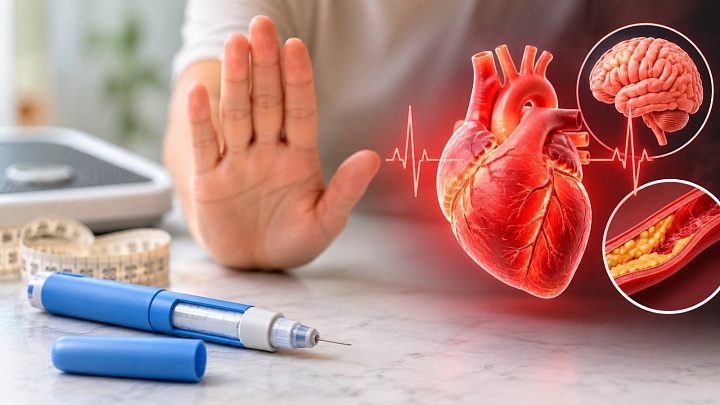
Stopping GLP-1 Weight-Loss Drugs? Study Flags Nearly Double Risk Of Heart Attack, Stroke And Death
GLP-1 drugs have transformed the treatment of type 2 diabetes and obesity, helping people manage blood sugar levels, lose weight and improve several aspects of metabolic health.
By Tanya Dutt··6K reads
Stopping GLP-1 Weight-Loss Drugs? Study Flags Nearly Double Risk Of Heart Attack, Stroke And Death
GLP-1 drugs have transformed the treatment of type 2 diabetes and obesity, helping people manage blood sugar levels, lose weight and improve several aspects of metabolic health.
The research, published in The Lancet Regional Health – Europe and widely reported in early November 2026, analysed real-world data from more than 80,000 patients and raises important questions about the consequences of stopping these widely prescribed medicines.
According to the research, people with type 2 diabetes who discontinued GLP-1 treatment had nearly twice the risk of a heart attack, stroke or death from any cause compared with those who continued using it.
Published in The BMJ on November 10, 2026, the study highlights the potential risks associated with interrupting treatment. The findings are particularly relevant as many patients stop taking GLP-1 medicines because of side effects, cost, inconvenience or concerns about long-term use. However, researchers have cautioned that the results show an association, not proof that stopping the drugs directly causes these adverse outcomes.
GLP-1 receptor agonists, which include drugs such as liraglutide, dulaglutide and semaglutide, mimic a natural hormone that helps regulate blood sugar and appetite. They have become central to type 2 diabetes care and are also used for weight management. Clinical trials have shown they can lower the risk of major cardiovascular events. Yet in everyday practice, a substantial proportion of patients stop taking them, often within the first year, because of side effects, cost, perceived lack of benefit or other practical reasons.
Why Does Coming Off GLP-1 Medication Affect Health?
GLP-1, short for glucagon-like peptide-1, is a hormone naturally produced in the body. It helps regulate blood sugar by stimulating insulin release when glucose levels are high, slowing stomach emptying and influencing appetite.
GLP-1 receptor agonists mimic the action of this hormone. These medicines are prescribed to help manage type 2 diabetes and, depending on the drug and its approval, obesity. They include semaglutide and liraglutide, among others.
Apart from supporting blood sugar control and weight management, certain GLP-1 medicines have demonstrated cardiovascular benefits in people with type 2 diabetes. This makes treatment continuity an important consideration, particularly for patients who have other risk factors for heart disease.
Stopping treatment may also be followed by weight regain and changes in blood sugar and blood pressure. These factors can affect cardiometabolic health, although the new study suggests that they may not fully account for the higher risk observed among people who discontinued medication.
One of the most important limitations of the research is that it was observational. This means it identified an association between stopping GLP-1 medicines and a higher rate of adverse outcomes, but could not establish that discontinuation directly caused them.
The researchers also did not have information on why individual patients stopped treatment. It is possible that some discontinued medication because their health was already deteriorating, which could itself have increased their risk of cardiovascular events.
Moreover, most participants had used earlier-generation GLP-1 medicines. Semaglutide accounted for only a small proportion of treatment, while tirzepatide was not included because it entered the Italian market after the study period. The findings may therefore not apply equally to every newer weight-loss or diabetes medication, or to people taking these drugs solely for obesity without type 2 diabetes.
Does The Risk Increase More In People With Obesity?
The researchers found that the association between stopping GLP-1 treatment and cardiovascular events appeared stronger among participants with obesity.
People with a BMI of 30 or above had a 127% higher cardiovascular risk after discontinuing treatment, while those without obesity had a 61% higher risk, compared with their respective continuation groups.
However, these findings should not be interpreted as proof that every person with obesity will face a greater risk after stopping medication. They reflect patterns observed in the study population and need further investigation.
Should You Stop Taking GLP-1 Medication After Reaching Your Weight-Loss Goal?
Reaching a target weight or seeing improved blood sugar readings does not automatically mean that GLP-1 treatment is no longer necessary. For some people with type 2 diabetes, these medicines may be part of a longer-term strategy to manage metabolic and cardiovascular health.
However, the new findings do not establish that everyone must remain on GLP-1 medication indefinitely. The decision to continue, reduce the dose, switch medicines or discontinue treatment needs to be based on an individual’s health, treatment response, side effects and risk factors.
If you are taking a GLP-1 medicine and considering stopping it, speak to your treating doctor first. Do not discontinue or change the dose on your own. Your healthcare team can assess your blood sugar levels, weight, cardiovascular risk and other treatment options before deciding on the next step.