Sonia Gandhi Opens Up About Breast Cancer Battle: A Guide To Breast Cancer Screening And Early Detection
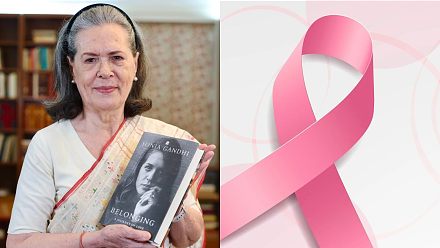
In a deeply personal revelation, Sonia Gandhi has opened up about her battle with breast cancer and the treatment she underwent in Milan, Italy. The disclosure features in her newly released memoir, ‘Belonging: A Journey
By Lifestyle Desk··20K reads
Sonia Gandhi Opens Up About Breast Cancer Battle: A Guide To Breast Cancer Screening And Early Detection
In a deeply personal revelation, Sonia Gandhi has opened up about her battle with breast cancer and the treatment she underwent in Milan, Italy. The disclosure features in her newly released memoir, ‘Belonging: A Journey of Love’, which hits bookstores on November 10, 2026. The 79-year-old Congress Parliamentary Party chairperson’s account adds another deeply personal chapter to a life marked by extraordinary public responsibility and private heartbreak.
The 544-page memoir revisits several defining moments in Sonia Gandhi’s life, from her childhood in Italy and marriage to former Prime Minister Rajiv Gandhi to the tragic loss of her first-born child and the assassinations of her mother-in-law, former Prime Minister Indira Gandhi, and husband.
(Image: Instagram/@soniagandhi)
Among these revelations, her account of battling breast cancer stands out as a particularly significant disclosure. While details of her diagnosis, the stage of the disease and the specific treatment she received have not been established in published reports, her experience brings attention to a health issue that continues to affect millions of women.
Breast cancer remains one of the most commonly diagnosed cancers among women worldwide. From recognising early warning signs to understanding mammograms and screening options, here’s what women should know about breast health and early detection.
(Image: Instagram/@soniagandhi)
Breast Cancer: Why Early Detection Matters
Breast cancer develops when abnormal cells in breast tissue grow uncontrollably, potentially forming a tumour. If left undetected and untreated, these cells can spread to nearby lymph nodes and other parts of the body.
According to the World Health Organization (WHO), approximately 2.3 million women were diagnosed with breast cancer worldwide in 2022, with around 670,000 deaths recorded that year.
The encouraging part is that early detection and timely treatment can significantly improve outcomes. Breast cancers identified when they are small and have not spread to nearby lymph nodes are generally easier to treat. However, the disease does not always announce itself through an obvious lump. Sometimes, the first indication can be a subtle change in the skin, nipple or overall appearance of the breast.
7 Breast Cancer Warning Signs Women Should Never Ignore
Not every breast change indicates cancer, but certain symptoms should never be brushed aside. Here are seven warning signs to watch out for:
A lump or thickening: A new lump or an area that feels different from the surrounding breast tissue is one of the most recognised warning signs. Breast cancer lumps can be painless, so don’t wait for discomfort before getting one checked.
Changes in breast size or shape: An unexplained change in the size, contour or appearance of one breast deserves medical attention.
Skin dimpling or puckering: Skin that begins to look dimpled, puckered or unusually textured could indicate an underlying abnormality.
Nipple changes: A newly inverted nipple or changes in its appearance and surrounding skin should be evaluated.
Unusual nipple discharge: Spontaneous discharge, particularly if bloody or occurring without squeezing the nipple, warrants a medical examination.
Redness or swelling: Persistent redness, swelling, pitting or rash-like changes can sometimes be associated with breast cancer, including inflammatory breast cancer.
Swelling around the armpit: A lump or swelling in the underarm or around the collarbone may indicate that nearby lymph nodes are affected.
If you notice any of these changes, consult a doctor. Most breast lumps are not cancerous, but only a medical evaluation can establish the cause.
Breast Cancer Screening: What Tests Should Women Know About?
Screening helps identify possible signs of breast cancer before symptoms appear. The appropriate method depends on age, medical history and individual risk factors.
1. Mammography
A mammogram is an X-ray of the breast that can detect abnormal growths and changes that may not be noticeable during a physical examination. It is one of the most widely used tools for breast cancer screening. Women should discuss when to begin and how frequently to undergo mammography with their doctors.
2. Clinical Breast Examination
A clinical breast examination involves a trained healthcare professional checking the breasts and surrounding areas, including the armpits, for lumps or unusual changes. India’s National Health Mission includes clinical breast examinations for women aged 30 and above as part of its population-based screening programme.
3. Breast Ultrasound
Using sound waves to create images of breast tissue, an ultrasound helps doctors investigate lumps or abnormalities identified during a physical examination or mammogram. It can also help distinguish between fluid-filled cysts and solid masses.
4. Breast MRI
Magnetic Resonance Imaging (MRI) produces detailed images of breast tissue and may be recommended alongside mammography for women at high risk, including those with certain inherited genetic mutations. It is not routinely required for every woman.
How Can Women Stay Breast-Aware?
Being familiar with your body can help you spot changes early. Breast self-awareness is not about diagnosing cancer at home but recognising what is normal for you.
Pay attention to changes in breast size, shape, skin texture and nipple appearance. If you notice a new lump, unusual discharge, persistent redness or swelling, seek medical advice rather than waiting for the symptoms to disappear.
Regular medical check-ups are equally important. Women with a family history of breast cancer or known genetic mutations should speak to their doctors about a screening schedule suited to their individual risk. Breast self-examination should not be considered a replacement for professional screening.
Can Lifestyle Changes Help Reduce Breast Cancer Risk?
While no lifestyle change can guarantee protection against breast cancer, certain everyday habits may help lower the risk:
Stay physically active: Regular exercise supports overall health and may help reduce breast cancer risk.
Maintain a healthy weight: Managing body weight, particularly after menopause, is important.
Limit alcohol: Alcohol consumption is an established risk factor for breast cancer.
Avoid smoking: Quitting tobacco supports overall health and reduces the risk of several cancers.
Eat a balanced diet: Include fruits, vegetables, whole grains and pulses in your everyday meals.
Discuss hormone therapy: Women considering menopausal hormone therapy should understand its potential risks and benefits with their doctors.
These habits are not a substitute for screening or medical advice. Breast cancer can affect women even when they have no known risk factors or an otherwise healthy lifestyle.
When it comes to breast cancer, awareness and early detection can make a meaningful difference.