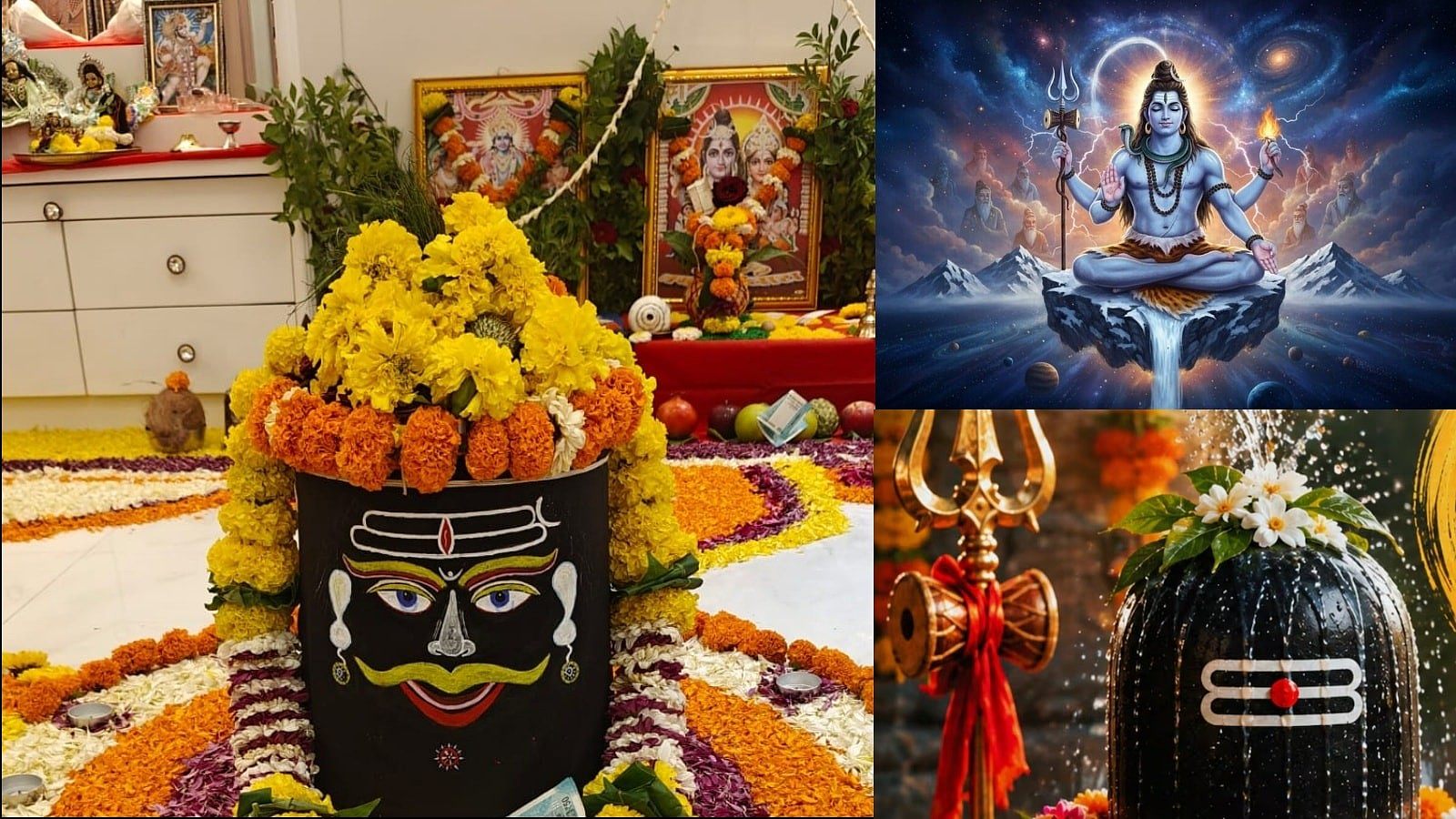
Sawan ka Aakhri Somwar 2026 is being observed today, on Monday, August 24. It is the fourth and final Sawan Somwar of the year for devotees. The final Monday of Shravan holds special significance for devotees who observe
Sawan ka Aakhri Somwar 2026 is being observed today, on Monday, August 24. It is the fourth and final Sawan Somwar of the year for devotees. The final Monday of Shravan holds special significance for devotees who observe the vrat. Many devotees visit Lord Shiva temples, perform Jalabhishek or Rudrabhishek, offer Bilva leaves to the Shivling and complete their monthly sankalp with prayers and daan. Sawan will conclude with Shravan Purnima on August 28.
Sawan ka Aakhri Somwar 2026 Date
Devotees offer prayers, perform Jalabhishek and Rudrabhishek, and seek Lord Shiva’s blessings on Sawan ka Aakhri Somwar. The fourth and final Sawan Somwar falls on August 24, 2026.
First Sawan Somwar: August 3
Second Sawan Somwar: August 10
Third Sawan Somwar: August 17
Fourth and final Sawan Somwar: August 24
For devotees following the North Indian Purnimanta calendar, August 24 is the final Shravan Monday.
Read More: Sawan Fourth Somwar 2026: 5 Shubh Yogas Make Rudrabhishek Special
However, the Shravan calendar differs across India. In states following the Amanta calendar, including Maharashtra and some other regions, the dates of Shravan are different.
Why is the Last Sawan Somwar important?
Sawan ka Aakhri Somwar is observed with special prayers, Shiva Abhishek, fasting and offerings of Bilva Patra. Devotees following the four-Monday vrat may also perform Udyapan on the final Somwar.
Monday is traditionally dedicated to Lord Shiva, while Shravan is considered an especially sacred month for Shiva worship. Devotees observe the Somwar vrat with the belief that sincere prayer and worship of Shiva bring peace, wellbeing and fulfilment of one’s sankalp.
The final Somwar is also significant for devotees who have observed all four Mondays and wish to formally conclude their vrat.
Last Sawan Somwar 2026 Puja Vidhi
The final Sawan Somwar is dedicated to Lord Shiva, with devotees visiting temples, offering water and Bilva leaves to the Shivling, chanting Shiva mantras and completing their monthly vrat with prayers and daan.
Devotees can perform a simple Shiva puja at home or visit a temple.
Step 1: Take a bath and wear clean clothes: Begin the day with a bath and prepare the puja area.
Step 2: Take the sankalp: Take water and Akshat in your right hand and state your name, gotra and intention to observe the final Sawan Somwar vrat.
Step 3: Perform Jalabhishek: Offer Gangajal or clean water over the Shivling while chanting Om Namah Shivaya.
Those following their family tradition may also perform Panchamrit Abhishek using milk, curd, ghee, honey and sugar.
Step 4: Offer Bilva Patra: Offer fresh Bilva leaves, flowers and other customary Shiva offerings.
Step 5: Chant Shiva mantras: Devotees can chant Om Namah Shivaya, Maha Mrityunjaya Mantra or recite the Sawan Somwar vrat katha according to their tradition.
Step 6: Perform Aarti: Complete the puja with dhoop, deep and Shiva Aarti. Offer fruit or other Satvik food as prasad.
Aakhri Sawan Somwar 2026 Muhurat
Puja timings depend on the devotee’s city because sunrise, sunset and other panchang calculations vary by location.
Devotees generally prefer:
Brahma Muhurat: Early morning before sunrise
Morning puja: After sunrise, during an auspicious muhurat
Pradosh Kaal: Around sunset, traditionally considered an important period for Shiva worship
Shukla Paksha Dwadashi (lasts until 06:21 AM on August 25)
Nakshatra: Purva Ashadha till 08:28 PM, followed by Uttara Ashadha
Yoga: Priti till 07:03 AM, followed by Ayushman
Sunrise / Sunset: 06:06 AM / 06:51 PM
Key Puja Timings
Rahu Kaal: 07:42 AM to 09:17 AM (Avoid starting puja or taking a new sankalp during this window)
Ideal Puja Window: Early morning during Brahma Muhurta or after 09:17 AM during Shubh Choghadiya.
Breaking the Fast: After the evening Shiva aarti and sunset (around 06:51 PM)
Sawan Somwar Vrat: What Can You Eat?
The fasting rules vary by family and region. Commonly consumed vrat foods include:
Fruits
Milk and curd
Sabudana
Singhara or Kuttu preparations
Samak rice
Dry fruits
Sendha namak
Ghee
Devotees generally avoid regular grains, pulses, onion and garlic during the fast.
Fasting practices are personal and should be adjusted for children, elderly people and anyone who is unwell or taking regular medication. Devotion does not require putting one’s health at risk.
Sawan Somwar Udyapan: How to Complete the Vrat
Udyapan is the formal conclusion of a vrat undertaken with a specific sankalp.
If a devotee had taken a sankalp to observe all four Sawan Somwars, the final Monday can be used to conclude that observance according to the family’s tradition.
A typical Udyapan may include:
Ganesh puja
Shiva-Parvati puja
Jalabhishek or Rudrabhishek
Offering Bilva leaves
Shiva mantra chanting
Aarti
Daan and dakshina
Feeding family members, guests or people in need
Distribution of prasad
Some families also perform a small havan as part of Udyapan.
There is no single Udyapan procedure followed by every Hindu household. Customs vary by region, sampradaya and family tradition.
When does Sawan end in 2026?
For devotees following the North Indian Purnimanta calendar, Sawan concludes on August 28, 2026, on Shravan Purnima.
This means that the final Sawan Somwar on August 24 is not the final day of the entire month. There are still a few days of Shravan after the last Monday.
What comes after the Last Sawan Somwar?
After the final Sawan Somwar, devotees can continue Shiva worship through the remaining days of Shravan.
August 28 marks Shravan Purnima, which is also observed as Raksha Bandhan in many parts of India.
Devotees who have completed their Sawan Somwar vrat may continue Monday Shiva worship beyond Shravan according to their personal practice.
Can the Last Sawan Somwar Puja be performed at home?
Yes. A temple visit is not compulsory for observing the vrat.
A simple home puja with a Shivling, water or Gangajal, Bilva leaves, flowers, a diya and Shiva mantra chanting is sufficient for devotees who wish to worship at home.
The most important part of the observance is faith and sincerity.
Can women observe Sawan Somwar?
Yes. Women and men both observe Sawan Somwar vrat.
Unmarried women may observe the vrat as part of their prayers for a suitable life partner, while married women may observe it for family wellbeing. Men also observe the vrat for health, prosperity, peace and spiritual devotion.
There is no requirement that Sawan Somwar be limited to one gender.
The final Shravan Monday is an opportunity for devotees to conclude the month’s observance with prayer and gratitude. Whether the vrat was observed for all four Mondays or only on the final Somwar, devotees can perform Shiva puja at a temple or at home according to their family tradition.
With the chanting of Om Namah Shivaya, Jalabhishek and prayers at the feet of Mahadev, devotees bring the sacred Sawan Somwar observance to a close.