Ready-To-Assemble Furniture: What The Installer Visit Really Involves
There is a particular kind of satisfaction in ordering a beautiful new piece of furniture online. You have measured the corner, saved the reference image, imagined how it will look against the wall and finally clicked bu
By Consumer Trends Desk··9K reads
Ready-To-Assemble Furniture: What The Installer Visit Really Involves
There is a particular kind of satisfaction in ordering a beautiful new piece of furniture online. You have measured the corner, saved the reference image, imagined how it will look against the wall and finally clicked buy. Then the delivery arrives, and the box is large enough to make you wonder whether you accidentally ordered an entire wardrobe instead of a study desk.
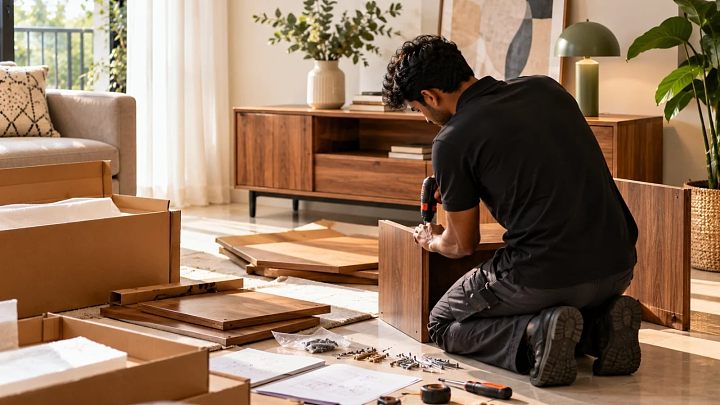
Welcome to the less glamorous side of ready-to-assemble (RTA) furniture. Flat-packed furniture is designed to be transported in separate panels, fittings and hardware, with the final piece put together at home. It can make shipping and handling more convenient, but the installer visit is where the real transformation happens: a collection of boards, screws, hinges and instruction sheets becomes the finished furniture you pictured on your screen.
And no, installation isn’t always as simple as someone turning up with a screwdriver and leaving 20 minutes later.
The process usually begins before the installer arrives. Check your order confirmation to see whether assembly is included, whether it needs to be booked separately and whether the service covers your postcode.
Next comes the practical preparation. Clear the space where the furniture will stand, move fragile objects out of the way and ensure the installer can get the package through the doorway, lift or staircase. If you’re installing a large wardrobe, desk with overhead shelving or entertainment unit, it’s worth checking the dimensions of the assembled product as well as those of the flat-packed box.
When the installer arrives, expect them to check the package and hardware, identify the panels and follow the product’s assembly instructions. Depending on the design, the work may involve attaching drawer runners, fitting hinges, securing shelves, tightening connectors and aligning doors so that they close properly. Some furniture also requires wall anchoring, which should be confirmed in advance rather than assumed to be part of the standard service.
The time involved depends on the number of components, the complexity of the design, the condition of the parts and whether the furniture needs to be secured to a wall. A straightforward bedside table is a different proposition from a tall storage cabinet with multiple drawers and doors.
Before signing off, inspect the finished piece. Open and close every drawer, check that doors align, look for scratches or chipped edges and make sure the furniture stands level. If the product is designed to be wall-mounted or anchored, confirm that this has been done correctly. Keep the packaging and assembly instructions until you’re satisfied that everything is in order.
The other detail worth remembering is that the furniture price and the installation experience are two separate parts of the purchase. A premium piece can still involve additional assembly charges, scheduling restrictions or exclusions. Read the listing carefully and confirm what the installer is expected to do before the delivery date.
Five Premium Furniture Pieces Worth the Installer Visit
1. WOODIQ Culture Home Study Table
A substantial workstation with multiple shelves and drawer storage is ideal for anyone building a more permanent work-from-home setup. Its larger footprint makes measuring the room and checking access routes especially important before delivery.
2. Luxari Premium Study Table with Bookshelf
A wider workstation with integrated shelving can make a home office feel more considered while providing room for books, stationery and everyday tech. With a larger configuration, pay attention to shelf alignment, stability and the space needed to assemble it.
3. Spacewood Winner Study Table with Bookshelf
Spacewood’s study table option combines a work surface with integrated shelving and storage. It’s a useful choice for someone who wants a more structured workspace without buying a desk and bookcase separately. Check the product’s stated warranty and assembly terms before ordering.
4. DeckUp Uniti Two-Door TV Entertainment Unit
A TV unit needs more than neatly aligned panels: it should sit level, have secure connections and provide practical access for cables and devices. This engineered-wood option has a matte finish and enclosed storage, making it worth considering for a contemporary living room.
5. Woodstage Wooden Shoe Rack
An enclosed or structured wooden shoe rack can make an entryway look considerably more organised. Before assembly, decide exactly where it will go, check the door clearance and confirm whether any wall fixing is recommended for the chosen model.
The Final Check Before The Installer Leaves
A successful installation is about more than getting the furniture to stand upright. The doors should close cleanly, drawers should glide smoothly, shelves should be secure and the finished piece should sit level. For tall or heavy furniture, follow the manufacturer’s anchoring instructions to reduce the risk of tipping.
Keep the order details and installation confirmation handy in case you need to report a missing component or workmanship issue. If you notice a problem, photograph it and contact the seller or service provider promptly.
Ultimately, ready-to-assemble furniture can be a convenient way to upgrade a room without coordinating a separate carpenter for every purchase. The trick is to budget for the complete experience, product, delivery, assembly and any additional installation work, rather than looking at the price tag alone.