Protein Is Having A Moment: Why Everything From Snacks To Sweets Is Suddenly “High-Protein”
Protein has officially escaped the gym. Once largely associated with bodybuilders, athletes and tubs of whey protein, the nutrient has become one of the biggest selling points in the modern supermarket. From snacks and c
By Swati Chaturvedi··30K reads
Protein Is Having A Moment: Why Everything From Snacks To Sweets Is Suddenly “High-Protein”
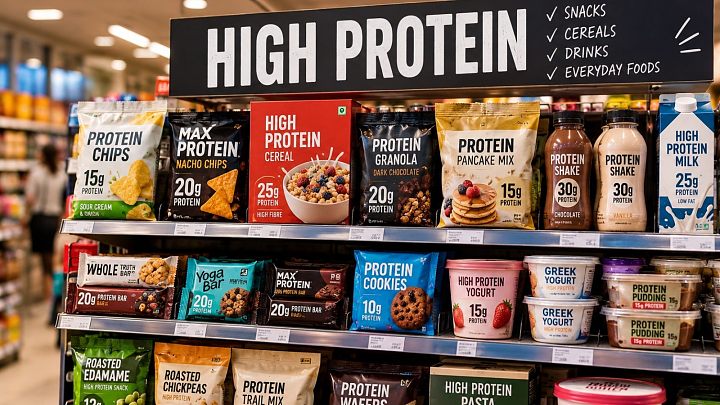
Protein has officially escaped the gym. Once largely associated with bodybuilders, athletes and tubs of whey protein, the nutrient has become one of the biggest selling points in the modern supermarket. From snacks and cereals to drinks and sweet treats, more and more everyday foods are now being marketed with an added dose of protein.
The phenomenon has become so widespread that The New York Times recently examined how supermarkets have become increasingly “protein-maxxed”, a reflection of just how deeply the protein craze has entered mainstream food culture.
And this isn’t just an American phenomenon. India is experiencing its own protein boom, with protein-rich foods increasingly appearing across retail shelves and brands introducing smaller, more affordable packs to encourage everyday consumption.
Protein Is No Longer Just a Gym Thing
For years, protein had a fairly predictable image: eggs at breakfast, chicken at lunch, paneer at dinner and a protein shake after a workout. That has changed dramatically.
Today, protein has become part of the language of wellness. A snack can be positioned as a protein snack. A drink can become a protein drink. Even traditionally indulgent categories are finding ways to add protein to their labels.
The shift reflects a broader change in how consumers think about food. Fitness has moved beyond bodybuilding, with strength training, Pilates, walking and general wellness becoming mainstream lifestyle habits. Protein has come along for the ride.
Why Is Everyone Suddenly Counting Protein?
There is a practical reason for the obsession. Protein is an essential nutrient involved in maintaining muscles and other tissues, and foods containing it can contribute to feelings of fullness. As consumers become more interested in fitness, body composition and wellness, protein has emerged as an easy nutritional metric to understand.
The problem is that the conversation can quickly become oversimplified. More protein isn’t automatically better, and individual requirements vary depending on factors such as age, body size, activity level and overall health.
Yet “high protein” has become a remarkably effective phrase on food packaging.
The High-Protein Health Halo
This is perhaps the most interesting part of the current trend. A product can contain more protein than its conventional counterpart and still be highly processed or contain substantial amounts of sugar, saturated fat or sodium.
Recent reporting on food labels in India has highlighted precisely this problem: terms such as “high protein”, “natural”, “multigrain” and “no added sugar” can create a health halo that doesn’t necessarily tell consumers the whole nutritional story.
In other words, high-protein doesn’t automatically mean healthy.
A protein cookie is still a cookie. A protein snack is not necessarily nutritionally equivalent to a meal built around whole foods.
From Protein Powder to Protein Everything
The rise of protein-enhanced foods is also a story about convenience. Not everyone wants to cook chicken, boil eggs or prepare dal every time they need a protein-rich meal. A packaged snack or ready-to-drink beverage promises something much simpler: protein without the preparation.
That’s particularly attractive to younger consumers juggling work, exercise and increasingly busy schedules. India’s food and beverage industry is responding accordingly. Companies and restaurant chains have been introducing protein-focused drinks and foods, even as the industry deals with rising whey prices and supply pressures.
The result is a supermarket where protein is no longer confined to one aisle.
Is This the New “Low-Fat”?
Food trends have a familiar pattern. Low-fat once dominated packaging. Then came low-carb, gluten-free, keto, natural, organic and no-added-sugar claims. Now protein has become one of the most powerful nutritional buzzwords.
The difference is that protein has a genuine nutritional role, which makes the marketing around it particularly persuasive.
Consumers aren’t necessarily being sold a completely meaningless claim. They are being sold one positive attribute that can overshadow everything else about the product. That’s why reading the entire nutrition label still matters.
So, Have We Reached Peak Protein?
Perhaps the most telling sign of the protein craze is that we have moved beyond asking “What foods contain protein?”
Now we’re asking: “What foods don’t?”
The supermarket protein boom isn’t necessarily a bad thing. Greater awareness of protein could encourage people to pay more attention to their diets and choose more protein-rich whole foods.
But the next phase of the conversation may need to be more nuanced. Instead of simply chasing the biggest protein number on the packet, consumers may increasingly ask a better question:
What else is in it? Because protein may be having its biggest moment yet but that doesn’t mean it needs to be added to absolutely everything.