Not Just Racing Boats: Kerala’s Snake Boats Are Blessed, Named And Given Ritual Farewells
When nearly 100 oars strike the water at once, Kerala’s famous snake boats appear to fly across the backwaters. But for the villages that build, own and race these imposing wooden vessels, they are much more than sportin
By Lifestyle Desk··24K reads
Not Just Racing Boats: Kerala’s Snake Boats Are Blessed, Named And Given Ritual Farewells
When nearly 100 oars strike the water at once, Kerala’s famous snake boats appear to fly across the backwaters. But for the villages that build, own and race these imposing wooden vessels, they are much more than sporting equipment. They carry a community’s identity, faith and collective memory.
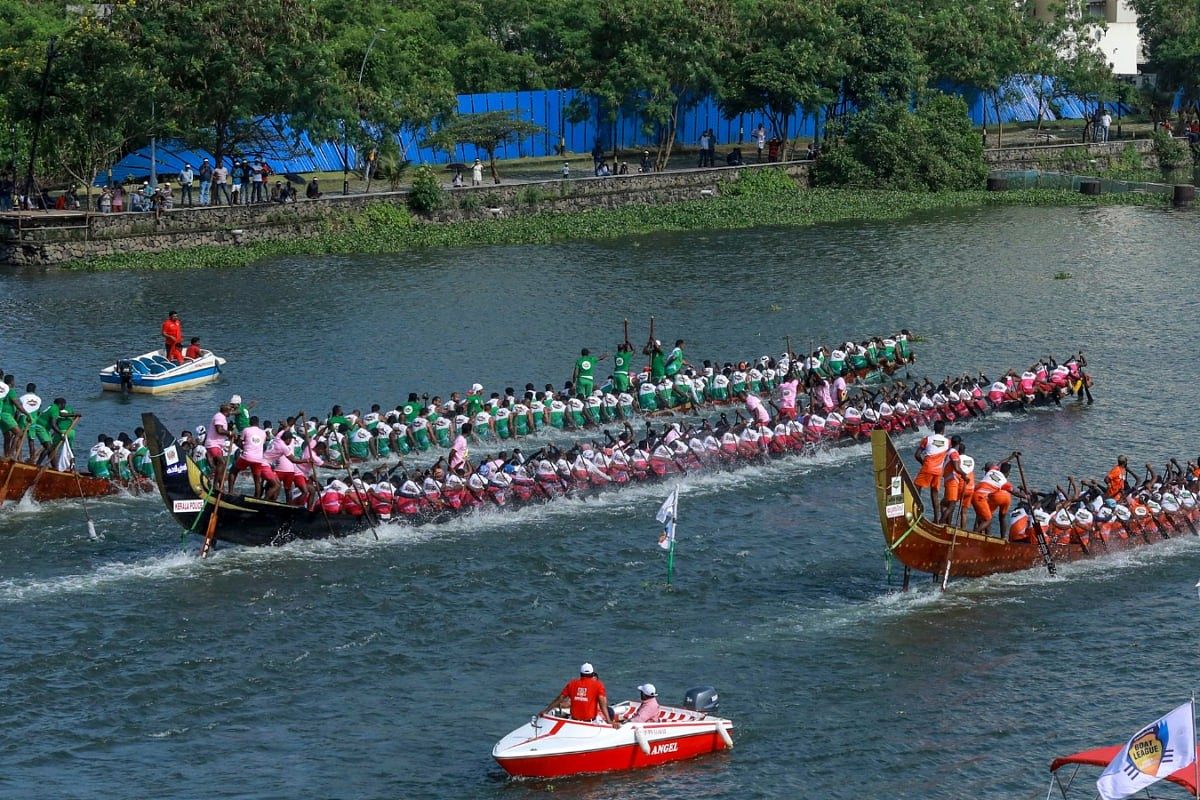
This relationship will take centre stage on August 22, when the 72nd Nehru Trophy Boat Race is held on Punnamada Lake in Alappuzha. Around 20 snake boats are expected to compete in the prestigious event, each powered by approximately 100 rowers. The 1.4-km contest will draw thousands of spectators to the lakeside and surrounding houseboats.
Why Are They Called Snake Boats?
Known locally as chundan vallams, the long and slender boats are distinguished by their dramatically raised sterns, which give them a cobra-like appearance.
A snake boat can stretch over 100 feet and accommodate as many as 100 oarsmen. Colourful flags and silk parasols add to its striking appearance during ceremonial processions and races.
These boats are believed to have originated as battle canoes used by Kerala’s local rulers centuries ago. Over time, they moved from warfare to the sporting arena, becoming enduring symbols of the state’s maritime heritage.
A Boat Can Give A Village Its Identity
Most chundan vallams are not owned by individual athletes or commercial teams. They belong to village communities, often comprising farmers and fishermen. Villagers pool money to build and maintain them, while local clubs hire and train rowers for the racing season.
The boats are commonly associated with the villages to which they belong and carry names such as Karichal, Veeyapuram, Nadubhagam and Melpadam. Some also acquire affectionate nicknames. Veeyapuram, for instance, is popularly called “Vicious Veeru”.
View this post on Instagram
A post shared by Ministry of Tourism (@tourismgoi)
Hundreds of residents reportedly raised around Rs 90 lakh to launch Veeyapuram in 2019. Keeping it competitive now costs nearly Rs 70 lakh per season, according to Reuters.
Despite the steep expense and modest financial returns, its owners continue because the boat has brought recognition and pride to their village.
A victory is therefore not celebrated by the rowers alone. It becomes an achievement for the entire community represented by the vessel.
Why Are Snake Boats Blessed?
Faith is woven into the preparation for a race. Before the chundan vallams enter the water, communities seek blessings for the boat, its rowers and their safe return.
These customs can also transcend religious divisions. On Veeyapuram, a green Islamic prayer cloth, a Hindu flower garland and a Christian cross have been placed together. The boat was blessed by religious leaders belonging to all three faiths.
Christian priest and Veeyapuram committee member Robin Varghese told Reuters that caste and religious barriers lose their significance when the community comes together for its boat. Everyone prays for the same goal—its success.
The practice turns the vessel into a powerful symbol of Kerala’s plural culture. On land, villagers may worship differently; on the water, they row for one boat and one community.
Boat Songs Turn Many Rowers Into One
The cultural identity of the boats is also carried through vanchippattu, Kerala’s traditional boat songs. These rhythmic chants help scores of rowers coordinate their strokes and maintain speed.
At competitive pace, rowers can strike the water more than 90 times a minute. Chants, whistles and the beat of wooden poles against the deck intensify the rhythm.
The songs are not purely sporting calls. Depending on the community and occasion, they may contain references drawn from Hindu, Muslim or Christian devotional traditions. Music thus becomes both a practical tool and an expression of Kerala’s shared cultural heritage.
Retired Boats Given A Ritual Farewell
A well-maintained snake boat can compete for decades. Karichal, one of the most celebrated names in the sport, was launched in 1970 and went on to win the Nehru Trophy in 2024—more than half a century later.
However, when a chundan vallam can no longer race, it is not always abandoned or broken up like ordinary timber. A retired snake boat may be cremated in a ceremony resembling a person’s final rites. A ritual is then performed to symbolically transfer its soul to a new vessel.
This extraordinary farewell reveals how communities perceive these boats: not as lifeless objects, but as cherished members of the village. They are spoken about with affection, entrusted with collective hopes and remembered for the victories they brought home.
More Than A Race On The Water
The Nehru Trophy may be decided by speed, stamina and precision, but the significance of Kerala’s snake boats extends far beyond the finish line.
Each vessel is a floating archive of craftsmanship, faith, music and community history. Its name carries the identity of a village, its blessings unite different religions and its ceremonial farewell acknowledges a lifetime spent carrying generations across the water.
That is why, when a snake boat races through Punnamada Lake, an entire village seems to move with it.