Non-Stick vs Stainless Steel Cookware: Which Lasts Longer In Indian Kitchens?
Cookware is used every day in most Indian kitchens, from making rotis and dosas to preparing curries, sabzis and gravies. While non-stick cookware has become popular for its easy cooking and cleaning, stainless steel rem
By Consumer Trends Desk··13K reads
Non-Stick vs Stainless Steel Cookware: Which Lasts Longer In Indian Kitchens?
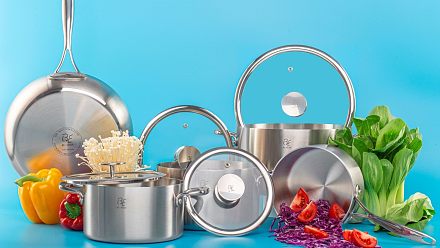
Cookware is used every day in most Indian kitchens, from making rotis and dosas to preparing curries, sabzis and gravies. While non-stick cookware has become popular for its easy cooking and cleaning, stainless steel remains a traditional choice because of its durability and ability to handle regular kitchen use.
The two materials offer very different cooking experiences. Non-stick cookware has a coated surface that helps food release easily and generally requires less oil. Stainless steel cookware has an uncoated metal cooking surface that can withstand high temperatures and regular use, provided it is maintained properly.
For buyers deciding between the two, durability is one of the biggest considerations. A non-stick pan can be extremely convenient when new, but its coating can gradually wear out with improper use. Stainless steel cookware may require a little more technique while cooking, but it can remain useful for many years.
The right choice therefore depends on whether convenience and easy food release or long-term durability and versatility are more important.
Verdict: Which one should you choose?
Choose non-stick cookware if:
You want easy food release.
You prefer cooking with less oil.
You regularly prepare dosas, eggs or delicate foods.
You want cookware that is relatively easy to clean.
You prefer convenient everyday cooking.
Choose stainless steel cookware if:
You want cookware that can last for many years.
You regularly cook at higher temperatures.
You prepare curries, gravies and Indian dishes frequently.
You want cookware without a non-stick coating.
You prefer versatility and long-term value.
Stainless steel cookware is generally the better choice for long-term durability because there is no non-stick coating to wear away. Non-stick cookware, however, is more convenient for everyday cooking, especially when preparing foods that tend to stick.
Top picks
Category
Product
Was
Now
Discount
Best Non-Stick Frying Pan for Everyday Cooking
Prestige Non-Stick Omega Deluxe Granite
–
Rs 780
0%
Best Non-Stick Kadai for Indian Cooking
Hawkins Ceramic Nonstick
Rs 2390
Rs 2238
6%
Best Budget Non-Stick Cookware
MILTON Pro cook Granito
Rs 475
Rs 402
15%
Best Stainless Steel Frying Pan for Long-Term Use
Vinod Platinum Triply Stainless Steel
Rs 3140
Rs 2649
16%
Best Stainless Steel Kadai for Indian Kitchens
Lifelong Stainless Steel Kadhai
Rs 2899
Rs 2093
28%
Best Budget Stainless Steel Cookware
The Indus Valley Stainless Steel Fry Pan
Rs 1249
Rs 750
40%
Quick Comparison
Feature
Non-Stick Cookware
Stainless Steel Cookware
Cooking surface
Non-stick coating
Stainless steel
Food release
Excellent
Good with proper technique
Durability
Moderate
Excellent
High-heat cooking
Limited depending on coating
Excellent
Oil requirement
Low
Moderate
Cleaning
Very easy
Easy with proper cleaning
Scratch resistance
Lower
High
Maintenance
Requires careful handling
Relatively simple
Metal utensil compatibility
Usually limited
Generally compatible
Versatility
Good
Excellent
Best for
Delicate and low-oil cooking
Everyday and high-heat cooking
Lifespan
Depends on coating and usage
Generally longer
Long-term value
Good
Excellent
Indian cooking suitability
Excellent for specific dishes
Excellent for most cooking
Overall durability
Good
Better
How does non-stick cookware work?
Non-stick cookware uses a coated cooking surface designed to prevent food from sticking to the pan. This makes it particularly useful for foods that can be difficult to cook on conventional metal surfaces, including eggs, pancakes, dosas and certain shallow-fried dishes.
The smooth surface also makes cleaning easier because food residue is less likely to become firmly attached to the pan. This can be a major advantage in busy Indian kitchens where cookware may be used several times a day.
However, the coating needs to be treated carefully. Scratches, excessive heat and unsuitable utensils can reduce the useful life of the cooking surface. Users should therefore follow the manufacturer’s instructions regarding temperature, utensils and cleaning.
Non-stick cookware is best viewed as a convenience-focused option rather than cookware designed for maximum longevity.
Where non-stick cookware performs best
Low-oil cooking
Dosas and pancakes
Eggs and omelettes
Shallow frying
Quick everyday meals
Easy cleaning
Where non-stick cookware struggles
Heavy high-heat cooking
Use with unsuitable metal utensils
Rough cleaning
Long-term durability after coating wear
Certain intensive cooking techniques
A good non-stick pan can make everyday cooking considerably easier, but careful handling is important if users want the coating to remain effective for longer.
How does stainless steel cookware work?
Stainless steel cookware uses a metal cooking surface rather than a non-stick coating. Stainless steel is known for its strength and resistance to corrosion, making it a popular material for cookware that is expected to withstand frequent use.
Unlike non-stick cookware, stainless steel can generally handle higher cooking temperatures and is suitable for a wide range of Indian cooking techniques. It can be used for sautéing, frying, boiling, simmering and preparing curries and gravies.
The main learning curve is food release. Ingredients can stick if the pan is not heated correctly or if the food is moved too early. Once users become familiar with heat management and cooking techniques, stainless steel can be highly versatile.
Because there is no coating to wear away, the cooking surface can remain usable for a long time when the cookware is properly maintained.
Where stainless steel cookware performs best
Everyday Indian cooking
Curries and gravies
High-heat cooking
Sautéing and frying
Boiling and simmering
Long-term use
Where stainless steel cookware struggles
Food can stick without proper technique
Requires better heat management
Burnt food can require additional cleaning
Can be less convenient for delicate foods
May require more oil than non-stick cookware
Stainless steel therefore offers a stronger combination of durability and versatility, although it may take some practice to get the best cooking results.
Which lasts longer?
For long-term durability, stainless steel cookware has the clear advantage. Its cooking surface does not depend on a coating, so normal scratches and years of regular use do not affect it in the same way that they can affect non-stick cookware.
Non-stick cookware can still last for years when used carefully, but its lifespan is closely linked to the condition of the coating. Once the coating becomes significantly damaged or loses its non-stick performance, replacing the cookware may become necessary.
This makes stainless steel a better choice for buyers who want to purchase cookware once and continue using it for a long period.
Durability comparison
Non-Stick Cookware: Convenient but coating life depends on usage and care
Stainless Steel Cookware: More durable and better suited to long-term use
Which is easier to cook with?
Non-stick cookware generally has the advantage for ease of use. Food releases more easily, which can make cooking delicate ingredients less frustrating, particularly for beginners.
Stainless steel requires more attention to temperature and cooking technique. Preheating the pan properly and allowing food to develop a surface before turning it can help reduce sticking.
For everyday convenience, non-stick cookware is easier. For users willing to develop better cooking technique in exchange for greater versatility and durability, stainless steel can be the better long-term option.
Which is easier to clean?
Non-stick cookware is usually easier to clean because food residue does not adhere strongly to the coated surface. In many cases, a soft sponge and mild dishwashing liquid are enough for routine cleaning.
Stainless steel can also be cleaned easily, but burnt or stuck-on food may require soaking or additional scrubbing. This is especially relevant after high-heat cooking.
The important difference is that non-stick cookware generally requires gentler cleaning methods to protect the coating, while stainless steel is more tolerant of regular cleaning.
Which is better for Indian cooking?
Both materials work well in Indian kitchens, but their strengths differ.
Non-stick cookware is particularly useful for dosas, eggs, shallow frying and dishes where easy food release is important. It is also convenient when cooking with less oil.
Stainless steel is more versatile for curries, tadkas, sautéing, boiling and high-heat cooking. It is also better suited to households that want cookware capable of handling a wide range of everyday recipes.
For a typical Indian kitchen, having both types can therefore be practical. However, if durability is the deciding factor, stainless steel is the stronger choice.
Which offers better value?
Non-stick cookware can offer excellent value when convenience is the priority. It is particularly useful for buyers who want easy cooking and cleaning without using much oil.
Stainless steel generally offers better long-term value because of its durability and versatility. A well-maintained stainless steel pan can continue to be useful long after a non-stick coating has deteriorated.
The higher upfront price of some stainless steel cookware can therefore be justified by its longer usable life. Non-stick remains attractive for buyers who prioritise convenience and specific cooking applications.
Which should you buy for your kitchen?
If easy cooking, low-oil preparation and simple cleaning are your priorities, non-stick cookware is a practical choice. It is especially useful for delicate foods and recipes where sticking can be a problem.
If durability, versatility and long-term value matter more, stainless steel cookware is the better investment. It can withstand regular cooking and higher temperatures without relying on a coating.
For most Indian kitchens, stainless steel is the stronger primary cookware choice, while non-stick pans can complement it for specific dishes that benefit from easy food release.
Common cooking scenarios
Situation
Better choice
Making dosas
Non-Stick Cookware
Cooking eggs and omelettes
Non-Stick Cookware
Preparing curries and gravies
Stainless Steel Cookware
High-heat cooking
Stainless Steel Cookware
Low-oil cooking
Non-Stick Cookware
Daily Indian cooking
Stainless Steel Cookware
Easy cleanup
Non-Stick Cookware
Long-term use
Stainless Steel Cookware
Sautéing vegetables
Stainless Steel Cookware
Shallow frying delicate foods
Non-Stick Cookware
Cooking during busy mornings
Non-Stick Cookware
One-pan versatile cooking
Stainless Steel Cookware
Cooking with metal utensils
Stainless Steel Cookware
Budget-conscious long-term purchase
Stainless Steel Cookware
FAQs
Which lasts longer, non-stick or stainless steel cookware?
Stainless steel cookware generally lasts longer because it does not have a coating that can gradually wear away. Its lifespan depends mainly on the quality of construction and how it is maintained.
Is non-stick cookware better for everyday cooking?
It can be, particularly for foods that tend to stick and for low-oil cooking. Non-stick cookware is also convenient because it is generally easier to clean.
Why does food stick to stainless steel cookware?
Food can stick when the pan is not heated properly, when ingredients are added before the cooking surface reaches the appropriate temperature or when food is moved too early. Learning heat management can significantly improve results.
Can stainless steel cookware handle high heat?
Stainless steel is generally well suited to higher-temperature cooking. However, the manufacturer’s instructions should always be followed, particularly for cookware with additional layers, coatings or specialised handles.
Does non-stick cookware require less oil?
Yes. The coated surface is designed to reduce sticking, allowing many foods to be prepared with less oil than would typically be required in conventional cookware.
Is stainless steel cookware harder to clean?
It can require more effort when food becomes stuck or burnt. However, routine cleaning is straightforward, and stainless steel is generally more tolerant of scrubbing than coated cookware.
Is non-stick cookware durable?
Non-stick cookware can be durable when used and maintained correctly, but the coating is the component most likely to determine its useful lifespan. Excessive heat, scratches and unsuitable utensils can reduce its longevity.
Which should I buy overall?
Choose non-stick cookware if convenience, low-oil cooking and easy food release are your priorities. Choose stainless steel cookware if you want maximum durability, versatility and better long-term value.
Disclaimer: The product descriptions mentioned in the article are solely based on the primary and secondary research conducted by our experts. To keep you ahead of the curve with these latest products, News18 utilises affiliate links. This means if you decide to shop through our recommendations, we may earn a small referral commission at no extra cost to you. Please be advised that News18 is not responsible for any claims under the Consumer Protection Act, 2019, or other applicable laws regarding the final performance, quality, or safety of these products.