Navratri Fasting Rules 2026: What To Eat And What To Avoid During Vrat
Navratri Fasting Rules 2026: As Shardiya Navratri 2026 approaches, many devotees will observe vrat, or fasting, for one or more of the nine days dedicated to Goddess Durga. For some, the fast involves eating only specifi
By Nibandh Vinod··24K reads
Navratri Fasting Rules 2026: What To Eat And What To Avoid During Vrat
Navratri Fasting Rules 2026: As Shardiya Navratri 2026 approaches, many devotees will observe vrat, or fasting, for one or more of the nine days dedicated to Goddess Durga. For some, the fast involves eating only specific vrat-friendly foods, while others follow a more restrictive fast with fruits and liquids. This year Navratri will be celebrated from October 11 to October 19.
Navratri fasting is traditionally observed as a period of discipline and devotion. The food rules, however, are not identical everywhere. Ingredients permitted during a vrat can differ according to regional customs, family traditions and the particular type of fast being followed.
If you are planning to observe a Navratri fast, knowing what is generally considered vrat-friendly can help you plan nutritious and filling meals while respecting your family’s traditions.
What Can You Eat During Navratri Fast?
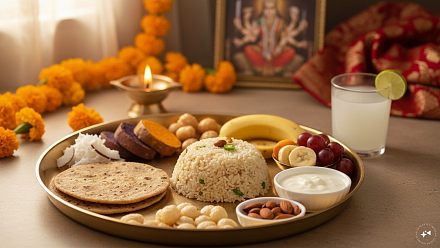
People observing Navratri vrat commonly replace everyday cereals, pulses and table salt with a limited selection of grains, flours, vegetables, fruits, dairy products and spices.
Here are some of the foods commonly consumed during Navratri fasting:
Vrat-friendly grains and flours
Regular wheat and rice are generally avoided during many Navratri fasts. They may be replaced with ingredients traditionally used for vrat preparations.
Common options include:
Kuttu, or buckwheat flour
Singhara, or water chestnut flour
Rajgira, or amaranth
Samak rice, also known as barnyard millet
Sabudana, or tapioca pearls
These ingredients can be used to prepare dishes such as kuttu rotis, singhara puris, samak rice preparations and sabudana khichdi.
Read More: Durga Puja 2026 Calendar: Dates, Schedule, Sandhi Puja Time And Significance
Fruits
Fresh fruits are commonly included in Navratri fasting diets.
Options can include:
Apples
Bananas
Pomegranates
Papaya
Oranges
Guava
Grapes
Melons
Fruits can also provide fluids and carbohydrates during a fast, particularly when devotees are eating fewer cooked meals.
Vegetables
Several vegetables are traditionally used in vrat cooking.
Common choices include:
Potatoes
Sweet potatoes
Pumpkin
Bottle gourd or lauki
Arbi or colocasia
Raw banana
Cucumber
Carrots
Preparation matters as well. Instead of relying heavily on deep-fried foods, devotees can prepare boiled, roasted or lightly cooked versions where permitted by their fasting tradition.
Read More: When Is Dussehra 2026: Date, Time, Significance And Vijayadashami Muhurat
Dairy products
Dairy products are commonly consumed by people following a fruit-and-milk or food-based Navratri vrat.
Depending on individual dietary practice, options may include:
Milk
Curd or dahi
Paneer
Buttermilk
Ghee
Malai
Homemade butter
Those with lactose intolerance, dairy allergies or other dietary restrictions should choose suitable alternatives rather than consuming dairy simply because it is traditionally permitted.
Nuts and dry fruits
Nuts and dry fruits can be useful sources of energy during fasting.
Common choices include:
Almonds
Walnuts
Cashews
Raisins
Dates
Makhana or foxnuts
Because nuts and dried fruits are energy-dense, moderate portions can be sufficient.
Rock salt
Many Navratri fasting traditions use sendha namak, or rock salt, instead of ordinary table salt.
Vrat-friendly spices and seasonings
The spices permitted during vrat can also differ according to tradition.
Commonly used seasonings include:
Cumin or jeera
Black pepper
Green cardamom
Cloves
Green chilli
Ginger
Sendha namak
What Should You Avoid During Navratri Fast?
Many Navratri fasting traditions exclude everyday cereals, pulses and certain ingredients. The following foods are commonly avoided during a vrat:
Regular grains and flour
Common staples such as wheat and ordinary rice are generally excluded from many Navratri fasting diets.
These may include:
Wheat flour or atta
Maida
Regular white rice
Semolina or suji
Corn flour
Regular grain-based breads and cereals
Instead, devotees following a traditional vrat diet may use kuttu, singhara, rajgira or samak.
Pulses and legumes
Many fasting traditions exclude dals, beans and other legumes.
These can include:
Moong dal
Masoor dal
Chana dal
Toor dal
Rajma
Chickpeas
Black gram
Onion and garlic
Onion and garlic are commonly excluded from Navratri vrat preparations.
Many devotees also avoid other ingredients they consider unsuitable for their fasting practice. The reasons are traditionally linked to religious and dietary practices rather than a medically established “detox” effect.
Regular table salt
People following a traditional vrat diet often replace ordinary table salt with sendha namak.
This is one of the most recognizable dietary changes associated with Navratri fasting.
Certain everyday spices
Depending on the tradition, devotees may avoid ingredients such as:
Turmeric
Asafoetida or hing
Mustard seeds
Coriander powder
Garam masala
Other mixed spice blends
Meat, fish and eggs
People observing a vegetarian Navratri vrat generally avoid meat, fish and eggs.
Alcohol and tobacco are also generally avoided during the festival by devotees observing traditional religious practices.
Is Sabudana Allowed During Navratri?
Yes, sabudana is commonly eaten during Navratri fasting. Sabudana khichdi, sabudana vada and sabudana preparations with peanuts are popular vrat foods.
However, preparation is important. A dish may contain sabudana but also include ingredients that a particular fasting tradition does not permit.
For a lighter option, sabudana can be prepared with moderate amounts of oil or ghee, peanuts and sendha namak.
Is Potato Allowed During Navratri?
Potatoes are commonly used in Navratri vrat recipes. They can be boiled, roasted or cooked with permitted seasonings.
Since deep-fried potato preparations can be high in calories and fat, eating them in moderation may be preferable if the goal is to maintain energy without making every meal excessively heavy.
Is Kuttu Allowed During Navratri?
Kuttu, or buckwheat, is one of the most widely used ingredients in Navratri fasting. Kuttu flour is commonly used to make rotis, puris and other vrat preparations.
Singhara flour and rajgira are also traditionally used as alternatives to regular wheat flour.
Can You Drink Tea and Coffee During Navratri?
This depends on the type of fast being followed.
Some people continue drinking tea or coffee during Navratri, while others avoid caffeinated beverages as part of a stricter vrat. If you do consume them, excessive caffeine may be counterproductive when your overall food and fluid intake is reduced.
Water, coconut water and other permitted fluids can help maintain hydration.
Navratri Fasting: Tips for a Balanced Vrat
Fasting does not necessarily mean going without food for the entire day. People following a food-based vrat can plan meals so that they receive adequate energy and fluids.
Stay hydrated: Drink sufficient water throughout the day. Depending on your fasting rules, coconut water, buttermilk, milk and other permitted beverages can also be included.
Do not rely only on fried foods: Sabudana vada, kuttu puri and fried potatoes are popular during Navratri, but eating fried foods at every meal can make the diet unnecessarily heavy.
Include fruits, nuts, dairy and lightly prepared vegetables where permitted.
Eat sensible portions: Instead of alternating between prolonged hunger and very large meals, eat reasonable portions at appropriate intervals according to your fasting routine.
Include energy-dense foods in moderation: Nuts, seeds, dairy, makhana and vrat-friendly grains can help provide energy when regular cereals and pulses are excluded.
Be careful with packaged “fasting” foods: Not every product labelled as “vrat-friendly” follows the same ingredient standards. Check the ingredient list, particularly if you are following a strict fasting tradition.
Who Should Be Careful About Fasting?
Fasting may not be suitable for everyone.
People who are pregnant or breastfeeding, children, older adults, people with diabetes or other medical conditions, and those taking medicines that need to be taken with food should speak with a qualified healthcare professional before undertaking a restrictive fast.
Anyone who develops significant weakness, dizziness, fainting, persistent vomiting or other concerning symptoms should stop the fast and seek appropriate medical advice.
Disclaimer: This article provides general information about commonly followed Navratri fasting practices and is not a substitute for religious guidance or medical advice. Fasting rules vary by tradition, and people with medical conditions or special dietary needs should consult an appropriate healthcare professional before fasting.