Navratri 2026 Day 2: Maa Brahmacharini Puja, Bhog, Colour And Mantra
Navratri 2026 Day 2: Sharad Navratri 2026 will continue on Monday, October 12, with devotees worshipping Maa Brahmacharini, the second form of Goddess Durga. The day falls on Dwitiya Tithi and follows the worship of Maa
By Nibandh Vinod··10K reads
Navratri 2026 Day 2: Maa Brahmacharini Puja, Bhog, Colour And Mantra
Navratri 2026 Day 2: Sharad Navratri 2026 will continue on Monday, October 12, with devotees worshipping Maa Brahmacharini, the second form of Goddess Durga. The day falls on Dwitiya Tithi and follows the worship of Maa Shailputri on the first day of Navratri.
Maa Brahmacharini is associated with tapasya, devotion, patience and spiritual discipline. Devotees worship her on the second day of Navratri and seek blessings for inner strength, peace and perseverance.
Here is everything to know about Navratri Day 2 2026, including the date, Dwitiya Tithi, Maa Brahmacharini’s significance, puja timings, colour, bhog and mantras.
Navratri 2026 Day 2 Date
Navratri Day 2 will be celebrated on Monday, October 12, 2026.
The day corresponds to Ashwin Shukla Dwitiya and is dedicated to Maa Brahmacharini, the second form of Navdurga.
The Dwitiya Tithi begins on October 11, 2026, at 9:32 PM and ends on October 12, 2026, at 10:14 PM.
Who Is Maa Brahmacharini?
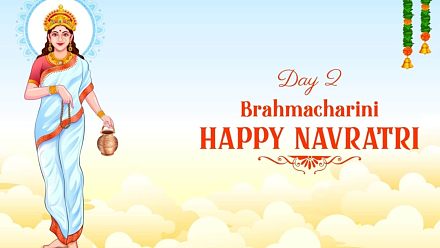
Maa Brahmacharini is worshipped as the second manifestation of Goddess Durga during Sharad Navratri.
The name Brahmacharini is associated with spiritual discipline and penance. In Hindu tradition, this form of Goddess Parvati represents the period of rigorous tapasya undertaken to attain Lord Shiva.
Maa Brahmacharini is traditionally depicted holding a rudraksha mala in one hand and a kamandalu in the other.
Her form is associated with devotion, determination, patience and self-discipline.
The second day of Navratri is therefore traditionally centred on perseverance and the strength to remain committed to one’s spiritual path.
Navratri 2026 Day 2 Colour
The Navratri colour for Day 2 in 2026 is white.
White is traditionally associated with purity, peace and simplicity. Devotees may wear white clothes or incorporate white flowers and other white elements into their puja arrangements.
Read More: Navratri Colours 2026: Day-Wise List From October 11 To October 19
The colour traditions associated with Navratri can vary across regions and communities.
Maa Brahmacharini Bhog
Sugar or mishri, also known as rock sugar, is traditionally offered to Maa Brahmacharini.
Panchamrit can also be included as a traditional offering.
Other puja items associated with the worship include:
White flowers
Fresh water
Rudraksha mala
Sugar or mishri
Panchamrit
Maa Brahmacharini Puja Vidhi
Clean the puja area and prepare the altar.
Light a diya and begin the worship with an invocation to Goddess Durga.
Place the image or idol of Maa Brahmacharini on the altar.
Offer flowers, water and traditional puja samagri.
Offer sugar, mishri or panchamrit as bhog.
Chant the Maa Brahmacharini mantra.
Recite the dhyan mantra or other Navratri prayers.
Perform the aarti and distribute prasad.
Read More: Navratri 2026 Ghatasthapana: Date, Time, Muhurat And Puja Vidhi
Maa Brahmacharini Mantra
The primary mantra associated with Maa Brahmacharini is:
Om Devi Brahmacharinyai Namah
In Devanagari:
ॐ देवी ब्रह्मचारिण्यै नमः॥
Devotees may chant this mantra during the worship of Maa Brahmacharini on Navratri Day 2.
Maa Brahmacharini Beej Mantra
Another mantra traditionally associated with Maa Brahmacharini is:
Om Aim Hreem Kleem Brahmacharinyai Namah
In Devanagari:
ॐ ऐं ह्रीं क्लीं ब्रह्मचारिण्यै नमः॥
Devotees may recite the mantra as part of their Navratri worship according to their spiritual or family tradition.
Maa Brahmacharini Dhyan Mantra
The dhyan mantra provided for Maa Brahmacharini is:
Dadhana Karapadmabhyam Akshamala Kamandalu
Devi Prasidatu Mayi Brahmacharyanuttama
In Devanagari:
दधाना करपद्माभ्यामक्षमालाकमण्डलु।
देवी प्रसीदतु मयि ब्रह्मचारिण्यनुत्तमा॥
This prayer invokes Maa Brahmacharini and seeks her grace and blessings.
Read More: Navratri Fasting Rules 2026: What To Eat And What To Avoid During Vrat
Navratri 2026 Day 2 Time
Dwitiya Tithi begins: October 11, 2026, at 9:32 PM
Dwitiya Tithi ends: October 12, 2026, at 10:14 PM
Significance of Worshipping Maa Brahmacharini
Maa Brahmacharini represents tapasya, devotion, patience and determination.
According to Hindu tradition, her story is associated with Goddess Parvati’s penance to attain Lord Shiva. Her devotion and perseverance are therefore central to the symbolism of the second day of Navratri.
Read More: Navratri 2026: 9 Forms Of Maa Durga, Names And Their Significance
For devotees, worshipping Maa Brahmacharini is an opportunity to reflect on patience, self-control and commitment during the nine-day festival.