Mumbaicha Raja Immersion Today: What Is Different About The Visarjan Process This Year?
Mumbai’s iconic Mumbaicha Raja of Ganeshgalli is set to add a new chapter to the city’s century-old Ganeshotsav tradition this year. As the mandal marks its 99th anniversary, it has announced a first-of-its-kind immersio
By Parishmita Saikia··7K reads
Mumbaicha Raja Immersion Today: What Is Different About The Visarjan Process This Year?
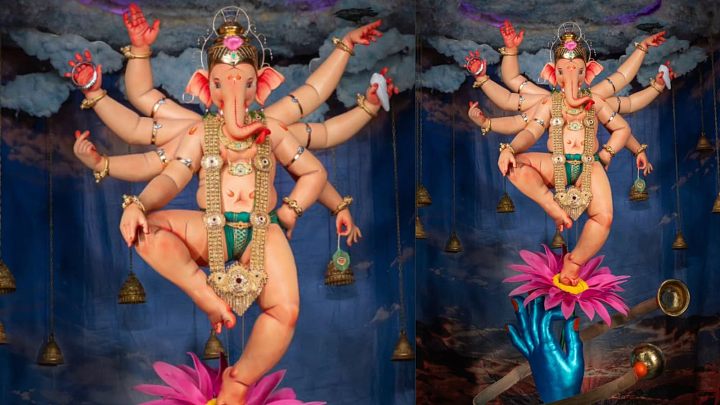
Mumbai’s iconic Mumbaicha Raja of Ganeshgalli is set to add a new chapter to the city’s century-old Ganeshotsav tradition this year. As the mandal marks its 99th anniversary, it has announced a first-of-its-kind immersion plan for its majestic 22-foot Ganpati idol.
The immersion procession will begin on Friday, September 25, at 7am, following the final Maha Aarti. The procession will follow its traditional route from Lalbaug to Girgaon Chowpatty, where the historic immersion will take place.
Mumbaicha Raja To Be Taken Into Deep Sea For Visarjan
For the first time in Mumbai’s Ganeshotsav history, the 22-foot Mumbaicha Raja will be taken into the deep sea for visarjan using a modern, state-of-the-art barge.
Instead of carrying out the immersion at the shoreline, the massive idol will be transported into deeper waters aboard the specially equipped vessel. The deep-sea immersion is scheduled to take place between 8pm and 11pm on September 25.
According to the mandal, the initiative has received approvals from the Maharashtra Maritime Board, Mumbai Police and the Brihanmumbai Municipal Corporation (BMC).
The mandal has described the move as a historic and pioneering step aimed at ensuring that the immersion of the towering idol is carried out in a more organised and secure manner.
How Will The Modern Barge Be Used?
The specially equipped barge will transport the 22-foot idol from the shore into deeper waters, accommodating the logistical requirements involved in handling the massive idol during visarjan.
Ahead of the immersion, the mandal’s office bearers also conducted a formal worship of the modern barge, marking the beginning of preparations for the unique ceremony.
The traditional procession will continue to retain its familiar route from Lalbaug to Girgaon Chowpatty, before the idol is taken into deeper waters for immersion.
Lalbaugcha Raja Visarjan Today
Meanwhile, Mumbai is also preparing to bid farewell to Lalbaugcha Raja as the iconic Ganpati idol embarks on its immersion procession on Anant Chaturdashi, bringing the city’s 11-day Ganeshotsav celebrations to a close.
The Lalbaugcha Raja immersion procession is scheduled to begin on Friday, September 25, following the Uttar Puja. The idol will travel from Lalbaug through several parts of south Mumbai before reaching Girgaon Chowpatty, where the immersion will take place.
How Does Lalbaugcha Raja’s Immersion Work?
Unlike smaller idols that can be immersed close to the shore, Lalbaugcha Raja is taken into deeper waters before the immersion. A specially designed iron raft, known as a tarafa, is used to carry the large idol out from the shore and facilitate its immersion in the Arabian Sea.
The use of the raft is not a new development. The Lalbaugcha Raja Mandal has previously used the system to enable the idol to be taken into deeper seawater for visarjan.
The method is particularly significant given the size of the idol and the logistical requirements involved in moving it safely from the shore into deeper waters.
Why Is The Immersion Method Important From An Environmental Perspective?
The environmental debate around Ganpati immersion has largely centred on the impact of Plaster of Paris (PoP) idols, paints and other materials on natural water bodies.
Civic authorities have this year placed greater emphasis on retrieving and processing PoP idols immersed in artificial ponds and other designated water bodies. Under a new ward-level procedure, such idols are to be retrieved within 24 hours and sent for further processing, with the recovered material potentially being reused for products including plaster boards, ceramics and bricks.
However, deep-sea immersion should not automatically be described as an anti-pollution measure. Its environmental impact depends on factors including the materials used to make the idol and how the immersion is managed.
The Central Pollution Control Board’s guidelines have sought to reduce the environmental impact of idol immersion through measures concerning idol materials and waste management.
Wider Push For Greener Ganeshotsav
The immersion arrangements come amid a broader push in Mumbai towards more environmentally conscious Ganeshotsav celebrations.
The BMC has also introduced a system to process food and organic waste generated at the Lalbaugcha Raja pandal. Around 80 tonnes of food waste is expected to be converted into renewable electricity, with the power being used at civic hospitals.
Meanwhile, civic authorities have expanded arrangements for artificial immersion ponds and the recovery of idols, as part of efforts to reduce pressure on natural water bodies during the festival.
Passenger Advisory
In view of the expected passenger rush during the Ganpati immersion on Friday, September 25, Western Railway has announced changes to local train services from Churchgate.
All AC local trains arriving at or originating from Churchgate from 7pm onwards will operate as non-AC services. Some services will also be cancelled or short-terminated.
Passengers travelling during the immersion have been advised to take note of the changes and plan their journeys accordingly.