Juicer Machines Under Rs 2500 For Fresh Juice At Home
A glass of freshly made juice can be surprisingly easy to fit into your routine if you have the right appliance. But the best juicer for your kitchen depends heavily on what you actually plan to make. Someone who mainly
By Consumer Trends Desk··24K reads
Juicer Machines Under Rs 2500 For Fresh Juice At Home
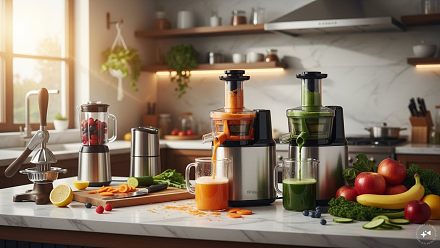
A glass of freshly made juice can be surprisingly easy to fit into your routine if you have the right appliance. But the best juicer for your kitchen depends heavily on what you actually plan to make. Someone who mainly wants fresh orange or mosambi juice needs a very different machine from someone who wants to juice apples, carrots and other fruits and vegetables.
You also don’t necessarily need to spend a lot. There are several options below Rs 2,500, ranging from simple citrus presses and manual juicers to centrifugal machines and portable rechargeable blenders.
We looked at seven options across these categories, considering what they are designed to juice, ease of use, versatility and price.
Top picks
Best overall: Amazon Basics 450W Centrifugal Juicer
Best for citrus fruits: Philips HD2799/00 Citrus Press Juicer
Best manual juicer: BTC India HPJ Aluminium Hand Press Juicer
Best premium citrus option: Braun CitrusQuick 1 CJ3000
Best budget option: Tekcool Portable Manual Juicer
Best portable option: Qlect Portable Blender
Best portable alternative: Turelar Portable Juicer Blender
Philips HD2799/00 Citrus Press Juicer
Why it makes sense
If most of the juice you make at home is orange, mosambi or lemon, the Philips is a much simpler choice than buying a large multipurpose juicer. Its 1-litre capacity is also handy when you’re preparing juice for more than one person.
This is best for someone who wants quick citrus juice without complicated assembly or cleaning. Just remember that it is a citrus press, so it isn’t the right machine if you also want to juice carrots, apples or beetroot.
Cons: Limited to citrus fruits; not suitable for harder fruits and vegetables.
Best for: Families that regularly make orange, mosambi or lemon juice.
BTC India HPJ Aluminium Hand Press Juicer
Why it makes sense
If you’d rather avoid another electrical appliance on the kitchen counter, this heavy-duty hand press is worth considering. The long lever lets you extract juice manually, making it particularly useful for citrus fruits and pomegranates.
It suits someone who doesn’t mind putting in a little effort in exchange for a simple machine without motors, charging or complicated controls. For several glasses every morning, however, an electric juicer will be more convenient.
Pros: No electricity required; sturdy aluminium construction; lever-operated design; straightforward to use.
Best for: Buyers who want a sturdy manual press for citrus fruits and pomegranates.
Qlect Portable Blender Juicer
Why it makes sense
The Qlect is better suited to someone who wants smoothies and fruit blends rather than traditional extracted juice. Its compact rechargeable design makes it convenient for preparing a single drink without getting out a full-sized appliance.
It’s also a useful option for the office or travel because you aren’t tied to a power socket while using it. But because it blends the fruit rather than separating the juice from the pulp, don’t buy this expecting the same result as a centrifugal or citrus juicer.
Pros: Rechargeable; six-blade design; compact; very affordable.
Cons: Blends rather than extracts juice; small capacity.
Best for: Smoothies, shakes and single-person fruit drinks.
Tekcool Portable Manual Juicer
Was: Rs 599
Now: Rs 499
Discount: 17% off
Why it makes sense
At Rs 499, the Tekcool is the one to consider if you juice only occasionally and don’t want to spend much. Its hand-operated design also means there is no charging, motor or electrical setup to worry about.
It isn’t the machine you should choose for a family making several glasses of juice every morning because the manual effort can become tedious. But for occasional use or a small kitchen, the simplicity and low price are appealing.
Pros: Very affordable; compact; no electricity required; simple operation.
Cons: Requires manual effort; not ideal for large quantities.
Best for: Occasional juicing on a tight budget.
Braun CitrusQuick 1 CJ3000 Citrus Juicer
Was: Rs 4,499
Now: Rs 1,999
Discount: 56% off
Why it makes sense
The Braun is worth the extra spend if citrus juice is part of your regular breakfast routine and you want something a little more convenient. Automatic start and stop and adjustable pulp control make it easy to prepare juice the way you prefer it.
Its smaller capacity makes it particularly suitable for one or two people rather than a large family. Like the Philips, though, this is a dedicated citrus machine, so look elsewhere if you also want carrot, beetroot or apple juice.
Cons: Only for citrus fruits; smaller capacity than the Philips.
Best for: Individuals and couples who regularly make fresh citrus juice.
Amazon Basics 450W Centrifugal Juicer
Why it makes sense
If you don’t want to restrict yourself to oranges and mosambi, the Amazon Basics model is the most versatile conventional juicer in this selection. The 450W centrifugal system is designed for a broader range of fruits and vegetables, making it better suited to households that like changing their juice combinations.
It is the one you should pick if your morning juice might contain apples, carrots or beetroot one day and fruit the next. The downside is that a centrifugal machine has more parts to wash than a simple citrus press.
Pros: 450W motor; suitable for different fruits and vegetables; three speed settings; removable pulp container.
Cons: More components to clean; occupies more counter space than a citrus press.
Best for: Households that want to make different fruit and vegetable juices.
Turelar Portable Juicer Blender
Why it makes sense
The Turelar is another option for someone who values portability over conventional juice extraction. Its rechargeable bottle-style format works particularly well for quick smoothies, shakes and fruit blends for one person.
It makes sense for students, office-goers or anyone who doesn’t want a full-sized appliance taking up kitchen space. But like the Qlect, it is essentially a portable blender, so the pulp and fibre remain in your drink rather than being separated.
Cons: Blends rather than extracts juice; designed for small personal servings.
Best for: Personal smoothies, shakes and fruit blends on the go.
How we chose
We did not treat all seven products as interchangeable because they aren’t. A citrus press, centrifugal juicer, manual press and portable blender produce different results and suit very different routines. The selection therefore considers the type of machine, what it can process, ease of use, versatility and price.
We also looked at how the machine is likely to be used at home. Someone who wants orange juice every morning may be better served by a simple citrus press, while a household that wants juice from different fruits and vegetables needs a more versatile machine. Portable blenders were considered primarily for smoothies and personal fruit drinks rather than as substitutes for conventional juice extractors.
Things to consider before buying a juicer
Type of juicer: Start with what you actually drink. Citrus presses are ideal for oranges, mosambi and lemons, while centrifugal machines can handle a broader range of fruits and vegetables. Portable blenders make smoothies rather than separating juice from pulp.
Cleaning: A machine that is difficult to clean can quickly end up sitting unused. Citrus presses generally have fewer components, while centrifugal juicers have pulp containers, filters and other parts that need washing.
Capacity: If you’re making juice for the whole family, a larger machine or juice container is more convenient. Portable blenders are better suited to individual servings.
Counter space: A full-sized centrifugal machine needs more storage and counter space than a citrus press or portable blender. Consider how often you’ll use it before giving up permanent kitchen space.
Manual versus electric: Manual presses eliminate motors, cables and charging but require physical effort. They can work well for occasional citrus juicing, while an electric model is generally more convenient for frequent use.
FAQs
1. Which type of juicer is best for home use?
It depends on what you want to juice. A citrus press is enough if you mainly drink orange or mosambi juice. For a wider range of fruits and vegetables, a centrifugal juicer is more versatile.
2. Is a portable juicer the same as a regular juicer?
Not necessarily. Many products sold as portable juicers are actually compact blenders. They blend the whole fruit rather than extracting the liquid and separating the pulp, so they are better suited to smoothies and fruit blends.
3. Do I need an expensive juicer for daily use?
No. The important thing is matching the machine to your routine. A relatively inexpensive citrus press may be perfectly adequate for someone who only makes citrus juice, while spending more on a versatile machine makes sense if you regularly juice different fruits and vegetables.
Disclaimer: The product descriptions mentioned in the article are solely based on the primary and secondary research conducted by our experts. To keep you ahead of the curve with these latest products, News18 utilises affiliate links. This means if you decide to shop through our recommendations, we may earn a small referral commission at no extra cost to you. Please be advised that News18 is not responsible for any claims under the Consumer Protection Act, 2019, or other applicable laws regarding the final performance, quality, or safety of these products.