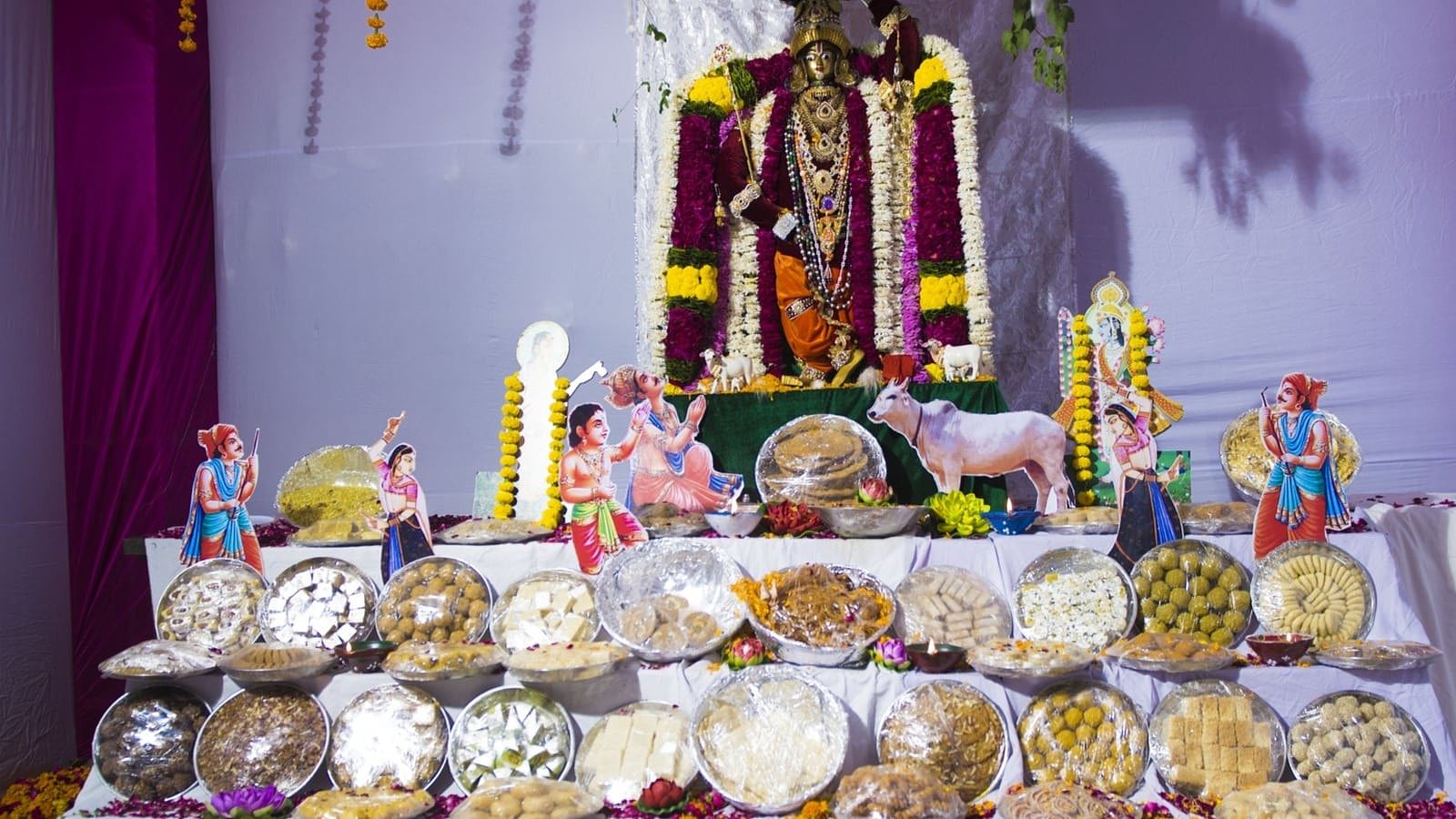
Janmashtami 2026 Puja Samagri List: 35+ Things You Need For Krishna Puja At Home
Janmashtami Puja Samagri List for Krishna Puja at Home: Janmashtami, marking the birth of Lord Krishna, is being celebrated today, on Friday, September 4. Devotees prepare for the festival with fasting, prayers, devotion
By Nibandh Vinod··13K reads
Janmashtami 2026 Puja Samagri List: 35+ Things You Need For Krishna Puja At Home
Janmashtami Puja Samagri List for Krishna Puja at Home: Janmashtami, marking the birth of Lord Krishna, is being celebrated today, on Friday, September 4. Devotees prepare for the festival with fasting, prayers, devotional songs and a special midnight worship ceremony.
At home, some families decorate a Krishna altar, place Laddu Gopal in a jhula and prepare offerings such as Panchamrit, makhan-mishri, fruits and sweets. The exact rituals and puja requirements can differ according to family tradition and region.
Read More: Janmashtami 2026 Wishes: 50+ Happy Krishna Janmashtami Images, Messages, Quotes And WhatsApp Status
For those planning Krishna Puja at home, keeping the essential samagri ready in advance can make the celebration more organised and meaningful. Here is a Janmashtami 2026 checklist covering setup, Abhishek, puja, aarti and bhog items.
Janmashtami 2026 Puja Samagri List
Preparing the puja items ahead of Janmashtami can make the midnight worship more convenient. While there is no single universal checklist followed by every Krishna devotee, the following items cover the commonly used materials for a home celebration.
You can adapt the list according to your family tradition, local customs and the form of Krishna being worshipped.
Laddu Gopal or Krishna Idol
Janmashtami is being celebrated today, on September 4. (Image: Shutterstock)
A Krishna idol is the central element of the home altar. Many families worship Laddu Gopal, the child form of Krishna, during Janmashtami.
If you already have a Krishna idol used for daily worship, there is generally no need to purchase a new one specifically for Janmashtami.
Chowki or Singhasan
Keep a clean wooden chowki or a small singhasan ready for the idol.
Cover the surface with a freshly washed cloth before placing the deity on it.
Jhula or Cradle
Janmashtami marks the birth of Lord Krishna. (Image: Shutterstock)
A small decorated jhula is commonly used for Laddu Gopal during Janmashtami celebrations.
Families may place the idol in the cradle around the midnight birth celebration and gently swing it while singing devotional songs.
Read More: Janmashtami 2026: Rare Astrological Combination On September 4, 5 Zodiac Signs May Benefit
Clean Decorative Cloth
Keep a fresh cloth for the altar. Red, yellow, saffron, blue or other auspicious colours may be used according to family preference.
A separate clean cloth can also be kept for dressing the idol.
New Poshak
If your tradition includes changing the deity’s clothes for Janmashtami, keep a fresh Krishna poshak ready.
For Laddu Gopal, the outfit may include a dhoti, kurta, mukut and other decorative accessories.
Mukut and Peacock Feather
A Krishna mukut or crown can be used to dress the idol.
A morpankh, or peacock feather, is traditionally associated with Krishna’s iconography and is often included in Janmashtami decorations.
Read More: Janmashtami Outfit Ideas 2026: Stylish Krishna-Radha Inspired Looks For Kids To Try
Bansuri
A small flute can be placed beside the Krishna idol or incorporated into the decoration.
The bansuri is one of the most recognisable symbols associated with Krishna.
ABHISHEK AND PURIFICATION SAMAGRI
Milk
Milk is commonly included in Krishna Abhishek rituals.
Keep a small quantity of fresh milk separately for the ceremony rather than using milk that has already been prepared as part of another offering.
Curd
Curd is another traditional Panchamrit ingredient and may also be used during Abhishek according to the household’s ritual practice.
Honey
Honey is commonly included in Panchamrit.
Use clean, food-grade honey and keep the required quantity ready before beginning the ritual.
Ghee
Pure ghee may be included in Panchamrit and is also commonly used for lighting a ghee diya during puja or aarti.
Read More: Janmashtami 2026: 7 Actors Who Made Lord Krishna Memorable On Screen
Sugar or Mishri
Sugar or mishri completes the commonly prepared five-ingredient Panchamrit mixture of milk, curd, honey, ghee and sugar.
Some households may prepare Panchamrit differently, so follow your family’s established practice where applicable.
Gangajal
Gangajal is traditionally kept for purification and ritual use.
If it is not available, devotees may use clean water according to their household’s practice.
Clean Water
Keep a separate vessel of clean water available for rinsing the idol after Abhishek.
A clean cloth should also be kept nearby to gently dry the idol where appropriate.
Chandan
Sandalwood paste may be used for applying tilak or other ritual markings.
Ready-made chandan paste can also be kept if preparing fresh paste is inconvenient.
Roli or Kumkum
Roli and kumkum are commonly kept among household puja materials.
Their use can vary according to the specific ritual and family tradition.
Read More: Janmashtami 2026: 7 Simple Ways To Prepare For Lord Krishna’s Arrival
Akshat
Akshat refers to unbroken rice grains used in many Hindu puja rituals.
Keep a small quantity of clean, uncooked rice ready in a separate bowl.
Moli or Kalava
A red sacred thread, commonly known as moli or kalava, may be included among the puja essentials.
Its specific use during the ceremony depends on the household’s ritual tradition.
DIYA, DHOOP AND AARTI ESSENTIALS
Diya
Keep one or more clean diyas ready for the puja and aarti.
A brass or silver diya may be used, although a simple earthen diya is also commonly used.
Cotton Wicks
Keep cotton wicks ready for the diya.
Having extra wicks is useful if the puja continues for several hours or includes multiple aarti rounds.
Ghee or Oil
Ghee can be used for a ghee diya. Depending on household practice, an appropriate edible oil may also be used for other lamps.
Incense Sticks or Dhoop
Agarbatti or dhoop may be included in the puja.
Use them in a well-ventilated area and keep burning incense away from curtains, paper and other flammable objects.
Camphor
Camphor is commonly used during aarti in many households.
Keep a small quantity ready if it forms part of your family’s Janmashtami ritual.
Bell
A puja bell may be used during prayers and aarti.
Its use and timing can vary according to the household’s worship tradition.
Shankh
A conch shell may be used during puja or aarti where it is part of the family’s practice.
If you do not have one, it is not necessary to buy one solely for a simple home celebration.
Puja Thali
A puja thali makes it easier to keep roli, kumkum, rice, flowers, diya and other small items together.
A clean metal plate can be used for this purpose.
FLOWERS AND DECORATIVE ITEMS
Fresh Flowers
Keep fresh flowers for decorating the altar and making offerings.
Marigold, jasmine and other locally available flowers can be used according to preference and availability.
Flower Garland
A small flower mala can be placed around the idol or altar.
Fresh flowers are preferable when readily available, although decorative artificial garlands can also be used for the surrounding décor.
Tulsi Leaves
Tulsi is traditionally associated with Vishnu and Krishna worship and is commonly offered with Krishna bhog.
If your family tradition specifically includes Tulsi in the offering, keep fresh leaves ready.
Rangoli and Toran
For the home entrance or puja area, devotees may use rangoli, torans, flowers and other festive decorations.
Small Krishna footprints made with rice flour or another suitable material are also commonly used as a decorative symbol representing Krishna’s arrival.
JANMASHTAMI BHOG AND PRASAD SAMAGRI
Makhan and Mishri
Makhan-mishri is among the most recognisable offerings associated with Krishna.
Fresh white butter can be served with mishri or rock sugar crystals as bhog, according to household tradition.
Dhaniya Panjiri
Dhaniya panjiri is a popular Janmashtami preparation in several parts of North India.
It is typically made using roasted coriander powder along with ingredients such as sugar, ghee and dry fruits.
Fresh Fruits
Keep clean, fresh seasonal fruits for the bhog.
Banana, apple, pomegranate, grapes and other available fruits may be used.
There is no need to purchase an excessive variety; a simple, fresh fruit offering is sufficient for a home puja.
Kheera or Cucumber
Cucumber is associated with Janmashtami rituals in some regional traditions and may be included in the midnight observance.
However, this is not a universal requirement for every Krishna Puja, so households should follow their own customary practice.
Milk-Based Sweets
Pedas, makhana preparations, kheer, rabri or other milk-based sweets may be prepared as bhog depending on regional and family traditions.
Dry Fruits
Almonds, cashews, raisins and other dry fruits can be used in panjiri, sweets or as part of the bhog platter.
Mishri
Keep additional mishri separately if it is used as part of the bhog or served with makhan.
Quick Janmashtami 2026 Shopping Checklist
If you want to keep the shopping simple, prioritise these essentials:
Krishna or Laddu Gopal idol
Chowki or singhasan
Clean altar cloth
Jhula or cradle, if following the cradle tradition
Krishna poshak
Mukut and peacock feather
Bansuri
Milk
Curd
Honey
Ghee
Sugar or mishri
Clean water
Gangajal, if used in your tradition
Chandan
Roli or kumkum
Akshat
Moli
Diya
Cotton wicks
Incense or dhoop
Camphor
Bell
Shankh, if used
Puja thali
Fresh flowers
Tulsi leaves
Fruits
Makhan-mishri
Dhaniya panjiri
Dry fruits
Other homemade or traditional bhog
What Should Be Prepared Before Janmashtami Night?
The midnight worship is an important part of many Janmashtami observances, so preparing the samagri beforehand can prevent last-minute interruptions.
Ideally, devotees can clean the puja area, wash the altar and utensils, arrange the idol and decorations, prepare Panchamrit ingredients, wash fruits, keep Tulsi leaves ready and organise the aarti thali before the evening festivities begin.
If fasting is being observed, food preparations can also be completed in advance according to the household’s fasting rules.
Janmashtami 2026 Puja Time: Why Location Matters
Janmashtami is observed on Friday, September 4, 2026. The Nishita Puja period occurs around midnight and can extend into September 5 depending on the city. According to Drik Panchang, the Nishita Puja window for Mumbai is around 12:14 AM to 1:01 AM on September 5, while timings differ for other cities.
Dahi Handi follows on Saturday, September 5, 2026.
Simple Way To Organise Your Janmashtami Puja Samagri
A useful way to organise the items is to divide them into four groups:
Milk, curd, honey, ghee, sugar or mishri, clean water and Gangajal.
For puja and aarti:
Chandan, roli, kumkum, akshat, moli, diya, wicks, ghee or oil, incense, camphor, bell, shankh and puja thali.
For bhog:
Makhan-mishri, Tulsi, fruits, dhaniya panjiri, dry fruits, sweets and other traditional offerings.
This grouping also makes it easier to check the list before the ceremony begins.
Do You Need Every Item On The List?
No. A home Janmashtami Puja does not have to become a shopping exercise.
The exact samagri can vary according to regional customs, family traditions and the form of worship. If you do not have a jhula, shankh, special decoration or a particular ingredient, you can still observe Janmashtami with a clean altar, a Krishna idol, simple prayers and an offering prepared according to your tradition.
Janmashtami 2026: Final Checklist
Before beginning the Krishna Puja, check that the idol and altar are clean, the Abhishek ingredients are ready, the aarti items are arranged and the bhog has been prepared.
Most importantly, follow the customs observed by your family or temple tradition, especially for fasting, Abhishek, midnight worship and Parana.