Induction Cooktop Vs Gas Stove: Which Is Safer For Indian Kitchens?
For most Indian households, the gas stove has been the default cooking appliance for decades. It works with almost every type of cookware, gives you immediate control over the flame and is equally comfortable handling a
By Consumer Trends Desk··5K reads
Induction Cooktop Vs Gas Stove: Which Is Safer For Indian Kitchens?
For most Indian households, the gas stove has been the default cooking appliance for decades. It works with almost every type of cookware, gives you immediate control over the flame and is equally comfortable handling a pressure cooker, tawa, kadai or handi.
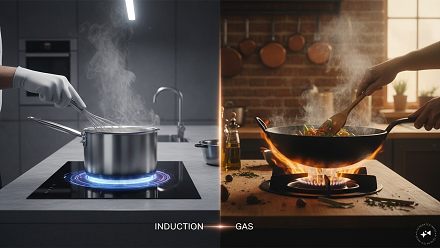
Induction cooktops, however, have become a serious alternative, particularly in apartments, smaller kitchens and homes where an additional cooking surface is useful. And when safety is the deciding factor, induction has some clear advantages.
Unlike a gas stove, an induction cooktop doesn’t produce an open flame. The cooking vessel itself is heated through electromagnetic induction. Many models also include features such as automatic shut-off, overheat protection and timers.
That doesn’t automatically make a gas stove unsafe. A properly installed and maintained LPG or piped-gas stove can be used safely for years. But the risks are different, and that’s what you need to consider before deciding which one is better for your kitchen.
For this comparison, we looked at three induction cooktops and three two-burner gas stoves available online and compared the two categories on safety, everyday cooking, ventilation, cookware, cleaning and ease of use.
Which should you buy?
Buy an induction cooktop if:
You are particularly concerned about having an open flame in the kitchen.
You live in a compact apartment or have a small kitchen.
You want automatic shut-off and overheat-protection features.
You have children or elderly family members and want to reduce exposure to a naked flame.
You want an additional cooking surface alongside your main stove.
You want something portable that can be put away when it isn’t being used.
You don’t mind using induction-compatible cookware.
Buy a gas stove if:
You cook several dishes simultaneously.
You regularly use different types of Indian cookware.
You want to cook rotis directly over a flame.
You frequently use large kadais, pressure cookers and tawas.
You don’t want cooking to depend on electricity.
You prefer controlling heat by looking at the flame.
Your kitchen already has a properly installed LPG or piped-gas connection.
Top picks
Best for everyday induction cooking: Pigeon Cruise 1800W
Best for smaller kitchens: Prestige IRIS ECO 1200W
Best for higher-power induction cooking: iBELL 20YO 2000W
Best for everyday two-burner cooking: Butterfly Smart 2 Burner
Best for simple everyday cooking: Lifelong LLSG10 2 Burner
Best for traditional Indian cooking: Prestige IRIS 2 Burner
Quick comparison
Feature
Induction cooktop
Gas stove
Heat source
Electromagnetic induction
LPG or piped gas flame
Open flame
No
Yes
Gas-leak risk
No
Yes, if there is a leak or installation problem
Auto shut-off
Available on many models
Generally not available on basic manual models
Overheat protection
Available on many models
Not usually a feature of basic gas stoves
Ventilation
Still advisable while cooking
Particularly important
Cookware
Must be induction compatible
Works with a much wider range
Power dependence
Requires electricity
Can generally operate during a power cut
Cleaning
Flat surface is easy to wipe
Burners, trivets and surrounding areas need cleaning
Multiple dishes
Usually one vessel on portable models
Two or more burners are common
Direct-flame cooking
Not possible
Possible
Best for
Safety, compact kitchens and convenience
Versatility and traditional Indian cooking
How does an induction cooktop work?
Induction works very differently from a conventional electric hot plate. Instead of heating an element that then heats the pan, the cooktop creates an electromagnetic field that generates heat in compatible cookware.
This is why an induction cooktop doesn’t need an exposed flame.
For a small kitchen, that can be reassuring. There is no flame that can accidentally catch a loose kitchen towel or clothing. Models such as the Pigeon Cruise and iBELL 20YO also advertise automatic shut-off, while the iBELL includes overheat protection.
Where induction cooktops perform best
Induction is particularly useful when you want a compact cooking area without adding another gas burner. It can work well in a studio apartment, rented accommodation or as a second cooking appliance in a larger household.
The flat cooking surface is another practical advantage. Once it has cooled sufficiently, there are no burner assemblies or trivets to remove before wiping it down.
Where induction cooktops struggle
Cookware is the first limitation. Your vessels need a magnetic base compatible with induction. Some existing aluminium, copper and other cookware may therefore not work.
A portable single-zone induction cooktop also isn’t necessarily a replacement for a two or three-burner gas stove in a household where several dishes are routinely cooked together.
And unlike gas, induction stops working during a power cut.
How does a gas stove work?
A gas stove burns LPG or piped natural gas to create a controllable flame underneath the cooking vessel. It is familiar, simple and exceptionally flexible.
That flexibility matters in Indian cooking. You can move quickly between a pressure cooker, kadai and tawa, roast certain foods over the flame and use cookware that wouldn’t necessarily work on induction.
Where gas stoves perform best
For a family cooking a complete Indian meal, two burners can be far more convenient than one induction zone. Dal can be cooking on one burner while vegetables are prepared on the other.
Gas also gives very intuitive heat control. Turn the knob and you can immediately see whether the flame is high or low.
Where gas stoves struggle
The biggest difference from induction is the open flame. Anything flammable brought too close to the burner can potentially catch fire.
Gas also introduces the possibility of leakage. Correct installation, good-quality regulators and hoses, regular checks and proper ventilation therefore matter.
Induction vs gas: Which is actually safer?
If the comparison is purely about eliminating flame and fuel-gas risks, induction has the advantage.
There is no LPG or piped gas being burned at the cooktop and no naked flame. Features such as automatic shut-off and overheat protection can add another layer of protection on models that include them.
But induction isn’t risk-free. The cooking vessel and surrounding area can still become hot, hot food can still spill, electrical equipment needs to be used correctly and a damaged power cable or socket shouldn’t be ignored.
Gas safety depends much more heavily on installation and user behaviour. A well-maintained stove connected correctly and used in a properly ventilated kitchen is very different from a poorly maintained stove with ageing hoses or questionable connections.
Which is better for Indian cooking?
Gas still wins on versatility.
If your everyday cooking involves rotis, tadka, pressure cooking, large kadais and several dishes being prepared together, a conventional multi-burner gas stove is difficult to beat.
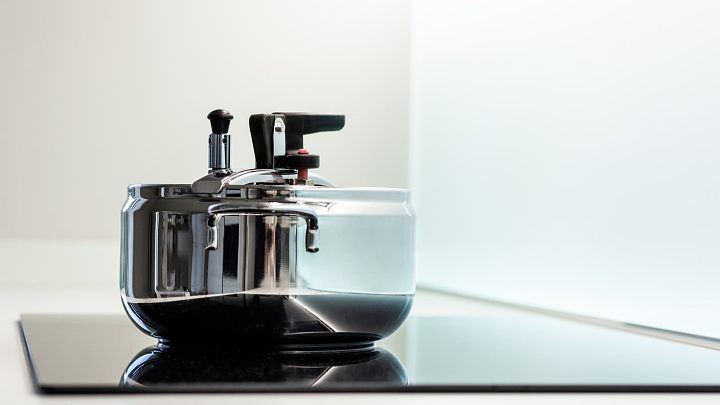
Induction becomes more attractive when your cooking needs are simpler or you want a second cooking surface. It is excellent for boiling, pressure cooking, making tea, cooking rice, preparing curries and reheating food, provided the cookware is compatible.
For many Indian households, the most practical solution may actually be to use both: a gas stove for the main cooking and induction when you need an additional burner or would rather avoid using a flame.
Common usage scenarios
Common usage
Induction cooktop
Gas stove
Better choice
Small apartment
Compact and portable
Requires gas arrangement
Induction
Family meal with several dishes
Single-zone models can be restrictive
Multiple burners make cooking easier
Gas
Pressure cooking
Very convenient with compatible cooker
Very convenient
Both
Making rotis
Works with suitable induction tawa
More familiar and flexible
Gas
Direct flame roasting
Not possible
Possible
Gas
Kitchen with children
No exposed flame
Requires greater care around flame
Induction
Power cuts
Cannot operate
Can generally continue cooking
Gas
Easy cleaning
Flat surface
More parts to clean
Induction
Wide cookware choice
Restricted to compatible vessels
Much broader choice
Gas
Second cooking appliance
Excellent
Usually unnecessary
Induction
So, which should you choose?
If safety is your main concern, induction is the stronger choice because it removes two significant hazards from the cooking area: an open flame and combustible cooking gas.
If versatility matters more, gas remains difficult to replace in an Indian kitchen. It handles practically every common cooking technique, accommodates a wide variety of cookware and doesn’t leave you dependent on electricity.
For a small apartment, an elderly person’s kitchen, a hostel-style setup or a household wanting an additional cooking surface, induction is particularly compelling. For a busy family kitchen preparing several dishes simultaneously, gas remains the more practical primary appliance.
FAQs
1. Is an induction cooktop safer than a gas stove?
In terms of open-flame and gas-leak risks, yes. Induction doesn’t use a naked flame or cooking gas. However, normal precautions around hot cookware, electricity and spills still apply.
2. Can an induction cooktop completely replace a gas stove?
It can for some households. But if you regularly cook several dishes simultaneously, use non-compatible cookware or rely on direct-flame cooking, gas may still be more convenient.
3. Does every utensil work on induction?
No. Induction requires compatible magnetic cookware. A simple way to check many vessels is to see whether a magnet sticks firmly to the bottom.
4. Which is easier to clean?
Induction is generally easier because of its flat surface. Gas stoves have burners, pan supports and spaces around the burners where spills and grease can collect.
Disclaimer: The product descriptions mentioned in the article are solely based on the primary and secondary research conducted by our experts. To keep you ahead of the curve with these latest products, News18 utilises affiliate links. This means if you decide to shop through our recommendations, we may earn a small referral commission at no extra cost to you. Please be advised that News18 is not responsible for any claims under the Consumer Protection Act, 2019, or other applicable laws regarding the final performance, quality, or safety of these products.