Ideology Or Mental Illness? Deconstructing The Psychological Labels Used By Alexandros Paporakis
A 19-year-old Palatine man, Alexandros Paporakis, has been arrested after police said they thwarted an alleged mass shooting plot targeting a Hindu temple in the Aurora area of Illinois. Arrested on Sunday evening, Papor
By Tanya Dutt··14K reads
Ideology Or Mental Illness? Deconstructing The Psychological Labels Used By Alexandros Paporakis
A 19-year-old Palatine man, Alexandros Paporakis, has been arrested after police said they thwarted an alleged mass shooting plot targeting a Hindu temple in the Aurora area of Illinois. Arrested on Sunday evening, Paporakis faces three felony counts, including making a terrorist threat.
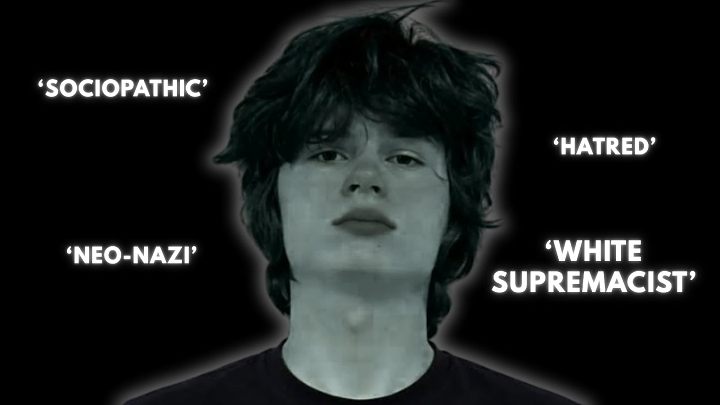
According to police and prosecutors, Paporakis allegedly shared an eight-page document containing white supremacist and racist material, expressed hatred towards Indians and other minority groups, and discussed a planned mass shooting. The young man had described himself as “a sociopathic white supremacist Neo Nazi filled with hatred.”
Alexandros Paporakis, a Taco Bell cashier from Palatine, Illinois, faces felony charges of making a terrorist threat and unlawfully possessing weapons. Prosecutors say co-workers received digital communications that included an eight-page document titled “Why I fought: A.K.A. (Aurora Shooter’s Manifesto).”
Image: File Photo/X
In that document, according to court filings obtained by the Associated Press, he used dehumanising language toward Indian, Jewish and African American people and presented himself with the sociopathic-white-supremacist phrasing. Police recovered items including a rifle without a serial number, loaded magazines, ammunition and materials with Nazi symbolism. He remains in custody pending further court proceedings.
Some court documents and reports have also referred to mental and emotional health concerns. Prosecutors said he had described himself using the term “sociopathic”, while a co-worker reportedly described him as behaving “manically” shortly before his arrest. These descriptions, however, are not the same as a formal psychiatric diagnosis raising questions beyond the immediate criminal investigation: when someone displays extreme hatred, violent fantasies and disturbing behaviour, should those actions be understood as signs of mental illness, extremist ideology or both?
Can Extreme or Violent Behaviour be Automatically Linked to Mental Illness?
Mental illness and violence are often connected in public discussions, but psychological research shows the relationship is considerably more complicated.
The American Psychological Association notes that most people with serious mental illness are not violent, and that most violent acts are not attributable to mental illness. When violence does occur among people with psychiatric disorders, other factors such as substance use, previous violence, environmental circumstances and certain symptoms can also contribute.
A major public-health review similarly found that having a mental illness is not a sufficiently specific predictor of violent behaviour. In other words, the overwhelming majority of people experiencing mental health problems do not become violent.
This is important in cases such as the Paporakis investigation because violent behaviour itself cannot establish a psychiatric diagnosis.
Image: File Photo/X
What Does ‘Sociopathic’ Mean?
“Sociopath” is not a formal diagnosis in the current Diagnostic and Statistical Manual of Mental Disorders, or DSM-5-TR. In everyday speech, “sociopath” is often used loosely to mean someone who is cold, cruel or without conscience. Clinically, the closest recognised concept is antisocial personality disorder, described in the DSM-5 as a pervasive pattern of disregard for and violation of the rights of others.
Clinicians instead assess specific patterns of behaviour and personality traits. Antisocial personality disorder, for example, is a recognised psychiatric diagnosis involving a persistent pattern of disregard for and violation of the rights of others. But diagnosing a personality disorder requires a comprehensive clinical assessment, developmental history and evidence that the relevant pattern is pervasive and persistent.
Therefore, a person’s description of themselves as “sociopathic” cannot by itself establish that they have antisocial personality disorder.
Ideology, Hatred and the Limits of Psychological Labels
White supremacist and neo-Nazi belief systems are ideological frameworks. They organise identity, grievance and perceived hierarchy around race. Research on radicalisation shows that such ideologies can provide a sense of purpose, belonging and moral justification for hostility. That process is distinct from the presence of a diagnosable mental illness.
Image: Canva
Many people who hold extreme ideological views do not meet criteria for psychiatric disorders, and many people with serious mental illness never engage in targeted ideological violence. Conflating the two can both stigmatise mental illness and obscure the role of ideology, social networks and online radicalisation pathways.
Research examined by the UK Government’s Commission for Countering Extremism found that ideology can help give meaning to grievances, belonging, status and perceptions of an “in-group” and “out-group”. The research also emphasises that ideology interacts with other individual and social factors rather than operating in exactly the same way for every person.
In the Paporakis case, authorities have described alleged white supremacist material, racist hostility and references to violence in his writings. Those are relevant behavioural and ideological signals in understanding the allegations. They should not, however, automatically be translated into a psychiatric label.
Fantasy, Fixation and Daily Preoccupation
The manifesto language referring to frequent fantasy about mass murder points to a pattern of cognitive and emotional fixation. In psychological literature, persistent violent ideation can appear in several contexts—rumination, identity fusion with an extremist worldview, or, in some cases, symptoms of certain mental disorders.
Representational Image
Without a clinical evaluation, it is not possible to determine which factors were operating here. What is known from the public record is that the expressed hatred was directed at specific ethnic and religious groups and was accompanied by preparation and communication that law enforcement treated as a credible threat.
Can Mental Health Problems and Extremist Ideology Exist Together?
The two categories are not mutually exclusive. A person can experience a psychiatric disorder and simultaneously hold extremist beliefs. Mental health difficulties may sometimes increase vulnerability to particular forms of radicalisation, but that does not mean the disorder caused the ideology or the violence.
The UK’s current counter-terrorism strategy says there is limited evidence for a direct causal relationship between mental ill-health and terrorist threat or susceptibility to radicalisation. It also notes that mental ill-health can play different roles in individual cases, including sometimes acting as a risk factor and, in other circumstances, as an inhibitor.
This is why psychologists look at the whole behavioural picture rather than searching for one label.
From a psychological and public-health perspective, concerning behaviour deserves attention even when there is no confirmed mental illness.
Threats, explicit declarations of violent intent, fixation on mass violence, acquisition of weapons, escalating behaviour and communications about a planned attack can be more immediately relevant to prevention than whether someone has a particular psychiatric diagnosis.
In Paporakis case, the reported digital communications, alleged manifesto, weapons possession and statements about an intended attack were among the warning signs that prompted intervention.