From Battered Woman Syndrome To Postpartum Psychosis: Two Women, Two Mental-State Defences 37 Years Apart
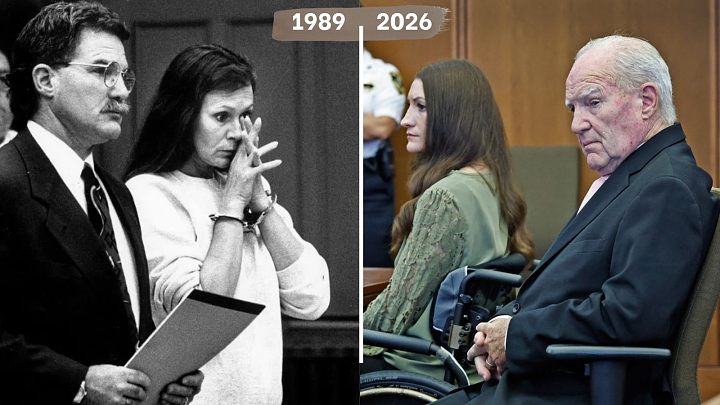
Thirty-seven years stretch between the two photographs. In one, a younger Kevin Reddington stands beside a woman whose defence rested on years of alleged abuse and a then-little-understood psychological state. In the oth
By Tanya Dutt··24K reads
From Battered Woman Syndrome To Postpartum Psychosis: Two Women, Two Mental-State Defences 37 Years Apart
Thirty-seven years stretch between the two photographs. In one, a younger Kevin Reddington stands beside a woman whose defence rested on years of alleged abuse and a then-little-understood psychological state. In the other, the same lawyer, now in his mid-seventies, sits with another woman whose case turns on a different but equally complex claim about mental illness.
The names and the diagnoses have changed. The central question he has asked juries to consider has not. What happens when a person’s mental state becomes central to understanding an act that would otherwise be viewed only through the lens of criminal responsibility?
Decades apart, the two cases involved different women, different circumstances and different mental-state defences yet both placed the question of psychological state at the heart of the courtroom.
1989 — Therese Rogers
In 1989, attorney Kevin Reddington represented Therese Rogers, a 33-year-old woman accused of killing her boyfriend while he slept. Reddington’s defence focused on the years of physical abuse she had allegedly endured and what was then described in court as “battered woman syndrome”, an early legal and psychological framework used to explain how prolonged intimate-partner violence could affect a person’s perception, behaviour and mental state.
Image Credit: USA TODAY Network via Reuters Co
Rogers was acquitted, in what was reported as Massachusetts’ first successful use of battered woman syndrome as a defence. The case was widely reported as the first successful use of battered woman syndrome as a defence in the state. It marked Reddington as a lawyer willing to place a defendant’s mental state at the centre of a serious criminal trial.
What Is Battered Woman Syndrome?
Battered woman syndrome describes the psychological effects of living with ongoing intimate-partner violence and abuse. The term was coined by psychologist Lenore Walker in her landmark 1979 book, The Battered Woman, to describe the emotional and psychological impact that prolonged abuse can have on survivors.
Importantly, battered woman syndrome is not itself considered a mental illness or a formal psychiatric diagnosis. Rather, it describes the effects that can develop when someone is repeatedly exposed to physical, sexual or psychological trauma within an abusive relationship. People experiencing these effects may also develop conditions such as post-traumatic stress disorder (PTSD), which is a recognised mental health disorder.
Walker also described intimate-partner abuse as often occurring in a cycle of violence. Tension can gradually build before an episode of abuse or violence, followed by a period in which the abuser apologises, promises to change or behaves more affectionately. The cycle may then begin again, creating an environment of recurring fear and trauma.
2026 — Lindsay Clancy
Nearly four decades later, he is doing something similar. Lindsay Clancy has been charged in connection with the deaths of her three young children. Her defence centres on the claim that she was experiencing postpartum psychosis, a rare but severe mental health condition that can involve profound breaks with reality, delusions and a sharp deterioration in a mother’s ability to recognise the nature of her actions.
Image Credit: AFP
Reddington has argued that her mental state at the time meant she could not form the criminal intent required for the most serious charges.
The jury ultimately failed to reach a unanimous verdict, and a mistrial was declared on September 4, 2026. The case remains unresolved.
What Is Postpartum Psychosis?
Postpartum psychosis is a very different condition and a psychiatric emergency. It is rare but severe, and can involve symptoms such as hallucinations, delusions, confusion, extreme mood changes and loss of contact with reality. The condition can emerge rapidly following childbirth and requires urgent medical attention.
Postpartum psychosis is a rare but serious mental health condition that can develop after childbirth. It can affect anyone who has recently given birth and most often begins within the first few days after delivery, although symptoms can emerge as late as six weeks postpartum.
While anyone can experience postpartum psychosis, the risk may be higher among people with certain underlying mental health conditions. The condition is uncommon, with estimates suggesting it affects around 0.089 to 2.6 out of every 1,000 births.
In Clancy’s case, postpartum psychosis became the central issue in the defence’s argument about her mental state. Reddington maintained that she was experiencing psychosis when she killed her children and that her psychiatric deterioration had been accompanied by extensive treatment and medication changes.
The prosecution disputed that interpretation, arguing that Clancy’s actions were deliberate and that the evidence did not establish that she was psychotic at the time.
That disagreement is precisely why psychiatric evidence became so important to the trial.
What Do These Two Cases Have In Common?
The connection is not that battered woman syndrome and postpartum psychosis are the same condition, they are not. The connection lies in the broader question of how trauma, psychiatric illness and altered mental states can affect behaviour and how those factors should be understood when someone is accused of a serious crime.
The two cases sit far apart in time and circumstance, yet they share a through-line. In both, Reddington has asked a jury to look past the immediate facts of what occurred and examine the internal world of the woman on trial. He has long specialised in cases where severe mental illness is said to have driven or shaped the alleged offence. Over five decades and roughly a hundred murder cases, that focus has become a defining part of his reputation.
Mental-state defences are among the most difficult to present and the most carefully scrutinised. They require juries to accept that a person can commit acts of profound harm while lacking the capacity for full criminal responsibility.
In the Rogers case, the argument rested on the cumulative effects of abuse and the psychological injuries it produced. In Clancy’s case, the focus is on a postpartum psychiatric crisis that, according to the defence, left her unable to understand or control her behaviour in the way the law requires.
The conditions are very different- Battered woman syndrome, as it was understood in the late 1980s, described a pattern of trauma responses in people subjected to ongoing intimate-partner violence.
Postpartum psychosis is a rare medical emergency that can emerge in the weeks after childbirth, sometimes linked to underlying vulnerability, confusion, extreme mood changes, loss of contact with reality sleep deprivation and other factors.
In the Rogers case, Reddington’s argument placed prolonged intimate-partner abuse at the centre of the woman’s psychological state. In Clancy’s case, his team placed severe postpartum psychiatric illness at the centre of the question of whether she could be held criminally responsible.
Image Credit: AFP
That distinction matters because mental illness does not automatically make someone violent, nor does a diagnosis by itself determine whether a person is legally responsible for an action.
What Does Reddington’s Two-Career-Spanning Cases Tell Us About Mental Health?
Perhaps the most striking link between the two cases is how much the language surrounding mental health has changed.
In 1989, the concept of battered woman syndrome helped bring the psychological consequences of prolonged domestic violence into a Massachusetts courtroom. Nearly four decades later, Clancy’s case has placed postpartum psychosis, maternal mental health and psychiatric care under intense public scrutiny.
Reddington himself has acknowledged the seriousness of postpartum mental illness, saying during the Clancy proceedings that the case had been an eye-opener for him and expressing hope that it would encourage greater discussion about postpartum depression and psychosis.
But there is an important lesson beyond the courtroom. Mental illness should not be understood only after a crisis becomes impossible to ignore.
Postpartum depression, postpartum psychosis, trauma and the psychological effects of domestic abuse can require professional attention long before they become part of a criminal case. Recognising warning signs, listening when someone asks for help and ensuring access to appropriate psychiatric care can be crucial.
Thirty-seven years apart, the Rogers and Clancy cases place two very different forms of psychological suffering in the courtroom. They also show how the understanding of mental health can evolve from early attempts to explain the psychological effects of prolonged abuse to today’s more nuanced conversations around severe postpartum psychiatric illness.