From Bastar’s 75-Day Festival To Mysuru’s Royal Parade, 8 Fascinating Ways India Celebrates Dussehra
Dussehra, also known as Vijayadashami, is celebrated across India through traditions that reflect the country’s diverse cultural heritage. While the festival is widely associated with Lord Ram’s victory over Ravan, some
By Tanya Dutt··29K reads
From Bastar’s 75-Day Festival To Mysuru’s Royal Parade, 8 Fascinating Ways India Celebrates Dussehra
Dussehra, also known as Vijayadashami, is celebrated across India through traditions that reflect the country’s diverse cultural heritage. While the festival is widely associated with Lord Ram’s victory over Ravan, some regions mark the occasion with tribal rituals, gatherings of village deities, royal processions and customs that go back centuries.
For many travellers, Dussehra brings to mind towering Ravana effigies, crowded fairs and the final day of Navratri. But travel across India, and the festival takes on strikingly different forms — from a 75-day tribal celebration in Chhattisgarh to royal processions in Karnataka and gatherings of village deities in Himachal Pradesh.
These eight destinations offer a glimpse of how local history, faith and community traditions shape Vijayadashami across the country.
1. Bastar, Chhattisgarh: A Dussehra Without Ravana Dahan
Bastar’s Dussehra breaks away from the familiar Ramayana narrative. Centred on Goddess Danteshwari and the region’s tribal traditions, the festival lasts around 75 days, making it one of India’s longest festive celebrations. Rituals include the gathering of local deities, traditional chariot processions and ceremonies that bring tribal communities together.
Image: Chhattisgarh Tourism
Rather than focusing on Ravana Dahan, the festivities reflect the region’s distinctive spiritual and cultural identity. For travellers, Jagdalpur serves as a key base for exploring Bastar’s celebrations, local markets and tribal heritage. Visitors should plan ahead, respect ceremonial restrictions and seek local guidance when attending rituals.
2. Kullu, Himachal Pradesh: When Village Deities Gather
Kullu Dussehra begins on Vijayadashami, unlike many celebrations that conclude on the day. Hundreds of village deities, carried in decorated palanquins, gather at Dhalpur Maidan to pay homage to Lord Raghunath. The festivities feature processions, traditional music, community gatherings and rituals that reflect the region’s deep-rooted devotional traditions.
Image: Pexels
The surrounding Himalayan landscape adds to the atmosphere, making the celebration a distinctive cultural experience. Travellers visiting Kullu during Dussehra can explore the festival grounds and nearby mountain towns, but should book accommodation early, expect large crowds and check local transport arrangements before travelling.
3. Maharashtra: A Golden Tradition Of Apta Leaves
In parts of Maharashtra, exchanging Apta tree leaves as symbolic gold is a cherished Dussehra tradition. The custom is associated with prosperity, good fortune and goodwill, with friends, relatives and neighbours exchanging leaves as they visit one another. It offers a more intimate perspective on the festival, where the emphasis is on relationships and shared blessings rather than elaborate public spectacles.
Travellers can experience this tradition by visiting local neighbourhoods, markets and temples during Vijayadashami. Those interested in the custom should ask residents about its local significance, as practices may differ across communities, and remember that the leaves are symbolic gifts rather than actual gold.
4. Kerala: A Day To Begin Learning
In Kerala, Vijayadashami is associated with Vidyarambham, a ceremony that introduces young children to learning. Children are guided to write their first letters, often with the help of teachers, elders or religious figures. Families visit temples and cultural institutions to mark this important milestone, making the day a celebration of education alongside faith. The ceremony is particularly meaningful for parents whose children are beginning their formal learning journey.
Image: X/@Shashi Tharoor
Travellers can explore temples and cultural centres that organise Vidyarambham ceremonies, but should check timings and participation guidelines in advance. Since these are often family-centred occasions, visitors should maintain a respectful distance and seek permission before photographing children or rituals.
5. Mysuru, Karnataka: Dussehra With Royal Grandeur
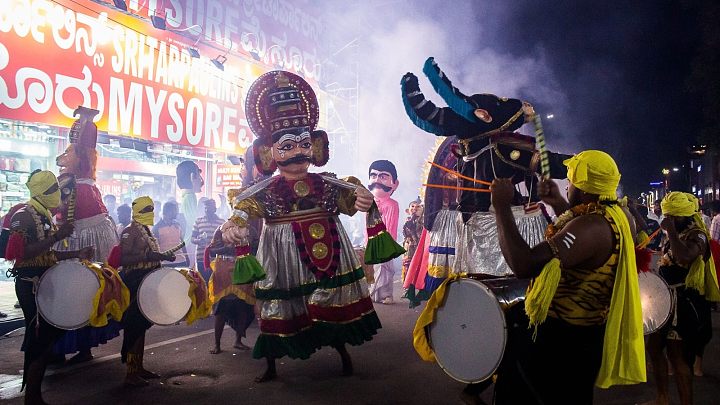
Mysuru Dasara transforms the city into a celebration of illuminated architecture, music, cultural performances and royal pageantry. The highlight is the Jamboo Savari, a grand Vijayadashami procession featuring Goddess Chamundeshwari’s idol in a golden howdah atop a decorated elephant, accompanied by performers and tableaux.
Image: Pexels
The festivities reflect Mysuru’s royal heritage and devotion to Goddess Chamundeshwari. Travellers can combine the celebrations with visits to Mysuru Palace, Chamundi Hill and the city’s historic markets. Since the procession attracts large crowds, booking accommodation early, checking traffic diversions and reaching viewing areas well in advance can make the experience more comfortable.
6. Sarangarh, Chhattisgarh: The Challenge Of A Mud Fort
Sarangarh’s Dussehra features a distinctive tradition called Garh Vichhedan, in which participants attempt to climb a cone-shaped mud fort built using soil associated with the former royal palace. The event brings together spectators and participants in a spirited display of regional tradition, setting it apart from the familiar Ravana Dahan celebrations. It also offers a glimpse into how local customs preserve historical and community identities.
Travellers interested in witnessing the event should confirm the celebration dates and venue with local authorities before planning a visit. As the gathering can become crowded, following organisers’ instructions and watching from designated areas is advisable.
7. Kota, Rajasthan: A Fair Beyond Ravana Dahan
Kota’s Dussehra Mela combines religious celebrations with folk performances, cultural programmes, amusement rides and bustling fairgrounds. The tradition dates back to 1723, and the burning of towering effigies of Ravana, Kumbhakarna and Meghnad remains a major attraction. Beyond the central ceremony, the mela offers a lively introduction to Rajasthan’s festive culture, with food stalls, local crafts and entertainment drawing families from across the region.
Image: Canva
Travellers can plan an evening around the fair and explore Kota’s historic attractions during the day. It is worth checking the official programme beforehand, as major performances and effigy-burning ceremonies can draw particularly large crowds.
8. Andhra Pradesh: Goddess Worship And Grand Processions
In Proddatur, Andhra Pradesh, Dussehra is marked by elaborate goddess adornments, temple rituals and a lively village fair. The festivities culminate in the Thotti Meravani, a procession in which the goddess is accompanied by deities from other temples. The celebration brings devotees and local communities together, highlighting the importance of collective worship and regional religious traditions.
For travellers, the festivities offer an opportunity to experience a local celebration beyond the better-known Dussehra spectacles in major cities. Those planning a visit should confirm the procession schedule locally, arrange transport in advance and follow temple customs, particularly when entering crowded ceremonial spaces.