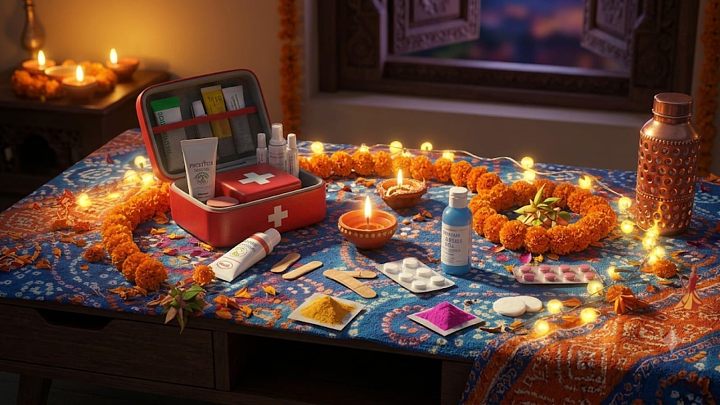
Diwali First-Aid Kit: 12 Essentials Every Household Should Keep Handy
Diwali brings lights, gatherings and celebration. It also brings a predictable rise in preventable injuries. Emergency departments routinely see burns, eye injuries from firecrackers, cuts, falls and accidental swallowin
By Tanya Dutt··10K reads
Diwali First-Aid Kit: 12 Essentials Every Household Should Keep Handy
Diwali brings lights, gatherings and celebration. It also brings a predictable rise in preventable injuries. Emergency departments routinely see burns, eye injuries from firecrackers, cuts, falls and accidental swallowing of harmful substances during the festive period.
A hot oil splash while cooking, a cut from broken glass, a fall on a slippery floor or an eye injury caused by a firecracker can happen when least expected.
While not every mishap can be prevented, knowing what to keep in a first-aid kit and how to use it can make a difference before medical help arrives. During Diwali, emergency departments often see preventable injuries, including burns, cuts, falls and firecracker-related eye injuries.
“Diwali is a time of celebrations, lights and festivities. Yet during Diwali emergency departments often see preventable injuries,” says Dr Kesha Mankad, Consultant & In-charge Emergency Medicine, Bhailal Amin General Hospital, Vadodara. “I find that having a first-aid kit at home and knowing how to act quickly can stop problems before a doctor arrives.”
Here is what your household first-aid kit should contain and how to respond to some common festive injuries.
What Should A Festival First-Aid Kit Contain?
A useful first-aid kit should cover minor cuts, burns, bumps and everyday health concerns. Dr Mankad recommends keeping the following essentials within easy reach:
Sterile gauze pads and bandages: Keep gauze pads, adhesive bandages in different sizes and soft, non-stick dressings for covering wounds and burns.
Medical tape: Useful for securing dressings in place.
Sterile saline: Can be used to clean minor wounds and, where appropriate, flush irritants from the eyes.
Antiseptic liquid: Keep it for appropriate use on the skin, following the product instructions. Do not pour it into the eyes or deep wounds.
Disposable gloves: Help reduce direct contact with blood and bodily fluids while providing first aid.
Blunt-ended scissors and tweezers: Useful for cutting medical tape or dressings and handling small items. Do not use tweezers to remove embedded objects.
Burn dressings: Special burn dressings, if available, and soft dressings that do not stick to injured skin can be useful.
Digital thermometer: Helps check body temperature if someone develops a fever.
ORS sachets: Useful for preparing oral rehydration solution when someone needs to replace fluids and salts, such as during diarrhoea or vomiting. Follow the instructions on the sachet.
Paracetamol: Keep age-appropriate medication with clear dosage instructions. Check the correct dose before giving it, and do not combine medicines containing the same active ingredient.
Regular prescription medicines: Keep essential medicines that family members need, while storing them according to their instructions.
Other useful supplies: Add a quick cold pack for minor bumps, hand sanitiser, a torch with spare batteries, a basic first-aid guide and emergency contact numbers for the nearest hospital and ambulance service.
Keep the kit in a clearly labelled, dry and accessible place, away from young children. Check expiry dates periodically and replace anything that has been used.
How Handel A Burn During Diwali?
Burns can happen while lighting diyas, handling firecrackers or cooking festive meals. The first response matters, but common household remedies can make the injury worse.
Dr Mankad advises cooling the affected area immediately under clean, cool running water for 20 minutes. She cautions against applying toothpaste, ice, ghee, oil or other home remedies to a burn. These substances can aggravate the injury or interfere with proper treatment.
Do not pull away clothing stuck to the burned skin or burst blisters. Once the area has been cooled, cover it loosely with a clean, non-stick dressing. Do not wrap it tightly or apply pressure. Seek medical attention for serious burns, including those affecting the face, hands or other sensitive areas, or when the injury is extensive or deep.
What Should You Do If A Firecracker Injures The Eye?
Eye injuries involving sparks, chemicals or debris should never be brushed aside, even if the initial discomfort seems mild.
“If chemicals or irritants get into the eye, flush it at once with running water or sterile saline,” says Dr Mankad. However, she warns that suspected penetrating injuries need a different response. If a sharp object may have entered the eye, do not wash it, press on it or attempt to remove the object. Cover the eye with a protective shield without applying pressure and seek emergency medical help immediately.
Avoid rubbing the eye, as this can worsen the injury. Sudden changes in vision, severe pain, bleeding or an object embedded in or around the eye warrant urgent medical assessment.
Common Mistakes that Make Injuries Worse
Broken glass, sharp decorations and household objects can cause cuts during festive preparations. Before attending to a wound, wash your hands and wear disposable gloves if available. Apply gentle, steady pressure with sterile gauze to control bleeding, then clean a minor wound with clean running water and cover it with a sterile dressing.
A cut that is deep, has an embedded object or continues bleeding despite sustained pressure needs medical attention. Do not attempt to remove anything lodged in the wound.
For a minor bump, a cold pack wrapped in a cloth may help reduce swelling. However, avoid moving someone unnecessarily if a fall has caused severe pain, a suspected fracture, head injury or difficulty moving a limb. Seek medical assessment rather than trying to manage a potentially serious injury at home.
Safety Precautions That Can Help Prevent Festival Emergencies
A well-stocked kit is only one part of being prepared. Keep children under close adult supervision around firecrackers, ensure that adults handle fireworks and keep a bucket of water nearby. Wear cotton clothing and closed shoes while lighting crackers, and avoid loose or easily ignited fabrics. Use appropriate eye protection where necessary and keep fireworks away from crowded areas and flammable materials.
As Dr Mankad points out, “A first-aid kit is more than medicines and bandages. It is about being ready and acting fast in the minutes of an emergency. With firecrackers a small injury can still become serious especially if the eyes, hands or face are hurt. First aid stops the injury until a doctor can help. It is not a substitute for a quick hospital visit.”
A little preparation can help families respond calmly when something goes wrong. Keep essential supplies handy, know the limits of home first aid and do not hesitate to seek emergency care when an injury appears serious.
Disclaimer: This article is for general awareness and does not replace professional medical advice. Seek urgent medical attention for serious burns, eye injuries, uncontrolled bleeding, suspected fractures, breathing difficulty or other emergencies.