Designing Homes Around Habits: Why Ritual Living Is Changing Luxury Interiors
Luxury in residential design is acquiring a quieter definition. Increasingly, it is less about how much space a home occupies or how expensive its finishes are, and more about how effortlessly that space supports the lif
By Swati Chaturvedi··12K reads
Designing Homes Around Habits: Why Ritual Living Is Changing Luxury Interiors
Luxury in residential design is acquiring a quieter definition. Increasingly, it is less about how much space a home occupies or how expensive its finishes are, and more about how effortlessly that space supports the life unfolding inside it.
The shift is subtle but significant. Homeowners are beginning to ask fewer questions about what a room should look like and more about what it should help them do, feel and experience throughout the day.
At SIORAA, this change is becoming increasingly visible. “They do not want us to create a lifestyle. Instead, they are asking us to understand the one they already have and build a design around it,” says Sonakshi Gupta, Founder and Creative Director, SIORAA.
It is an idea that challenges one of the oldest assumptions in interior design: that a beautiful home begins with an aesthetic.
Increasingly, it may begin with a habit.
Designing for the Life That Already Exists
Before selecting materials, colours or furniture, Gupta says the more revealing questions are often remarkably ordinary. Where does someone sit first thing in the morning? What happens when they return home? Where does the family naturally gather? Which room remains occupied long after dinner? What does the weekend look like when there is nowhere to go?
“These habits, small and often unspoken, carry more information about a client’s needs than any brief ever could,” explains Gupta.
It is a philosophy that shifts the designer’s role from creating a visual statement to understanding a behavioural pattern.
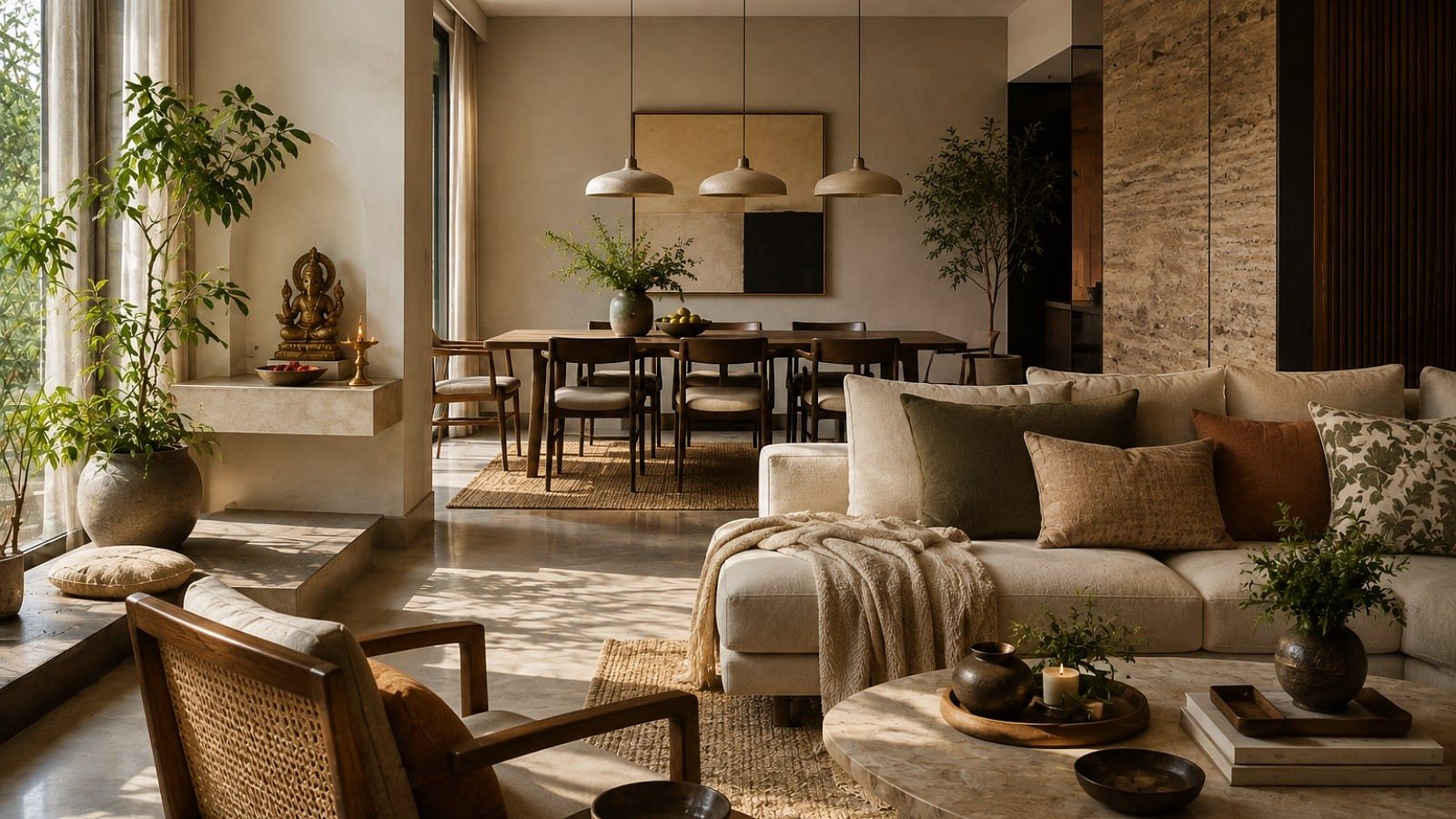
A morning meditation corner might need to be positioned where natural light arrives at a particular hour. A puja space may need privacy without being isolated from the rest of the home. A kitchen designed for a family that cooks together requires a very different relationship between preparation, circulation and dining than one designed primarily for entertaining. The result is a home that feels less staged.
“When a home is designed around them, it stops feeling curated and starts feeling personal,” Gupta says.
The Rise of Ritual Living
This is where the idea of ritual living enters the conversation. For Sarita Handa, founder and Chairperson, a heritage-focused lifestyle brand, Sarita Handa, the home is increasingly being understood not as a collection of rooms, but as a sequence of experiences that unfold across a day.
“Homeowners today aren’t just asking what a room should look like. They’re asking what a room should help them do and feel, at different points in the day,” says Handa.
The distinction may sound philosophical, but it has practical implications for design. A bedroom at 7 a.m. has a different purpose from a bedroom at 10 p.m. A dining room before guests arrive is different from one after everyone has settled around the table. A living room might need to accommodate quiet reading in the afternoon and a gathering of friends later that evening.
The most successful spaces, therefore, may be those capable of changing character without constantly changing form.
A Bedroom Designed for the End of the Day
Consider the bedroom. Winding down is a ritual, whether or not we consciously describe it that way. The lighting becomes softer. The pace slows. Textures become more tactile. The room begins to communicate that the day is coming to an end.
Handa sees textiles as particularly powerful in creating this transition.
“Soft, layered textures, a quilt that feels heavier at night, linen that softens further with every wash, do quiet work here,” she explains. These details do more than make a room visually inviting; they help establish an atmosphere of rest.
The beauty of this approach is that it does not necessarily require another piece of furniture or a dramatic architectural intervention.
Sometimes it is the weight of a quilt, the feel of linen or the quality of the light that changes the emotional temperature of a room.
When the Dining Table Becomes the Centre of the Home
The dining table demands an entirely different energy. Where the bedroom is about retreat, dining is about gathering. It is where conversations stretch, celebrations take shape and, in many Indian homes, multiple generations can find themselves sharing the same meal.
For Gupta, these everyday rituals can be among the most important considerations when designing a home.
“The moments our clients value most are rarely grand. For some, it is morning meditation or puja; for others, it is a Sunday lunch that brings three generations around the same table,” she says.
Designing around these moments means understanding not just how many people a room needs to accommodate, but how they actually behave once they are there.
Do people linger over meals? Does someone always move from the dining table to the living room with their coffee? Do children do their homework nearby? Does entertaining happen formally or spontaneously?
These details can determine everything from furniture placement to lighting and circulation.
Why Textiles Have Become More Important
If architecture gives a home its structure, textiles may be what give it its rhythm. Handa believes textiles have a particular role in ritual living because they respond to touch, light and use in ways that hard surfaces cannot.
“Furniture holds its shape regardless of the hour. Textiles change character with light, with touch, with use,” she says.
A cushion can feel crisp in the morning and softer by evening. Linen develops character over time. A table runner can shift the mood of a dining setting without changing the room itself.
This responsiveness makes textiles more than decorative accessories. They become a kind of sensory layer, one that can help a space transition from one ritual to another.
In the bedroom, textiles can create softness and enclosure. At the dining table, they can introduce colour and energy. In a living room, they can create visual warmth while making the space feel more inviting.
“That responsiveness is exactly why textiles have become central to how we think about ritual living, not as accessories, but as the layer of a home that actually moves with the day,” Handa explains.
From Bespoke Design to Behavioural Design
The idea of designing around rituals also pushes against the increasingly familiar language of trend-driven interiors. A room can look beautiful in photographs and still be inconvenient to live in.
A kitchen can be perfectly styled but poorly organised for the way a family cooks. A living room can be visually impressive but fail to encourage conversation. A bedroom can be luxurious yet lack the sensory qualities that help someone unwind.
For Gupta, this is why bespoke design has to begin with observation rather than aesthetics.
“A templated home cannot account for the specific rhythm of a specific family,” she says.
The goal is not to reject trends altogether, but to make sure they do not dictate how people live. A design language can borrow from contemporary aesthetics while remaining deeply personal in its planning.
That is perhaps the difference between a home that looks considered and one that feels considered.
The Home as a Sequence, Not a Static Image
The larger shift is towards seeing residential interiors as something dynamic. A home changes with the hour, the season, the people in it and the rituals taking place within it. Morning light enters differently from evening light. A formal dining room can become a children’s homework station. A balcony can be a place for coffee at sunrise and conversation after dinner.
Designing for these transitions requires a different kind of attention. It means asking not only where furniture belongs, but where life happens.
And that may explain why ritual has become such a compelling idea in contemporary interiors. In an era of highly photographed homes and rapidly changing design trends, the most enduring luxury may be a space that feels unmistakably its own.
The New Luxury Is a Home That Knows You
The most personal homes rarely announce themselves loudly. They reveal themselves through small decisions: the chair positioned exactly where someone reads every morning, the dining table large enough for three generations, the textiles chosen because they feel better with use, the quiet corner reserved for prayer or meditation.
“A home that understands how you live will always outlast one that simply looks the part,” says Gupta.
Handa arrives at a similar conclusion from another direction: “Ultimately, ritual living reminds us that design isn’t just about aesthetics; it’s about creating a home that responds to who you are at every hour.”
Perhaps that is where residential luxury is heading, not towards homes that are increasingly perfect, but towards homes that are increasingly personal, responsive and lived in.
The most sophisticated home may ultimately be the one that does not ask its inhabitants to adapt to the design. It adapts to them.