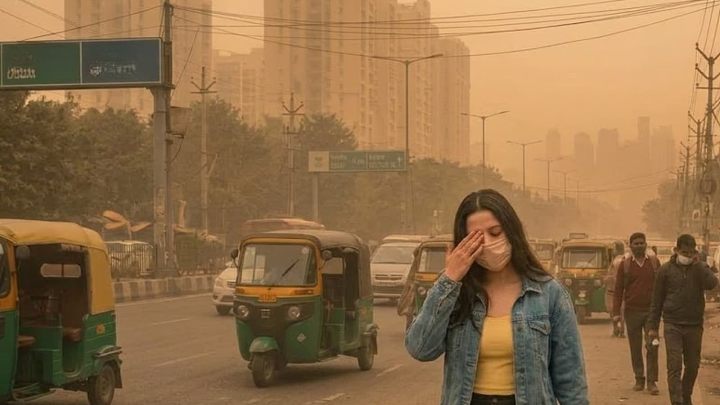
Delhi Air Quality Dips To ‘Poor' First Time In 2026: How Smog Can Trigger Redness, Dryness And Itching In Your Eyes
Delhi woke up on Wednesday to its first overall ‘poor’ air quality reading of 2026. The city’s Air Quality Index (AQI) touched 227 early in the morning, crossing the 200 mark for the first time since mid-July.
By Tanya Dutt··21K reads
Delhi Air Quality Dips To ‘Poor' First Time In 2026: How Smog Can Trigger Redness, Dryness And Itching In Your Eyes
Delhi woke up on Wednesday to its first overall ‘poor’ air quality reading of 2026. The city’s Air Quality Index (AQI) touched 227 early in the morning, crossing the 200 mark for the first time since mid-July.
The city recorded an AQI of 227 at 7.05 am on October 21, according to official data. The Central Pollution Control Board classifies an AQI between 201 and 300 as poor. Several monitoring stations slipped into the ‘very poor’ category, with readings above 300 in places such as Jahangirpuri and Pusa.
Falling temperatures and weaker winds have contributed to the accumulation of pollutants close to the ground.
While respiratory health is usually at the centre of discussions around Delhi’s pollution, your eyes are also directly exposed to the air you breathe. Persistent exposure to particulate matter and other pollutants can irritate the ocular surface and aggravate existing eye problems.
Signs That Air Pollution Is Affecting Your Eyes
Common complaints during poor air quality days include:
Burning or stinging that feels worse in the wind
Redness or a bloodshot appearance
A gritty or sandy sensation
Excessive tearing that does not relieve discomfort
Increased sensitivity to light
These symptoms can overlap with allergies or infections, so persistent irritation should not be dismissed as just the weather.
How Does Smog Affect The Eyes?
The surface of the eye is continuously exposed to the surrounding environment, making it particularly vulnerable to airborne pollutants.
Dr Tushar Grover, Medical Director, Vision Eye Centre, explains, “During smog season, rising levels of air pollution can significantly affect the health of the ocular surface, leading to symptoms such as redness, burning, itching, dryness and excessive watering. Fine particulate matter, including PM2.5 and PM10, along with smoke and other airborne pollutants, can irritate the surface of the eyes and disrupt the tear film, which acts as a protective layer to keep them lubricated. This can increase tear evaporation and trigger inflammation, worsening existing conditions such as dry eye disease and allergic conjunctivitis.”
The tear film acts as a protective barrier, washing away small particles and keeping the cornea lubricated. Pollutants can destabilise this film, leaving the eyes more vulnerable to irritation and dryness.
The result is a range of symptoms that many people notice almost as soon as they step outdoors: a burning or stinging sensation, redness, a gritty feeling, excessive watering or a persistent sense of dryness.
Why Do your Eyes Water Even When they Feel Dry?
Watery eyes may seem contradictory when the underlying problem is dryness. However, the eyes can produce excess reflex tears in response to irritation. These tears may not provide the stable lubrication needed to keep the ocular surface comfortable.
Dr Grover highlights this common misconception, saying, “One common misconception is that watery eyes are always a sign of adequate lubrication. In reality, when the eyes become dry or irritated, they may produce excess reflex tears as a protective response. However, these tears may not provide the stable lubrication needed to keep the eyes comfortable.”
People who already have dry eye, allergies or eyelid oil gland dysfunction may be particularly vulnerable. Contact lens wearers may also experience increased discomfort during periods of high pollution.
Outdoor workers, daily commuters and people living near heavily trafficked roads face repeated exposure. Children and older adults also need particular care on high-pollution days.
What Can Help Reduce Eye Irritation During Smog?
Reducing exposure to pollutants is an important first step. Follow these precautions during periods of poor air quality:
Limit outdoor exposure: Check the AQI before stepping out and reduce prolonged outdoor activity when pollution levels are high.
Wear protective glasses: Wraparound glasses can help reduce direct exposure to airborne particles.
Avoid rubbing your eyes: Rubbing can aggravate irritation and inflammation.
Consider lubricating eye drops: Preservative-free lubricating drops may provide temporary relief from dryness and discomfort, depending on individual needs.
Keep indoor air cleaner: Keeping windows closed when outdoor pollution is high and using an air purifier with a high-efficiency particulate air (HEPA) filter can help reduce indoor particle exposure.
Reconsider contact lens use: If pollution is causing discomfort, switching temporarily to spectacles may help.
Dr Grover advises, “To minimise irritation, people should reduce outdoor exposure when pollution levels are high, wear protective glasses and consider using a HEPA air purifier indoors. Preservative-free lubricating eye drops may help relieve dryness and discomfort. Contact lens users can consider switching to spectacles during severe pollution episodes.”
He also cautions against self-medication, adding, “It is equally important to avoid rubbing the eyes or using over-the-counter redness-relieving drops and steroid eye drops without medical advice, as these may worsen symptoms or mask an underlying condition.”
When Should You See An Eye Doctor?
Pollution-related irritation may improve when exposure decreases, but persistent symptoms should not automatically be attributed to smog.
If redness or irritation continues, worsens or is accompanied by eye pain, discharge, swelling, significant light sensitivity or blurred vision, an ophthalmologist should be consulted. Sudden changes in vision or severe eye pain warrant urgent medical assessment.
Dr Grover stresses the importance of timely evaluation, saying, “If redness or irritation persists, or is accompanied by eye pain, light sensitivity or blurred vision, an ophthalmologist should be consulted. Timely evaluation can help identify the underlying cause and prevent symptoms from being dismissed as routine seasonal discomfort.”
Delhi’s Winter Action Plan is due to begin on November 1, with measures aimed at controlling local sources of pollution. Until then, and through the colder months when atmospheric conditions can limit pollutant dispersion, residents will need to take precautions for their eyes alongside those for their lungs.