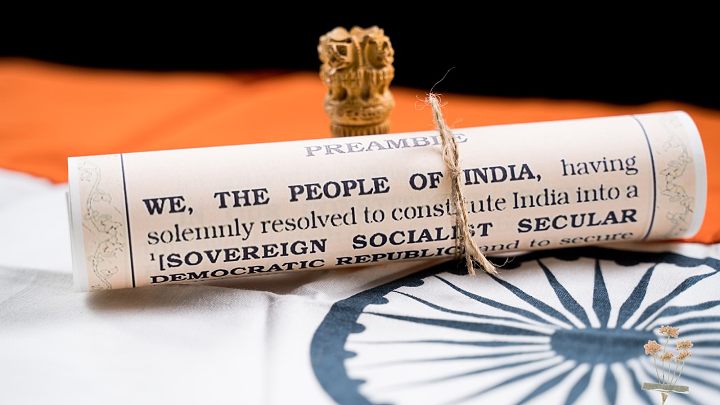
Constitution Day 2026: Take The Preamble Challenge To Test How Well You Know India's Founding Principles
The words Justice, Liberty, Equality and Fraternity are familiar to most of us. We have read them in textbooks, heard them during school assemblies and perhaps even recited them on important national occasions. But how w
By Lifestyle Desk··15K reads
Constitution Day 2026: Take The Preamble Challenge To Test How Well You Know India's Founding Principles
The words Justice, Liberty, Equality and Fraternity are familiar to most of us. We have read them in textbooks, heard them during school assemblies and perhaps even recited them on important national occasions. But how well do we really understand the principles that form the foundation of the Indian Constitution?
Every year, November 26 is observed as Constitution Day, also known as Samvidhan Divas, to commemorate the adoption of the Constitution by the Constituent Assembly on November 26, 1949. In 2026, India marks 77 years since that historic moment. The Constitution came into effect on January 26, 1950, which is why the country celebrates Republic Day on that date.
The Government of India began observing November 26 as Constitution Day in 2015 to promote awareness of constitutional values among citizens. This year, the Ministry of Parliamentary Affairs is facilitating an online reading of the Preamble through the MyGov portal in 23 languages, including English and 22 Scheduled Languages. Citizens can participate, read the Preamble and reaffirm their commitment to its ideals.
And what better way to mark the occasion than by going back to the very beginning? The Preamble may be brief, but every word carries weight. It sets out the vision of the Constitution and the values India seeks to uphold as a democratic republic.
So, before you scroll through another Constitution Day post, put your knowledge to the test. From the meaning of ‘sovereign’ and ‘secular’ to the history behind the Preamble, here are 10 questions to find out how well you know India’s founding principles.
The Preamble Challenge: Take The Quiz
1. On which date was the Constitution of India adopted by the Constituent Assembly?
A. August 15, 1947
B. November 26, 1949
C. January 26, 1950
D. January 24, 1950
Correct answer: B. November 26, 1949
The Constituent Assembly adopted the Constitution on November 26, 1949. It came into force on January 26, 1950. The two dates mark different milestones in India’s constitutional history.
2. Which words begin the Preamble to the Indian Constitution?
A. The Republic of India
B. We, the People of India
C. India is a Sovereign Nation
D. We, the Citizens of India
Correct answer: B. We, the People of India
The opening words establish a central idea of the Constitution: its authority comes from the people of India. The Preamble declares that the people adopt, enact and give the Constitution to themselves.
3. Which of these words was added to the Preamble through the 42nd Constitutional Amendment in 1976?
A. Democratic
B. Republic
C. Socialist
D. Justice
Correct answer: C. Socialist
The 42nd Amendment Act, 1976, added the words ‘Socialist’ and ‘Secular’ to the Preamble. It also added the word ‘Integrity’ to the phrase ‘unity and integrity of the Nation’. The Preamble originally described India as a Sovereign Democratic Republic.
4. What does ‘Sovereign’ mean in the context of the Indian Constitution?
A. India is governed by a monarch
B. India is independent and has the authority to make its own decisions
C. India follows the laws of another country
D. India has no elected government
Correct answer: B. India is independent and has the authority to make its own decisions
Sovereignty means that India is an independent nation, free to conduct its internal and external affairs without being controlled by another state. It reflects the country’s political independence and authority.
5. Which of the following best describes the meaning of ‘Secular’ in the Preamble?
A. The State follows one official religion
B. Religion has no place in the lives of citizens
C. The State does not identify itself with one religion and respects religious freedom
D. Citizens must follow the same religious practices
Correct answer: C. The State does not identify itself with one religion and respects religious freedom
Secularism is a constitutional principle that protects freedom of religion and ensures that the State does not favour one religion over another. It recognises the country’s religious diversity and the right of individuals to practise, profess and propagate religion, subject to constitutional provisions.
6. The Preamble promises Justice in which three forms?
A. Legal, moral and social
B. Social, economic and political
C. Religious, cultural and economic
D. Individual, national and international
Correct answer: B. Social, economic and political
The Preamble promises social, economic and political justice. These ideals aim to create a society where people are treated fairly, have opportunities to improve their lives and can participate in the country’s political process.
7. Which of these is NOT explicitly listed under Liberty in the Preamble?
A. Thought
B. Expression
C. Movement
D. Worship
Correct answer: C. Movement
The Preamble promises liberty of thought, expression, belief, faith and worship. Freedom of movement is protected separately under Article 19 of the Constitution, subject to reasonable restrictions.
8. What does the Preamble mean by Equality?
A. Everyone must have the same income
B. Equality of status and opportunity
C. Everyone must follow the same profession
D. All citizens must have identical lifestyles
Correct answer: B. Equality of status and opportunity
The Preamble promises equality of status and opportunity. It reflects the constitutional commitment to equal dignity and fair opportunities, without discrimination on grounds prohibited by the Constitution.
9. What does Fraternity seek to assure?
A. The dignity of the individual and the unity and integrity of the Nation
B. Equal income for every citizen
C. A single language and culture across India
D. The authority of the government over citizens
Correct answer: A. The dignity of the individual and the unity and integrity of the Nation
Fraternity refers to a sense of brotherhood and shared belonging. The Preamble connects it with the dignity of every individual and the unity and integrity of the country. It is a reminder that India’s diversity and democratic spirit must go hand in hand.
10. Who chaired the Drafting Committee of the Constituent Assembly?
A. Jawaharlal Nehru
B. Sardar Vallabhbhai Patel
C. Dr BR Ambedkar
D. Dr Rajendra Prasad
Correct answer: C. Dr BR Ambedkar
Dr BR Ambedkar chaired the Drafting Committee, which was responsible for preparing the draft Constitution. He is widely recognised as one of the principal architects of the Indian Constitution.
The Preamble is more than an introduction to the Constitution. It captures the larger vision behind the document and offers a way to understand the principles that guide India’s democratic framework. Its promises of justice, liberty, equality and fraternity remain relevant to conversations around discrimination, freedom of expression, religious diversity, equal opportunity and individual dignity.
This Constitution Day, take a moment to read the Preamble again. You can also participate in the Government’s online Preamble-reading initiative through the MyGov portal, which is offering the text in 23 languages.
Whether you scored a perfect 10 or discovered a few gaps in your constitutional knowledge, the point is to keep learning. After all, knowing the principles that shape our democracy is not just a school lesson; it is part of being an informed citizen.