Centrifugal vs Cold Press Juicer: Which Is The Best Way To Get Juice, Retain Nutrients?
Fresh juice is one of those things that seems straightforward until you start shopping for a juicer. A centrifugal machine can produce a glass in minutes and is usually considerably cheaper. A cold press juicer takes lon
By Consumer Trends Desk··28K reads
Centrifugal vs Cold Press Juicer: Which Is The Best Way To Get Juice, Retain Nutrients?
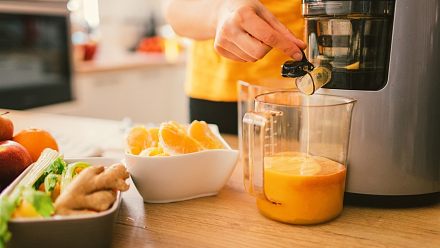
Fresh juice is one of those things that seems straightforward until you start shopping for a juicer. A centrifugal machine can produce a glass in minutes and is usually considerably cheaper. A cold press juicer takes longer and costs more, but promises gentler extraction, better yield and, in many cases, better nutrient retention.
The two machines work very differently. A centrifugal juicer uses a rapidly spinning mechanism to shred fruits and vegetables and separate the juice from the pulp. A cold press juicer crushes and presses produce slowly, usually at a fraction of the speed.
However, the nutritional difference between the two isn’t quite as clear-cut as marketing around cold press juicers sometimes suggests. Research comparing freshly prepared cold-pressed and centrifugal juices has found no significant difference in vitamin C, total phenolics, carotenoids or antioxidant capacity in the fruits and vegetables studied.
So the better machine isn’t simply the one labelled “cold press”. It depends on how often you juice, what you juice and how much you’re prepared to spend.
Which should you buy?
Buy a centrifugal juicer if:
You want fresh juice quickly.
You mainly juice harder fruits and vegetables such as apples, carrots and beetroot.
You don’t want to spend Rs 15,000 or more on a juicer.
You want something straightforward for occasional or everyday use.
Speed matters more to you than maximising juice yield.
Buy a cold press juicer if:
You juice frequently enough to justify a more expensive machine.
You want to extract as much juice as possible from your produce.
You regularly juice leafy greens as well as fruits and vegetables.
You prefer a slower, quieter machine.
You want a machine that can also handle things such as nut milk, depending on the model.
For most people who simply want a quick glass of fresh fruit or vegetable juice, a centrifugal machine remains the more practical and affordable choice. Cold press becomes more compelling if juicing is an established part of your daily routine and you’re willing to pay considerably more for slower extraction and additional versatility.
Top picks
Category
Product
Was
Now
Discount
Best centrifugal juicer overall
Sujata Powermatic Pro Juicer
Rs 8,910
Rs 5,740
36% off
Best value centrifugal juicer
Wonderchef Venezia Centrifugal Juicer
Rs 5,999
Rs 4,199
30% off
Best centrifugal juicer for easy cleaning
Philips HR1832/00 Centrifugal Juicer
Rs 8,995
Rs 6,299
30% off
Best cold press juicer overall
Kuvings B1700 Cold Press Juicer
Rs 35,900
Rs 24,999
30% off
Best value cold press juicer
AGARO Imperial Cold Press Juicer
Rs 35,899
Rs 14,999
58% off
Best cold press juicer with XL hopper
Atomberg Althea Cold Press Juicer
Rs 21,999
Rs 14,999
32% off
Quick comparison
Feature
Centrifugal juicer
Cold press juicer
Extraction method
High-speed spinning mechanism
Slow crushing and pressing
Juicing speed
Fast
Slower
Juice yield
Good
Generally higher
Aeration
More
Less
Foam
Usually more
Usually less
Hard fruits and vegetables
Excellent
Excellent
Leafy greens
Less efficient
Generally better
Noise
Usually louder
Usually quieter
Cleaning
Often quicker
Can be more involved
Price
Usually lower
Usually higher
Best for
Quick, convenient juicing
Frequent and varied juicing
How does a centrifugal juicer work?
A centrifugal juicer is designed around speed. Produce is fed through a chute and comes into contact with a rapidly rotating cutting mechanism. The resulting pulp is spun at high speed against a mesh filter, separating the liquid from the solids.
That speed is the biggest attraction. Apples, carrots, beetroot and many other fruits and vegetables can be turned into juice very quickly, making a centrifugal machine particularly useful when you’re trying to get breakfast ready rather than treating juicing as a lengthy kitchen ritual.
Where centrifugal juicers perform best?
Hard fruits and vegetables are where centrifugal machines tend to be particularly convenient. Apples, carrots, beetroot, pears and similar produce can usually be processed quickly.
They’re also considerably more accessible in terms of price. Among the machines here, the Wonderchef Venezia costs Rs 4,199, while even the more powerful Sujata Powermatic Pro is Rs 5,740. By comparison, the cold press models start at Rs 14,999.
If you juice occasionally or simply want fresh carrot or mixed fruit juice in the morning, that price difference is difficult to ignore.
Where centrifugal juicers struggle?
Leafy greens and softer ingredients can expose some of their limitations. A centrifugal mechanism may not extract as efficiently from certain produce as a slow juicer.
The high-speed process also incorporates more air into the juice, which can result in more foam and separation. If you prefer a denser juice or intend to make more varied combinations of fruits, vegetables and greens, a cold press machine can be more appealing.
How does a cold press juicer work?
Cold press machines take almost the opposite approach.
Instead of relying on high rotational speed, they slowly crush the produce and press the liquid through a filter. The Atomberg Althea, for example, operates at 40 RPM, while centrifugal machines can run at thousands of revolutions per minute.
The process is slower, but it generally introduces less air into the juice and can extract more liquid from some types of produce.
Where cold press juicers perform best?
Cold press machines make most sense for people who juice regularly and use a wider variety of ingredients.
They are generally better suited to leafy greens and can also be more versatile. Models such as the Kuvings B1700 and AGARO Imperial can be used for fruit and vegetable juices as well as nut milk.
The resulting pulp can also be drier because more liquid has been extracted. If you’re buying large quantities of fresh produce specifically for juicing, getting more juice from those ingredients can become meaningful over time.
Where cold press juicers struggle?
Price is the obvious drawback.
The Atomberg Althea and AGARO Imperial are both Rs 14,999 at the prices shown, while the Kuvings B1700 costs Rs 24,999. That is a major jump from a centrifugal machine costing around Rs 4,000 to Rs 6,000.
They’re also slower. If the entire point of owning a juicer is being able to make a glass quickly before leaving for work, paying significantly more for slow extraction may not improve your experience.
Which actually retains more nutrients?
This is where the comparison becomes more interesting.
Cold press juicers are frequently promoted on the basis that slower extraction generates less heat and oxidation and therefore preserves more nutrients. The extraction method certainly differs, but evidence does not support a blanket claim that freshly prepared cold press juice is always significantly more nutritious.
A study published in Heliyon compared cold-pressed and centrifugal juices made from pineapple, guava, carrot and two varieties of dragon fruit. Researchers measured vitamin C, total phenolic and carotenoid content as well as antioxidant capacity. They found no significant differences between the two extraction methods for the parameters studied.
That doesn’t mean extraction method is irrelevant. Different fruits, machines and processing conditions can produce different results, and cold press extraction can reduce aeration. But consumers shouldn’t assume that buying an expensive slow juicer automatically produces juice with dramatically more vitamins and antioxidants.
How the juice is stored also matters. In the same study, room-temperature storage adversely affected the nutritional quality of cold-pressed juice within 48 hours, while refrigerated samples remained comparatively stable for longer.
In practical terms, drinking freshly made juice relatively soon after preparing it may matter as much as obsessing over which extraction technology was used.
Which gives you more juice?
Cold press has a stronger argument here.
Because the produce is slowly crushed and squeezed rather than rapidly shredded and spun, slow juicers can extract more liquid from certain ingredients and leave behind relatively dry pulp.
That difference matters most if you juice frequently. Getting slightly more juice from each kilogram of fruit and vegetables can reduce waste over time.
For someone who juices once or twice a week, however, the additional yield may not be enough on its own to justify spending two or three times as much on the machine.
Which is easier to live with?
For sheer speed, centrifugal wins.
You can feed in the produce, extract the juice quickly and get on with your morning. Machines with wider feeding tubes also reduce the amount of chopping required beforehand.
Cold press machines require more patience. The slower mechanism means you can’t necessarily force ingredients through as quickly, although newer machines with larger hoppers have made the process considerably easier.
Cleaning varies more by model than by category. A well-designed centrifugal machine such as the Philips HR1832/00 focuses specifically on easier cleaning, while cold press machines can have multiple strainers and extraction components that need to be washed thoroughly.
Which offers better value?
For occasional and moderate juicing, centrifugal machines offer better value.
A capable centrifugal model can cost well under Rs 7,000. The Wonderchef Venezia at Rs 4,199 is a relatively inexpensive way to start making fresh juice, while the 900W Sujata Powermatic Pro at Rs 5,740 offers more power for frequent use.
Cold press machines require a much larger investment. The AGARO Imperial and Atomberg Althea cost Rs 14,999, while the Kuvings B1700 moves up to Rs 24,999.
The calculation changes if you juice almost every day. Better extraction, the ability to process a broader range of ingredients and additional functions can make the higher cost worthwhile over several years.
Which works better for different kitchens?
A household that mainly wants carrot, beetroot, apple or mixed fruit juice will probably be perfectly happy with a centrifugal machine.
A health-conscious household making green juices regularly, experimenting with different vegetables or preparing nut milk may get much more use from a cold press model.
Counter space matters too. Before spending Rs 15,000 to Rs 25,000 on a cold press machine, consider where it will actually sit. Like any specialised kitchen appliance, a juicer stored at the back of a difficult cupboard is much less likely to be used.
Common usage scenarios
Situation
Better choice
Quick morning juice
Centrifugal juicer
Apple and carrot juice
Centrifugal juicer
Beetroot juice
Centrifugal juicer
Occasional juicing
Centrifugal juicer
Lower budget
Centrifugal juicer
Frequent daily juicing
Cold press juicer
Leafy green juices
Cold press juicer
Higher juice extraction
Cold press juicer
Nut milk
Cold press juicer
Quieter operation
Cold press juicer
Want the fastest machine
Centrifugal juicer
Frequently Asked Questions
Is cold press juice more nutritious than centrifugal juice?
Not necessarily. Research comparing freshly prepared juices has found no significant differences in vitamin C, total phenolics, carotenoids and antioxidant capacity between cold-pressed and centrifugal extraction for the fruits and vegetables tested.
Is a cold press juicer worth the extra money?
It can be if you juice frequently, want to process leafy greens or want greater versatility from the machine. For occasional fruit and vegetable juice, a centrifugal model is usually much more economical.
Which juicer is better for carrots and beetroot?
Both can handle them, but a centrifugal juicer is particularly convenient for hard produce because it processes it very quickly.
Which juicer is better for leafy greens?
Cold press machines are generally the better choice when leafy greens form a significant part of your juices.
Which should I buy first?
If you’re new to juicing and aren’t sure how frequently you’ll actually use the appliance, a centrifugal juicer is the safer starting point. If juicing is already a daily habit and you’re prepared to spend more, a cold press machine becomes easier to justify.
Disclaimer: The product descriptions mentioned in the article are solely based on the primary and secondary research conducted by our experts. To keep you ahead of the curve with these latest products, News18 utilises affiliate links. This means if you decide to shop through our recommendations, we may earn a small referral commission at no extra cost to you. Please be advised that News18 is not responsible for any claims under the Consumer Protection Act, 2019, or other applicable laws regarding the final performance, quality, or safety of these products.