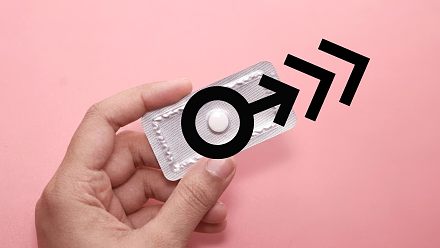
Birth Control Pill For Men: The Science, The Side Effects And When It Could Arrive
For something that takes two people, birth control has historically come with a rather unequal division of labour. Women have had to navigate daily pills, hormonal side effects, intrauterine devices and a long list of co
By Tanya Dutt··15K reads
Birth Control Pill For Men: The Science, The Side Effects And When It Could Arrive
For something that takes two people, birth control has historically come with a rather unequal division of labour. Women have had to navigate daily pills, hormonal side effects, intrauterine devices and a long list of contraceptive decisions, while men have largely had two familiar options: condoms or vasectomy.
The conversation around a pill for men, however, is gathering momentum, raising an obvious question, could contraception finally become a shared responsibility in more than just theory?
Scientists are developing male contraceptive pills that could work either by temporarily blocking sperm release or by suppressing sperm production. Some candidates are hormone-free, while others are being tested for their ability to offer reversible pregnancy prevention without interfering with sexual function. It sounds like a long-overdue addition to the contraceptive toolkit, but there is a catch: promising science does not automatically translate into an available pill.
Image credits: Canva
So, how close are we to men having another option, and what would it mean for fertility, libido and sexual health?
How Would A Male Contraceptive Pill Prevent Pregnancy?
Male contraceptive research is exploring two broad approaches: preventing sperm from being produced or temporarily stopping sperm from functioning normally. Unlike most conventional contraceptive pills for women, which primarily prevent ovulation, these candidates target the male reproductive system.
One approach is to suppress sperm production. YCT-529, developed by YourChoice Therapeutics, is a non-hormonal oral candidate designed to block retinoic acid receptor alpha, a protein involved in sperm development. Researchers hope this will reduce sperm production without directly suppressing testosterone.
Another approach targets sperm motility, or the ability of sperm to swim. An experimental candidate being developed by researchers at Weill Cornell Medicine inhibits soluble adenylyl cyclase (sAC), an enzyme needed for sperm movement. Rather than stopping sperm production, this strategy aims to temporarily prevent sperm from reaching and fertilising an egg.
Image credits: Canva
These approaches are still being investigated. Their ability to prevent pregnancy reliably, and the extent to which their effects can be reversed, must be established through clinical trials.
What Have Recent Studies Found About Male Birth Control?
Could sperm production be switched off temporarily? A Cornell University study published in Proceedings of the National Academy of Sciences in April 2026 investigated whether sperm production could be temporarily interrupted without permanently affecting fertility.
Researchers used a compound called JQ1 to disrupt meiosis, the process through which reproductive cells develop into sperm. In experiments involving male mice, treatment stopped sperm production. After the compound was withdrawn, sperm production began to recover within six weeks, and the animals subsequently fathered healthy offspring that were themselves fertile.
The findings offer preliminary evidence that targeting sperm development could provide a reversible contraceptive approach. However, the experiments were conducted in mice, not humans. JQ1 is not a ready-to-use contraceptive, and further research is needed to identify safer compounds and establish whether this strategy could work in people.
Image credits: Canva
Could an on-demand pill temporarily immobilise sperm?
A separate research programme at Weill Cornell Medicine is investigating an on-demand pill that blocks sAC, an enzyme essential for sperm motility. The proposed approach is designed to act temporarily rather than suppress sperm production over time.
In October 2026, the research programme received an $8.2 million grant to advance development towards a Phase 1 trial in healthy men. The proposed pill is intended to provide a limited window of contraceptive protection, but its safety and effectiveness in humans have not yet been established.
These studies represent different approaches to male contraception. The Cornell mouse study explored temporary suppression of sperm production, while the Weill Cornell candidate aims to interfere with sperm movement.
Could Male Contraceptive Pills Affect Testosterone, Libido Or Erections?
Sexual function is a key consideration in developing a male contraceptive. Potential users will want to know whether a pill affects testosterone, sex drive, erections, orgasm or mood.
Early human research into YCT-529 has provided some preliminary safety information. In a Phase 1a study involving 16 men who had previously undergone vasectomy, single doses were generally well tolerated, with no significant changes reported in testosterone levels, sexual desire or mood.
However, the study was small and examined single doses. It cannot establish whether repeated use would have the same effects or whether the candidate can prevent pregnancy. Larger studies are needed to assess its safety and contraceptive potential.
Researchers developing non-hormonal candidates hope to avoid some of the effects associated with altering hormone levels. But non-hormonal does not mean side-effect-free, and claims that a pill will preserve sexual performance need to be supported by clinical evidence.
What Are The Possible Side Effects Of Male Birth Control Pills?
The risks will depend on the specific drug and its mechanism. Hormonal approaches may affect testosterone levels, mood, libido or other hormone-dependent functions. Non-hormonal candidates may avoid some of these effects, but researchers still need to investigate their potential impact on reproductive health and other body systems.
Clinical trials must examine adverse reactions, sperm quality, sexual function and the effects of repeated use. They must also establish how quickly normal reproductive function returns after a man stops taking the medication.
Reversibility is particularly important because a temporary contraceptive should not cause lasting impairment of fertility. Until larger and longer studies are completed, the full side-effect profiles of these experimental pills remain unknown.
How Will The Pills Actually Work?
An important distinction in contraceptive research is the difference between changing sperm production and preventing pregnancy.
A study may show that a candidate reduces sperm counts or temporarily immobilises sperm. These findings can demonstrate that a drug is affecting its intended biological target, but they do not, on their own, establish how reliably it prevents pregnancy during sexual activity.
Researchers must determine the appropriate dose, duration of protection and consistency of the contraceptive effect. They also need to assess what happens when doses are missed, whether the method interacts with other medicines and how reliably fertility returns after discontinuation.
Clinical trials involving couples will ultimately be important for establishing contraceptive effectiveness. Safety and efficacy evidence must then meet the requirements of the relevant regulatory authorities before a product can be approved.
When Could Male Contraceptive Pills Become Available?
There is no confirmed launch date for the experimental candidates discussed here. YCT-529 is undergoing further clinical evaluation, while the on-demand sAC-inhibitor programme at Weill Cornell Medicine is working towards early human testing. The sperm-production approach investigated in Cornell’s mouse study remains at a preclinical stage.
Each candidate must progress through the necessary safety and efficacy studies before regulators can consider approval. A promising result in an animal model or an early human safety trial does not guarantee that a contraceptive will reach the market.
For now, condoms remain an available contraceptive option for men and also help reduce the risk of many sexually transmitted infections. Vasectomy remains an established option for those seeking permanent contraception.
A male contraceptive pill could eventually broaden reproductive choices and help couples share responsibility for pregnancy prevention. The next milestone is demonstrating that a candidate can prevent pregnancy reliably, has an acceptable safety profile and allows reproductive function to recover as intended.