Bipasha Basu Says She Made Muscular Women ‘Acceptable’: Why Women Today Want Strength, Not Just Weight Loss
“I think we are seeing a very positive shift in how women define fitness. Chavi Singhal, Founder & Mind–Body Wellness Coach at Ishva Wellness, tells us how she is seeing a very clear change in how women talk about t
By Mallika Bhagat··7K reads
Bipasha Basu Says She Made Muscular Women ‘Acceptable’: Why Women Today Want Strength, Not Just Weight Loss
“I think we are seeing a very positive shift in how women define fitness. Chavi Singhal, Founder & Mind–Body Wellness Coach at Ishva Wellness, tells us how she is seeing a very clear change in how women talk about their bodies. The goal for many, she says, is slowly moving from “I want to be thin, smaller” to “I want to be stronger and healthier.”
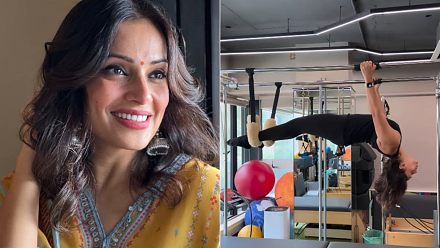
While there is a parallel conversation on unhealthy weight that centres celebs like Demi Moore, Ariana Grande, the world collectively is trying to define what it really means to be healthy. In India, actress Bipasha Basu recently appeared on the latest cover of Elle Magazine, after a hiatus of sorts since her baby. Speaking to the magazine about her physique and the way muscular women were perceived when she entered Bollywood, Basu said: “I don’t think women with more muscle tone were very acceptable as actresses. But I think I started the trend, and I started preaching ‘love yourself’ to everyone because I realised it’s not just about looking good. It’s more intrinsic. You need to be healthy.”
The actress, now 47, also spoke about ageing and refusing to chase a younger version of herself. “Ageing is like the biggest sin that you can commit. I believe that I like myself more, the person that I am today, much more than what I used to be in my twenties,” she said, adding that she is “very proud” of her age.
That idea that the body is something to build, use and live in rather than endlessly shrink is increasingly resonating with women who grew up surrounded by weight-loss content.
‘It Started With Weight Loss Like It Usually Does’
For 27-year-old Simran Sukhnani, it started with a desire to lose weight but she soon realised there was more going on. “It started with weight loss like it usually does but i was also facing a lot of other issues as a result of lack of movement – lethargy, acne and constant bloating,” she says. Those concerns pushed her towards eating better and getting to the gym.
She never really worried about becoming too muscular. “I knew that its not something that happens overnight because i had constantly heard complaints from male friends about how much time it takes to build muscle.”
What changed most for her was her relationship with food. “I do not indulge in emotional eating anymore,” she says. Instead of simply trying to eat less, she now pays attention to protein and whether she is actually hungry. “Before eating something my question now always is, do I need it because I’m physically hungry or do I feel drawn to it because I am emotionally hungry?” she says.
Even her idea of a treat has changed. She calls it a “treat day” rather than a cheat day, while being mindful of how she feels afterwards. “shocking my body with heavy amounts of sugar, salt or alcohol is not something I’d want to do because then I will only be facing issues the next day, bummer,” she says.
She has muscles, and deadlifts more than most people in her gym. But when people tell her that muscles are not feminine? Her answer is blunt: “Femininity or masculinity are parts of being a human and without strength, you would not be able to experience any of it. Strength comes from muscle in the body and not goops of fat or plain skin.”
‘I Just Wanted To Look A Certain Way’
For 23-year-old Divyanshi Kaandpal, the motivation was never really about becoming smaller. She had seen enough bodies on Instagram to know what she wanted hers to look like. “Honestly, I just wanted to look a certain way,” she says. “I just wanted to have a toned body, good muscles, and look a certain way.”
She started lifting weights knowing that it would build muscle and says she never had much fear of becoming “too muscular”. But she does question what that phrase actually means.
“If by too muscular you mean having a body that is extremely muscular, where the muscles are kind of coming out of your clothes, then no, that’s not something I wanted,” she says. At the same time, she knew she was not going to accidentally become extremely muscular simply by lifting weights.
The changes she notices now aren’t necessarily the ones a weighing scale can measure. “I think the biggest thing is that I’ve built strength,” she says. On the days when she is regular with strength training, she feels “more strength and power” in herself, less lazy and more active. There is also a mental component: “Mentally also, I feel more relaxed, clean and clear.”
Left: Simran Sukhnani; Right: Divyanshi Kaandpal
Her relationship with food has changed too. She now thinks about whether she is fuelling her body properly and getting enough protein rather than simply cutting calories. “I do feel guilty when I’m putting what I would call ‘trash calories’ into my body and not getting enough protein,” she says.
There is still some resistance to women lifting heavy. Divyanshi says friends have not really commented on her muscles, but family members have occasionally told her, “Don’t lift such heavy weights, you’ll end up looking like a boy.”
For her, however, fitness has expanded beyond appearance. “It’s not just about being thinner or looking a certain way. It’s about having strength, mobility, flexibility, energy, and also feeling good physically and mentally.”
From ‘Becoming Slim’ To ‘Being Able To Do Stuff’
Samridhi Punetha, 26, describes a similar evolution, although she began with a more conventional weight-loss goal: “weight loss and looking a certain way- lose fat and build lean muscle.”
She started because she wanted to be healthier, but admits there is still a fear attached to muscle. “yes I do have a fear of becoming too broad especially my back by doing the wrong excercises (as per my goals),” she says. She does feel good about herself after starting to work towards building muscle, although the relationship with food has become more complicated. “It’s now a little negative because i don’t have a proper structure as of now so I keep worrying if I’m consuming too many calories,” she says.
She also finds herself analysing her body more. Yet her definition of fitness has changed considerably. “Fit a couple of years ago simply meant becoming slim. Now it also means building muscle, being able to do shit, feel active and healthy etc.”
What Actually Happens When Women Start Lifting?
Singhal says the appeal of strength training is partly that it gives women new ways to measure progress. It could be lifting a heavier weight, doing more repetitions, improving form or simply finding everyday movements easier. Unlike the constant pursuit of a lower number on the scale, those markers can make fitness feel more tangible — and more empowering.
There is also a reason not to judge strength training too quickly. “The first changes are often actually felt before they are seen,” Singhal explains. Early gains can come from the nervous system becoming better at recruiting the muscles being trained, while visible changes in muscle and body composition take longer and vary depending on training, nutrition, sleep, genetics and consistency.
Does More Muscle Really ‘Boost’ Your Metabolism?
While muscle does contribute to resting energy expenditure, the health expert cautions against one of the most popular promises attached to strength training: a dramatically faster metabolism. “Building muscle can increase the number of calories the body uses at rest, but the increase from each additional kilogram of muscle is relatively modest,” she says.
The bigger argument for muscle is not that it turns the body into a calorie-burning machine, but that it supports strength, movement, physical function and body composition over time. Muscle mass and strength naturally decline with age, particularly with inactivity. Singhal says the process can begin gradually around the 30s and become increasingly relevant later in life. Maintaining muscle can support balance, bone health, mobility and independence.
“The muscle you build and maintain earlier in life is almost like a reserve that you carry with you as you age,” she says.
Can ‘Strong Is The New Sexy’ Become Another Body Ideal?
The idea of replacing one body ideal with another does not necessarily mean women have escaped body pressure. “Anything can become unhealthy when it becomes obsessive,” Singhal says. If every workout becomes about burning calories, changing a body part, getting leaner or constantly checking body composition, strength training can simply become another version of the same pressure.
“There is no need for women to replace ‘I need to be thinner’ with ‘I need to be more muscular’,” she says. “The goal should be to build a body that supports the life you want to live.”