Bangkok Flood Alert: Thailand Capital Declares Disaster Zone, Airline Guidelines And Travel Advisory Explained
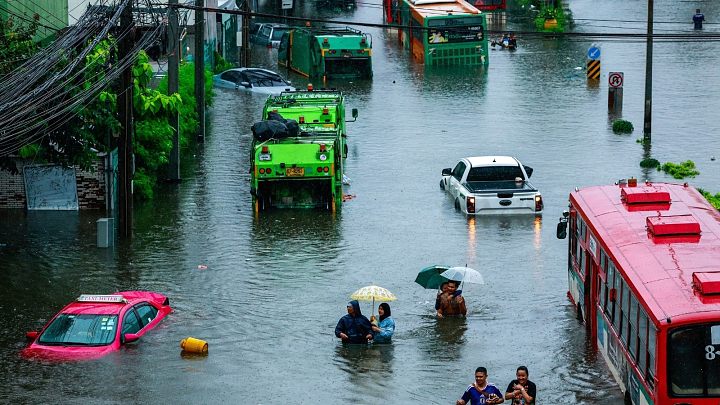
Bangkok is dealing with severe flooding after almost 300 mm of rain fell in parts of the Thai capital over roughly 48 hours, leaving roads inundated, traffic severely disrupted and some residents forced to evacuate. The
By Labani Mahanandy··29K reads
Bangkok Flood Alert: Thailand Capital Declares Disaster Zone, Airline Guidelines And Travel Advisory Explained
Bangkok is dealing with severe flooding after almost 300 mm of rain fell in parts of the Thai capital over roughly 48 hours, leaving roads inundated, traffic severely disrupted and some residents forced to evacuate. The situation has prompted Bangkok authorities to declare the entire city a disaster-affected area.
For travellers, however, the biggest question is not simply whether Bangkok is flooded. It is whether they can still fly in and out of the city and, more importantly, how they should get to the airport.
The good news is that both Suvarnabhumi Airport (BKK) and Don Mueang International Airport (DMK) remain open and operational. The bigger challenge is reaching them, with flooding, waterlogged roads and traffic congestion affecting journeys across the city. The Tourism Authority of Thailand (TAT) is advising visitors to allow extra travel time and check road, weather and transport conditions before setting out.
Bangkok is under a citywide flood disaster declaration
The flooding began after persistent heavy rain, with parts of Bangkok recording close to 300 mm of rainfall. Roads have been submerged in several areas, while canals have reached or exceeded capacity, making it harder for floodwater to drain away.
The declaration gives authorities a wider framework to coordinate assistance and flood-response measures across the capital. Earlier, three districts, Nong Chok, Suan Luang and Khan Na Yao, had been specifically designated as flood disaster areas before the response was expanded citywide.
Flying from Bangkok? Don’t leave for the airport at the last minute
The Civil Aviation Authority of Thailand (CAAT) has warned passengers using both Bangkok airports to plan ahead, as heavy rain and flooding could affect road access and flight schedules. Travellers have been asked to check their flight status directly with their airline before leaving and to allow additional time for the journey.
The official advice from Suvarnabhumi Airport is particularly important for international travellers. The airport says passengers should allow at least three hours for international flights and two hours for domestic flights, while also factoring in additional road delays caused by flooding.
Getting to Suvarnabhumi Airport
If you are travelling to BKK, avoid the Lat Krabang route, where significant waterlogging has been reported.
Thailand’s government travel advisory recommends using Motorway No. 7 or the Burapha Withi Expressway where appropriate. The airport itself continues to operate flights normally, but passengers should monitor road conditions before leaving for the terminal.
The TAT is also advising passengers heading to Don Mueang to build in additional journey time and avoid flooded roads wherever possible. Rail options can be useful in areas where roads are badly affected, although travellers should check the latest service status before setting out.
Airlines are offering flexible options
Several airlines have announced special measures for passengers affected by the flooding and resulting traffic disruption between September 26 and 28.
AirAsia: Passengers travelling to or from Bangkok during the affected period can make one free change on the same route, with the new journey taking place within seven days of the original travel date, subject to availability. An AirAsia Credit Account option is also available under the announced conditions.
Nok Air: For passengers departing from Don Mueang on September 26, including those who missed their flight because of flooding, the airline is offering one free change within 30 days or a voucher worth 100% of the ticket value, according to The Nation.
Thai Lion Air: Passengers travelling between September 26 and 28 may be eligible for ticket credit or a free rebooking within the specified 30-day period, subject to the airline’s conditions.
Thai Vietjet: Passengers with flights arriving at or departing from Suvarnabhumi between September 26 and 28 can choose between a one-time free change on the same route, with travel within seven days, or retaining the ticket value as Credit Shell for 180 days.
Thai Airways: Passengers holding eligible THAI tickets issued on or before September 26 and travelling from Suvarnabhumi between September 26 and 29 can change their travel date once, with the change fee waived. The new travel must be completed by September 29.
What if your flight is delayed or cancelled?
CAAT says passenger rights remain applicable when flights are delayed or cancelled because of adverse weather. Depending on the circumstances and applicable conditions, assistance may include food and beverages, communication facilities, alternative travel arrangements or refunds. At the same time, severe weather can require airlines to alter schedules or cancel services for safety reasons.
For passengers already booked to fly, the simplest rule right now is: check first, leave early and don’t assume your usual route to the airport will be usable.
The TAT is also advising visitors to check their airline’s official channels, monitor weather and traffic conditions and consider alternative transport routes where necessary.
For travellers who are already in Bangkok, the city’s flood situation remains fluid, so local conditions can change quickly even if a flight itself is operating normally. In other words, your flight may be on time, but your journey to the airport may not be.