Opinion | Reel Deal: Curious Case of Salman Khan - Superstar Who Refuses to Follow PR Rules
In an industry obsessed with controlling the narrative for image building, Salman Khan remains unusually comfortable letting his heart do the talking.
By Tavishi Paitandy··177K reads
Opinion | Reel Deal: Curious Case of Salman Khan - Superstar Who Refuses to Follow PR Rules
In an industry obsessed with controlling the narrative for image building, Salman Khan remains unusually comfortable letting his heart do the talking.
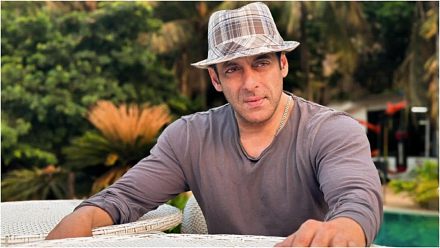
A few years ago, I found myself at Salman Khan’s Galaxy Apartments in Mumbai, with an invitation that seemed perfectly straightforward. We wanted him on stage for an in-conversation session at a Leadership Conclave.
Salman, however, found the proposition rather amusing.
“Are you sure you want me up on stage?” he asked, a cheeky smile spreading across his face. “I’ll probably say just about anything. That could be trouble,” he laughed.
It was a very Salman moment. Here was one of the country’s biggest stars, being invited to speak about leadership, cheerfully warning us that he might be the one person in the room least interested in sticking to a script.
What stayed with me was not the possibility of trouble. It was how little pretence there was in the answer. He wasn’t promising great wisdom or a carefully prepared speech. He was simply telling us what we could expect: Salman Khan, unfiltered.
Years later, that conversation returned to me as I watched him on Bigg Boss 20, questioning why celebrities are expected to have an opinion on everything.
Why, he wondered, should actors be asked to comment on political matters simply because they have millions of followers? They may not know enough about an issue. They may not want to get involved. And why should a journalist’s question automatically require them to take a public position?
It is a surprisingly unfashionable argument at a time when celebrity can sometimes feel like a second public office.
The celebrity who refuses to be a press release
The irony, of course, is that Salman is hardly quiet.
On the same platform, he has spoken about online trolling, body-shaming and the increasingly intrusive behaviour of the paparazzi. He defended Katrina Kaif against comments about her appearance following pregnancy, questioned the obsession with ageing actors and challenged the idea that buying a cinema ticket somehow gives audiences ownership over the person on screen.
There he was again. The man who had once laughed and warned me that he might say just about anything was doing precisely that.
But there was a difference. Having something to say is not the same as having something to say about everything.
And that is where the Salman conversation gets interesting.
Bollywood has spent years becoming very good at making celebrities look spontaneous. The modern star is not just an actor. The star is a brand. And brands are not supposed to surprise you. Publicists manage interviews. Social-media posts are planned. Appearances are coordinated. Controversies are contained. Even vulnerability can sometimes look suspiciously well-lit.
Actor Rakul Preet Singh has also criticised what she described as the industry’s growing paid-PR culture and the pressure to remain visible through publicity. There is nothing inherently wrong with that. Actors have managers, studios have interests and public figures have every right to protect their privacy and careers. In an industry where one badly phrased sentence can become a week-long news cycle, caution makes sense.
But when everyone is careful all the time, you start to notice the sameness.
We asked for authenticity. Then we made it conditional.
For years, audiences have demanded that stars “be real”. We want behind-the-scenes footage, unfiltered interviews, airport photographs, family anecdotes, opinions, confessions and spontaneous reactions.
But what we usually mean is: be real in a way we like.
The moment a celebrity says something uncomfortable, the rules change -Explain yourself. Clarify. Apologise. Release a statement.
We want the thrill of an unfiltered star without having to deal with an actually unfiltered person. The problem is that real people are inconsistent. They contradict themselves. They change their minds. Sometimes they say something foolish, sometimes they say something perceptive, and occasionally, they manage both in the same conversation.
Authenticity does not mean being right all the time.
And having millions of followers does not make an actor an expert on every subject under the sun.
Some stars choose causes, decide when to talk
India has a long tradition of stars using their fame for causes beyond cinema.
Aamir Khan’s Satyamev Jayate was perhaps the clearest modern example. The programme tackled female foeticide, child sexual abuse, domestic violence, disability, rape, alcoholism, untouchability, water and the criminalisation of politics, among other subjects.
More importantly, the work did not end when the cameras stopped. The programme’s focus on water eventually helped lead to the Paani Foundation, which Aamir co-founded with Kiran Rao. Aamir has described his role less as an expert and more as a communicator and storyteller — someone whose fame could get people to pay attention.
Priyanka Chopra offers another model. Her advocacy has been built around a sustained relationship with UNICEF rather than a need to comment on every political controversy that crosses her feed. She has worked with UNICEF since 2006, became a national ambassador in India and was appointed a global Goodwill Ambassador in 2016. Her work has included girls’ education, child rights, violence against children and refugee children.
The point is simple – Speaking about something is not the same as speaking about everything.
Fame is not a 24-hour commentary channel
This is what makes Salman’s recent comments more interesting than the controversy around them.
He isn’t saying celebrities should never speak. His own behaviour makes that impossible to argue. He is saying that fame should not mean being available for an opinion on demand.
Now, that seems reasonable enough. Except, we have created a culture in which even silence can become a story.
The paparazzi ecosystem Salman has criticised is part of the same cycle. Audiences want access to celebrities all the time. We want to know where they are, what they are wearing, who they are dating, what they ate, where they went on holiday and, increasingly, what they think about everything. A star’s body, marriage, children, airport outfit, dinner reservation and facial expression can all become content…
At some point, access starts looking a lot like entitlement.
We want celebrities available but not overexposed. Honest but not offensive. Political but not partisan. Vulnerable but not weak. Spontaneous but not reckless. In other words, we want them to be human — as long as they remain reasonably well-behaved humans.
Salman though, has never been particularly good at that last bit.
For better or worse, his appeal has always depended partly on his refusal to fit neatly into the usual celebrity mould. He can be generous, contradictory, impulsive, funny, irritating, protective and outspoken, sometimes within the same news cycle. Now, that does not make every statement wise.
But, it does make the statements recognisably his!
Perhaps what we miss is the person, not the opinion
Maybe that is what audiences actually miss. Not celebrity opinions on every crisis. Not actors pretending to be policy experts. Not another perfectly worded Instagram statement about how “deeply saddened” everyone is.
Just the sense that there is a person behind the publicity machine.
The most convincing kind of celebrity candour may not come from the person who speaks the most. It may come from the person who knows what they actually want to talk about — and accepts that people are free to disagree when they do.
That afternoon at Galaxy Apartments, Salman had warned me that putting him on stage could be trouble. Years later, I suspect the real trouble for Bollywood is something quite different: an industry so accustomed to carefully managed personalities that a star speaking his mind can still feel like an act of rebellion. And Salman, for all his contradictions, has never seemed particularly interested in reading from someone else’s script.
That may be the real reason he remains such an unusual figure in Bollywood. He is not always polished. He is not always consistent. He certainly isn’t always right. But he still sounds like himself.
And in an industry where almost everything comes with a communications strategy, there is something oddly refreshing about that.