'I Am Not Only Against Diljit Dosanjh': Professor Rejects Singer's 'Double Standards' Allegation Over Songs
Diljit Dosanjh’s criticism of the restrictions imposed on his songs at his Ahmedabad concert has prompted a response from Dr Punditrao Dharennavar, the professor who raised objections to the singer’s setlist. After Dilji
By Yatamanyu Narain··112K reads
'I Am Not Only Against Diljit Dosanjh': Professor Rejects Singer's 'Double Standards' Allegation Over Songs
Diljit Dosanjh’s criticism of the restrictions imposed on his songs at his Ahmedabad concert has prompted a response from Dr Punditrao Dharennavar, the professor who raised objections to the singer’s setlist. After Diljit questioned why Coldplay could perform a song containing references to intoxication without attracting similar scrutiny, Dharennavar rejected the allegation of double standards and claimed that he had previously complained about the British band’s music as well.
The controversy began during Diljit’s November 21 performance at Narendra Modi Stadium, where he compared the objections surrounding his Punjabi songs with Coldplay’s concert at the same venue in January 2025. Dharennavar has now released a video explaining his position, maintaining that his campaign against songs allegedly promoting alcohol, drugs and gun culture extends to several Indian and international performers.
Professor Claims He Also Filed Complaint Against Coldplay
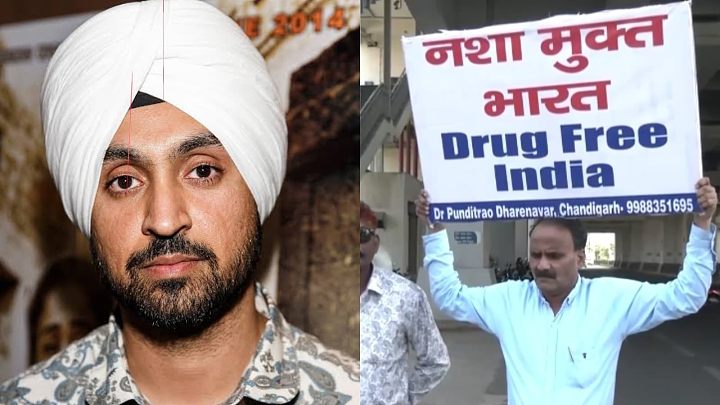
Dharennavar, an Associate Professor of Sociology at PGGC-46 in Chandigarh, responded directly to Diljit’s comparison with Coldplay.
In a self-recorded video, he claimed that he had approached authorities in Ahmedabad before the British band performed at Narendra Modi Stadium. According to the professor, his complaint specifically concerned the lyrics of Coldplay’s Hymn for the Weekend.
“Before Coldplay came to perform, I had sent a complaint to the District Child Protection Officer, Ahmedabad. On the basis of my complaint, the District Child Protection Officer issued a notice. In that notice, it was written that Coldplay would not sing that song,” Dharennavar said, according to ANI.
He also stated that he would share a copy of the notice, which he claimed contained a specific reference to the song and its lyrics.
The professor’s account challenges Diljit’s suggestion that international artistes were being treated differently. However, the existence and contents of the notice have not been independently established in the supplied account.
‘I Am Against All Those Who Sing Songs About Alcohol, Drugs And Guns’
Dharennavar insisted that his objections were not directed exclusively at Diljit. He named several other musicians against whom he claimed to have raised similar concerns, including Karan Aujla, Honey Singh, Sunidhi Chauhan, Babbu Maan and Sharry Mann.
“I am not only against Diljit Dosanjh. I am against all those who sing songs about alcohol, drugs and guns. Like Karan Aujla, Honey Singh, Sunidhi Chauhan, Babbu Maan, and others. I am against all of them. That is why there is no need to say anything like double standards,” he said.
Elaborating on his previous interventions, Dharennavar claimed that he had filed a complaint against Sunidhi Chauhan in Ahmedabad.
He also said that he had approached the authorities regarding songs performed by Karan Aujla, Honey Singh, Babbu Maan and Sharry Mann in Punjab.
According to Dharennavar, his concerns arise from the messages conveyed through certain songs rather than the nationality, popularity or professional standing of the artistes performing them.
Why Dharennavar Objected To Diljit Dosanjh’s Ahmedabad Concert
Before Diljit’s November 21 concert, Dharennavar had objected to three songs from the singer’s repertoire: Patiala Peg, 5 Taara Theke and Jeeb Vicho Feem Labbiya.
He alleged that their lyrics contained references to alcohol and drugs and argued against their inclusion in the concert setlist.
His objections were not limited to the music. The professor also urged Diljit to avoid wearing a bullet belt as part of his stage attire.
Following the performance, Dharennavar expressed satisfaction that the singer had refrained from using the accessory.
“I am very happy that Diljit Dosanjh did not wear a bullet belt,” he said.
He subsequently appealed to Diljit to reconsider performing the three songs at future concerts.
“I hope in the coming time, he will not sing the wrong songs, like Patiala Peg, 5 Taara Theke, Jeeb Vicho Feem Labbiya on the stage. I am very hopeful. Because Dosanjh is talented and intelligent,” Dharennavar said.
The professor also referred to the government’s Nasha Mukt Bharat campaign while explaining his opposition to lyrics allegedly encouraging substance use.
“He will understand that there is a drug-free India campaign going on in our country,” he added.
Ahead of the Ahmedabad performance, the District Child Protection Unit had reportedly appealed to the city police to prevent Diljit from singing four songs over concerns about references to alcohol, narcotics and firearms.
Dharennavar had also warned that he could approach the Gujarat High Court with a contempt petition if the disputed tracks were performed.
What Diljit Dosanjh Said About Coldplay And ‘Double Standards’
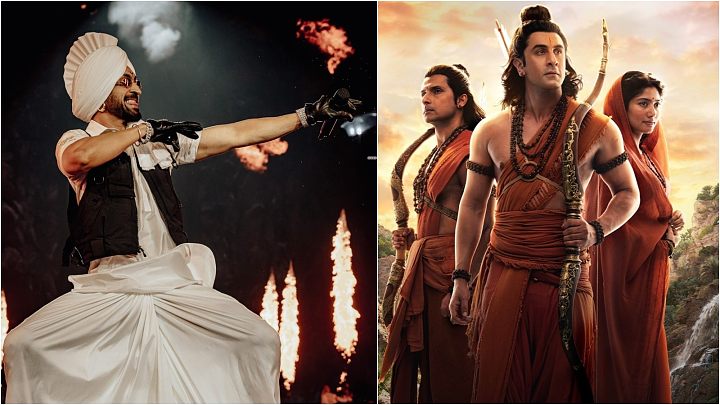
During his concert, Diljit addressed the restrictions from the stage and recalled watching Coldplay perform at Narendra Modi Stadium.
The singer said the band’s concert had inspired him to perform at the venue himself. However, he questioned why the lyrics of Hymn for the Weekend, particularly the line “I’m feeling drunk and high”, had not attracted the same objections.
“Last year, when the band Coldplay sir performed here, I decided that one day I will also perform here. But I will tell you something when Coldplay sings, ‘I’m feeling drunk and high’, nobody has a problem. I like that song. But why, when Coldplay comes here and sings it, nobody has an issue? But when Diljit sings the same, there is a problem. Why these double standards?” he said.
Diljit also spoke about his efforts to take Punjabi and Indian music to audiences around the world.
His remarks brought renewed attention to the dispute over concert lyrics, with Dharennavar subsequently maintaining that his objections applied equally to musicians performing in different languages and genres.