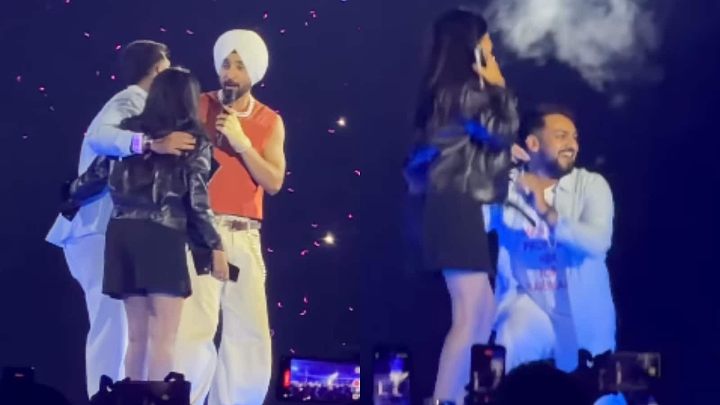
Darshan Raval On Love Letters India Tour, His New EP The Everafter And Writing Heartbreak Songs After Marriage | Exclusive
Darshan Raval has built much of his career on a peculiar contradiction. He writes songs that feel private enough to belong to one person, then walks onto stages where thousands of people sing them back as though they wer
By Yatamanyu Narain··55K reads
Darshan Raval On Love Letters India Tour, His New EP The Everafter And Writing Heartbreak Songs After Marriage | Exclusive
Darshan Raval has built much of his career on a peculiar contradiction. He writes songs that feel private enough to belong to one person, then walks onto stages where thousands of people sing them back as though they were written for them alone.
That is also the idea sitting behind Love Letters, his first extensive India tour since 2023. The production is bigger this time, with panoramic staging, immersive elements and a much larger sonic canvas, but Raval is wary of allowing scale to swallow intimacy. For him, the point is still remarkably simple: somebody standing at the farthest end of the venue should feel as involved in the song as the person pressed against the barricade.
Three years away from touring at that scale have also changed the material he is returning with. There is The Everafter, a four-track EP that begins with falling in love, passes through loss and wonder, and ends with ‘Karwaan’, a reminder not to spend life waiting endlessly for the next milestone. There are songs such as ‘Nafrat’, whose live response he has only begun to witness, and there is a fandom that has aged alongside him. People who discovered his music in school now write to him about jobs, businesses, marriages and entire adult lives that unfolded with songs such as ‘Tera Zikr’ and ‘Asal Mein’ somewhere in the background.
Raval himself has changed too. Marriage has not suddenly made heartbreak inaccessible to him, nor has it convinced him that every love song must now sound contented. What it has done is widen the emotional vocabulary available to him. Companionship, ordinary days, growing alongside another person and the quiet work that happens after falling in love now interest him just as much as longing once did. He is also less anxious about whether every experiment fits a familiar idea of what a “Darshan Raval song” should be.
In an exclusive conversation with News18 Showsha, Darshan Raval speaks about returning to a full-scale tour after three years, why he deliberately wanted Love Letters to begin in Ahmedabad, and the songs whose relationship with audiences he is still waiting to discover on stage. He also opens up about making The Everafter as a connected story rather than a collection of singles, writing heartbreak after marriage, growing older alongside the Blue Family, and why the emotions attached to his songs no longer belong entirely to him once listeners begin placing their own lives inside them. For an artiste who has spent more than a decade writing about love in its many unfinished forms, the “ever after” now seems less like an ending and more like the point where another story begins.
Here are the excerpts:
You have performed individual shows, but this is your first extensive India tour since 2023. Why did you need such a long gap from touring at scale?
I don’t think it was about consciously taking a break from touring. I was performing, making music and exploring different things during this period. Sometimes you need to step back from a certain routine and give yourself time to create, understand what you want to do next and come back with something new. I think Love Letters came together at the right time.
Did you miss touring during those three years, or did you actually discover that some distance from constant live performance was creatively necessary?
Of course I missed it. There is nothing like standing on stage and hearing thousands of people sing your songs. But I also think every phase of life teaches you something. The time away gave me a chance to explore music, work on myself and experience new things. And when you come back to something you love after some time, you appreciate it even more. I think that’s what I’m feeling with this tour.
You once said concerts are where you truly understand what a song has done to people because streaming numbers cannot show you somebody crying or singing every word back. After three years away from a full tour, are there songs whose audience impact you haven’t properly witnessed yet?
I think my latest EP The Everafter, I am most curious to see the audience impact on those tracks. Nafrat from my last EP “I Loved You”, the few times that I have performed it, I have seen a phenomenal reaction but I can’t wait to see how the audience reacts to it on Love Letters.
The tour is called Love Letters, and the announcement itself says a letter can travel miles but still feel as though it was written specifically for one person. Isn’t that essentially the paradox of pop songwriting too: writing something personal enough that thousands of strangers believe it belongs to them?
That is the beauty of music. When I write a song, it usually starts with a personal though or feeling but once its created and out there it doesn’t belong to just me anymore. It is for each of those people who resonate with it and connect a part of their lives to the song. That’s the magic of music. One feeling can have a thousand different meanings.
Your team is promising panoramic staging, spatial acoustics, fan hubs and immersive elements, but your music often works because it feels intimate. How are you making the production bigger without making the emotional distance between you and the audience bigger too?
For me, the production is there to make the emotions bigger, not to create a distance. We are working on the visuals, sound, staging and immersive elements, but at the heart of Love Letters, it’s still going to be me singing and people singing along. I want someone standing at the farthest corner of the venue to feel just as connected as someone standing right in front of the stage. The scale may be bigger, but the feeling has to remain personal.
Your earlier tours happened before some of your audience had grown into adulthood. You recently talked about fans who discovered you in school or college now having careers and businesses of their own. Does performing to the same fandom after both you and they have grown older change the emotional tone of a show?
Absolutely. I have fans who tell me they first listened to my songs when they were in school or college. Today, they’re working, running businesses, getting married and building their own lives. Some of them have been following me for more than a decade. In a way, we have grown up together. When I see those familiar faces, it makes me realise that my music has been travelling alongside their lives. That’s a very special feeling.
The Everafter immediately evokes the language of fairy tales, where the story supposedly ends once people find love. You have spent most of your career writing about everything that happens before, during and after love. What does “ever after” mean to you now that you’ve actually lived through more versions of love than when you began writing songs?
I think when we were always told and we believed that finding love was the happy ending. But with time, you realise that love is not just about finding someone. It’s about everything that happens after that too. It’s about growing, understanding, losing, finding yourself again and enjoying the little moments. The Everafter is my way of saying that life and love don’t really have an ending. There is always another chapter.
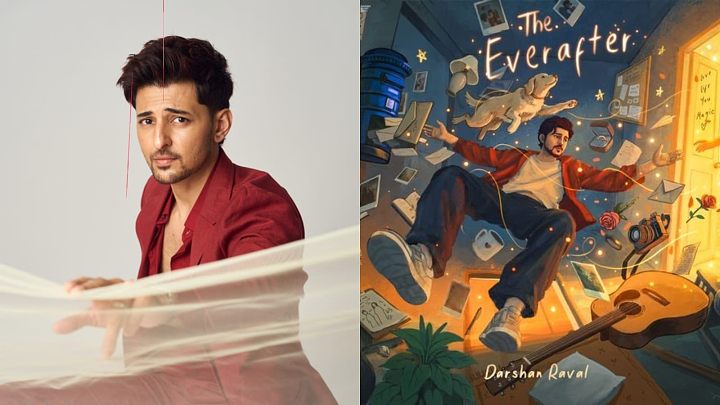
There are only four tracks on the EP: Naal Naal Ve, Sirf Tum, Jaadu and Karwaan. What made these four songs belong to the same world rather than simply becoming four separate singles?
These four songs represent four different emotions and chapters. Naal Naal Ve is about falling in love and finding that person who brings light into your life. Sirf Tum is about losing someone and feeling incomplete. Jaadu takes you into a more magical, childlike world, while Karwaan reminds you to enjoy the journey of life. When we put them together, they started feeling like four chapters of one story. That’s when The Everafter became a world of its own.
You are an artist who has historically released standalone songs that each build their own emotional universe. Did making an EP force you to think about what happens between songs rather than only what happens inside each one?
Yes, definitely. Normally, when you release a single, you focus on telling that one story. But with an EP, I started thinking about how one emotion moves into another. What happens after falling in love? What happens when you lose someone? How do you find happiness again? And how do you move forward? Thinking about these transitions helped us create a larger story.
The artwork has a ring, a door, a dog, letters, the words “Love, Life, You, Magic” and a Sirf Tum envelope. Are those simply visual clues to individual songs, or does the EP actually tell one continuing story?
The different elements represent different parts of the world we’ve created for The Everafter. I wanted people to discover little things every time they looked at it or listened to the songs. The four tracks are connected emotionally, and the visuals help bring that world to life. I also love that listeners can interpret these things in their own way. I don’t want to explain every little detail and take away the magic.
You recently laughed off the assumption that marriage means Darshan Raval will stop making sad songs. Has getting married changed the way you understand heartbreak even if it hasn’t stopped you from writing about it?
I don’t think getting married means you stop understanding heartbreak or writing sad songs! (laughs) As a songwriter, you observe so many emotions around you. You also draw from memories, experiences, stories and things you see in other people’s lives. Marriage has definitely brought new experiences and a different understanding of companionship into my life. But emotions are universal. You don’t stop feeling or understanding them just because your life changes.
Earlier in your career, a lot of your songs were written from yearning, incompleteness or one-sided love. Do those emotions become harder to write honestly once your own emotional life changes? Or has songwriting taught you that you don’t actually need to be living an emotion in the present tense to write it truthfully?
I don’t think you always have to be experiencing an emotion at that exact moment to write about it. Sometimes a song comes from a memory, sometimes from a conversation, sometimes from something you observe. I might remember how I felt years ago and still be able to write about that feeling honestly. I think the important thing is to be emotionally connected to what you’re writing. If the emotion is genuine, people will feel it.
One of the songs is called Karwaan. Your own career has now lasted more than a decade. Is there something retrospective about that song, or about this EP more broadly, that made “journey” an important word right now?
I think after being in this industry for more than a decade, you naturally start looking at life a little differently. You realise that you spend so much time waiting for the next milestone, the next release or the next achievement that you sometimes forget to enjoy where you are. Karwaan is a reminder to enjoy the journey. For me, it is also a reminder to appreciate the people, experiences and little moments that make life what it is.
You said earlier this year that you’ve come out of the fear of trying something new. Which song on The Everafter would the Darshan of five years ago have been most nervous to release?
I would probably say Jaadu. It has a very different kind of energy and takes you into a more imaginative, playful world. Earlier, I think I was more conscious about what people expected from me as an artist. Today, I’m much more comfortable experimenting and trying things without worrying too much about whether they fit into a particular image of Darshan. I think that’s one of the biggest changes in me.
A fandom can give an artist enormous freedom because people will follow him into new territory, but it can also become fiercely protective of a familiar sound. Have you experienced both sides of that loyalty?
Yes, and I think both come from love. When people connect with your music, they naturally develop expectations. They have certain songs and sounds that are close to their hearts, and they want to experience that feeling again. But I’ve also seen my listeners support me when I try something different. I am very grateful for that. I think the relationship between an artist and their audience should keep growing.
The Blue Family has existed with you since almost the beginning of your career. Is there ever pressure to keep feeding the version of Darshan that your oldest fans originally fell in love with?
I think that version of Darshan will always be a part of me. The Blue Family has been with me through so many stages of my life and career. But I also believe that they want to see me grow. They have grown themselves, and I have grown too. I don’t want to keep repeating myself just because something worked in the past. I want to make music that feels honest to who I am today, and I hope they continue to enjoy discovering those different sides of me.
When a fan tells you that Tera Zikr or Asal Mein belongs to a very specific period of their life, does that eventually change your own memory of the song?
It does! I made both these songs at different times of my life and have specific memories attached to them. But when I hear the stories that others share with me about how these songs were with them at difficult phases of their lives I feel connected to their story too and it really makes me feel connected to them even more, its actually a very beautiful feeling.
Ahmedabad opens the tour. You first became known nationally after leaving Ahmedabad for India’s Raw Star, but the city has remained central to your story. Does opening there still feel emotionally different from merely adding your hometown to an itinerary?
I am performing in Ahmedabad after a very long time and honestly it is like coming back home. I didn’t want to just add Ahmedabad to the tour but I wanted to start my tour with Ahmedabad. I keep telling myself not to make any show very big in my head as it may make me nervous, but I am nervous for Ahmedabad and the good kind where I can’t wait to set foot on the stage begin Love Letters.
You’ve probably been called a “romantic singer” thousands of times by now. At what point does a flattering description begin to feel like a creative restriction?
Honestly, Never for me has this or any other tags felt like a restriction. I don’t want to put myself in a box. If tomorrow I feel like making a completely different kind of song, I want to be able to do that. At the end of the day, I just want to make music that I genuinely enjoy.
You have always maintained that independent music is central to who you are even while playback remains important. Has the growth of Indian non-film pop finally removed the feeling that an independent song is somehow a smaller career event than a Bollywood song?
Today, an independent artist can release a song and reach millions of people without it being part of a film. That’s a very exciting change. I’ve always believed in independent music because it gives you the freedom to tell your own stories and create your own identity. Bollywood will always have its own beautiful place in music, but I don’t think independent music needs to be compared to it anymore. Both can exist and grow together.
Your monsoon songs have become such a ritual that fans noticed when you skipped the tradition for two years. When something you started organically becomes something audiences expect on schedule, does it begin feeling less spontaneous?
Not really. I think the monsoon songs became a tradition because people connected with them. And that’s a beautiful thing. I never want to make a song just because I have to fulfil a tradition or a deadline. It has to come from the right feeling and the right idea. Sometimes the rain inspires you, sometimes life takes you in another direction. I think the audience understands that too. Whenever the right song comes, we’ll share it with them.
You’ve said marriage will naturally enter your music because you write from everything happening around you. Has companionship given you new things to write about that pop music often neglects because it is so obsessed with falling in love and breaking up?
I think so. Most love songs talk about falling in love or heartbreak, but there is so much more to companionship. It’s about understanding someone without having to say too much, growing together, sharing ordinary days and finding happiness in the smallest things. Those emotions are equally beautiful and deserve to be written about. As I experience different phases of life, I think those emotions will naturally find their way into my music.
There is a peculiar difference between privacy and secrecy. As a songwriter whose career depends upon emotional openness, where have you learnt to draw that boundary?
think being emotionally honest in your music doesn’t mean you have to share every detail of your personal life. Music allows me to express feelings, experiences and emotions, but some moments are meant to be kept personal. I’ve learnt that there is a difference between sharing an emotion and sharing the entire story behind it. I want people to connect with my music, but I also want to protect the little world that belongs to me and my family.
You came into the mainstream at a time when Bollywood was still the dominant route to becoming a nationally known singer. An artist beginning today can build millions of listeners without playback at all. Would the Darshan Raval of 2014 even need the same career path today?
I am grateful for the path I took because every experience, every opportunity and every challenge made me the artist I am today. I wouldn’t want to change that journey.