Aastha Gill On Returning After 8-Month Hiatus With Fursat: ‘I Needed To Reconnect With My Music’ | Exclusive
Aastha Gill went quiet for eight months in an industry that treats silence almost like a professional risk. There was no dramatic exit, no public falling-out, no grand declaration that she was beginning again. She simply
By Yatamanyu Narain··127K reads
Aastha Gill On Returning After 8-Month Hiatus With Fursat: ‘I Needed To Reconnect With My Music’ | Exclusive
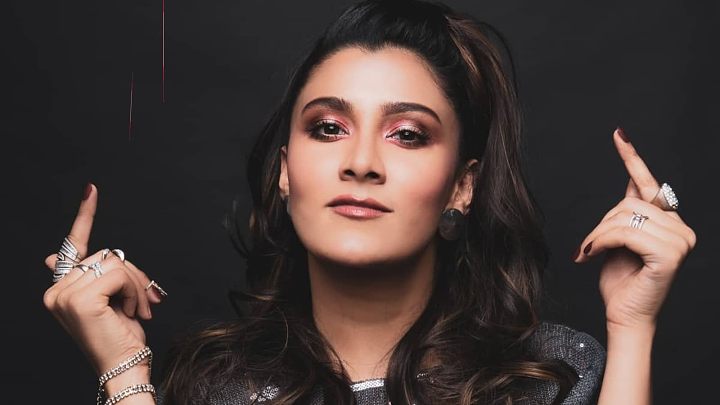
Aastha Gill went quiet for eight months in an industry that treats silence almost like a professional risk. There was no dramatic exit, no public falling-out, no grand declaration that she was beginning again. She simply stopped rushing to put something out. For an artist whose biggest songs had already built a recognisable image around swagger, flirtation and high-energy pop, that pause became less about disappearing and more about asking an inconvenient question: what happens when the version of you that people know starts becoming a creative limitation?
‘Fursat’ arrives from that space. The song itself is soaked in longing, but the woman in its video does not spend her remaining time chasing somebody else. She keeps some of it for herself. Gill liked that contradiction. The romance stays, the softness stays, but the woman at the centre of it does not have to dissolve into either. “You can surrender to love without losing yourself in it,” she says, laughing that the video’s heroine is essentially responding to all that yearning with, “Cute… but I’m still doing my own thing!”
There is something of Gill’s own past year in that idea too. The break gave her time to travel, slow down, make music without immediately worrying about where it would fit and, perhaps most importantly, stop allowing other people’s idea of “Aastha Gill” to decide the edges of her sound. She admits there was a point when she began thinking too much about what listeners expected from her. What she did not want was for familiarity to turn into a cage.
In an exclusive conversation with News18 Showsha, Aastha Gill speaks about returning with ‘Fursat’, choosing softness after years of being associated with attitude-heavy pop, and why stepping away did not make her afraid that the industry would move on. She also opens up about the expectations that come with having major hits behind you, the songs and sounds she now wants the freedom to explore, and why her comeback is less about reinvention than finally giving herself room to make music without constantly asking whether it fits the old version of her.
Here are the excerpts:
“Fursat” is lyrically steeped in romantic longing, but its video ultimately gives its woman her remaining time back to herself. Were you interested in creating a love song that quietly refuses the conventional obligation to spend love on somebody else?
Honestly, yes. I loved the idea of taking a very romantic, longing-filled song and looking at it from a slightly different lens. “Fursat” is about wanting to hold on to someone, but the video is about choosing to spend that little bit of time on yourself too. There’s something quite beautiful about that, sometimes love can be about another person, and sometimes it can just be about how you choose to feel in your own little world. I wanted the video to feel free, dreamy and a little unexpected rather than just another love story.
The song uses Urdu-inflected romantic vocabulary, which carries centuries of longing, surrender and devotion, while the visual narrative leans toward self-possession. Did you enjoy that tension between surrender in the language and autonomy in the image?
Absolutely! I loved that little tug-of-war between the lyrics and the visuals. The words are all dreamy, filmy and full of Love, very “I’m completely in love with you” energy. And then the girl in the video is like, “Cute… but I’m still doing my own thing!”
I think that’s what makes Fursat feel fun and different. You can surrender to love without losing yourself in it. I wanted the song to have all that romance and longing, but the visuals to still feel free, playful and very me. Basically, heart full, but personality intact!
We are accustomed to songs where somebody says, essentially, “If I had one last day, I would spend it with you.” Here the woman chooses herself. Why does that still feel radical enough to require explanation in a romantic music video?
I think we’re just so used to seeing love as always being about choosing the other person. But choosing yourself doesn’t mean you don’t love someone. It just means you know your own worth too. I like that the girl in the video isn’t running away from love, she’s simply enjoying her own moment and being happy in her own space. And honestly, I think that’s something a lot of people can relate to.
Do women in Hindi pop still have to justify choosing themselves in ways male protagonists rarely do?
I think it’s something we’re seeing change gradually. Traditionally, a lot of romantic stories, whether male or female-led, have focused on choosing the other person. So when the story shifts towards a woman choosing herself, it naturally feels a little different. I don’t see it as one being right or wrong—it’s simply nice to have different kinds of stories where women can be emotional, romantic, independent, or all of it at once. For me, that’s what makes it interesting.
There is also something slightly melancholy about the word fursat. It can mean leisure, but in romantic vocabulary it can also imply finally having time for something we have postponed. What have you personally been postponing because your career kept consuming the available space?
Honestly, I think I had been postponing a little bit of everything, taking time for myself, slowing down, travelling, spending time with people I love, and especially exploring and working on music. When your career takes up most of your space, you don’t always realize how little time you’re leaving for yourself.
I think the biggest thing I was postponing was simply pausing and giving myself the space to create. These last few months gave me that fursat, to explore different sounds, work on a lot of music, understand myself better and come back with a much clearer idea of what I want as an artist and as a person.
You have sung enormously popular songs built around confidence, flirtation and attitude. Here the emotional palette is more yearning and intimate. Was vulnerability harder to perform vocally because listeners already associate your voice with a certain swagger?
It definitely was a new experience for me, and honestly, a great one. When I first heard Kunal Verma’s writing, I immediately connected with the emotion in it. And when Dev Sadaana’s composition came together with those lyrics, it completely swept me off my feet.
So for me, it wasn’t really about finding vulnerability difficult. It was more about discovering a different side of my voice and allowing myself to sing with a little more emotion and softness. I really enjoyed that process.
One of the most interesting ideas in the video is that love and selfhood don’t necessarily have to be opponents. Do you think popular music has spent too many years convincing women that romantic fulfilment requires some form of self-erasure?
I’d say it’s less about what popular music has convinced women of, and more about the different ways we’ve been shown love over the years. I really like the idea that love doesn’t have to mean losing a part of yourself. You can love someone deeply and still have your own identity, your own dreams and your own space.
That’s what I found beautiful about Fursat. It doesn’t put love and self-love against each other. It simply shows that you can have both, and I think there’s something very beautiful and real about that.
You have described these eight months as one of the most challenging phases of your career. What had stopped working badly enough that simply making another song was no longer the answer?
I think I had reached a point where I needed to reconnect with my music, not just keep making songs for the sake of making them. My relationship with music has always been very personal, and somewhere along the way, I felt I needed to find that connection again.
Those eight months gave me the space to step back, explore, listen, work on music and really understand what I wanted to say as an artist. It wasn’t just about making another song, it was about finding my way back to why I make music in the first place. That was difficult, but also very important for me.
There is often an invisible bargain in mainstream pop: the bigger the audience becomes, the more people acquire opinions about what the artist “should” sound like. At what point did other people’s understanding of Aastha Gill begin interfering with your own?
I think there was a point where I started thinking too much about what people expected from Aastha, instead of what I genuinely wanted to make. When you’ve been known for a certain sound and energy for a long time, it’s easy to feel like you have to keep giving people the same thing.
I realised I didn’t want expectations to become my creative boundary. I still value everything people have loved about my music, but I also want the freedom to explore, experiment and grow. For me, this phase has really been about finding my own voice again and trusting it.
A break can sometimes be restorative, but sometimes it happens because the machinery around an artist has become unsustainable. Was your hiatus more about exhaustion, disillusionment, or realising that the career you had built no longer reflected the artist you wanted to be?
It wasn’t really exhaustion or disillusionment for me. It was more about growth and recognizing that I had reached a point where I wanted to work differently and explore a different side of myself as an artist. I needed the space to step back, change the way I was working, find the right people around me, and spend more time exploring and working on music. The break gave me that clarity, and I came back feeling more sure of the artist I want to be.
When somebody has already had major hits, stepping away carries a different anxiety because there is something tangible to lose. During those months, were you ever frightened that the industry might simply move on without you?
Honestly, I was never worried about that.people love good music, I do believe inmyself Of course, you think about it, but I had enough belief in myself and my music to know that taking a break wouldn’t erase everything I had built.
I felt that if I took the time to grow, explore and come back with music I truly believed in, the right people would connect with it. I wasn’t interested in rushing back just to stay visible. I wanted to come back when I felt ready.
Pop music rewards visibility relentlessly. There is always another song, reel, collaboration or face competing for attention. What did disappearing for eight months teach you about how replaceable an artist can feel in this business?
I think the industry will always keep moving, and I’ve made peace with that. There will always be a new song, a new face, a new trend, and honestly, that’s what makes it exciting.
Were there songs you wanted to make earlier in your career that somebody talked you out of because they didn’t fit the commercial idea of Aastha Gill?
I think there were songs and ideas I wanted to explore earlier, but at that time they didn’t always feel like the right fit for where I was in my career. And I think that’s something every artist goes through, you grow, your perspective changes, and what excites you can change too.
I don’t see it as a bad thing at all. Every phase teaches you something. Today, I feel much more comfortable giving myself the freedom to try different things and go with what genuinely excites me. I think that freedom is one of the best parts of where I am right now.
Was the hardest part of the hiatus figuring out what you wanted to do next, or admitting what you no longer wanted to do?
I think it was more about figuring out what I wanted to do next. Ive always been someone who likes to explore, and this break gave me the time and space to really lean into that. So, for me, the hiatus was less about letting go and more about discovering what’s possible.
Female pop stars are frequently praised for “reinventing themselves,” but that language can also imply that women constantly need to become new products to retain attention. Do you ever resent the demand for reinvention? -Avoid this one
So what’s the roadmap for you in the coming future? What do you have in store for your dedicated listeners?
There’s definitely a lot in store! I’ve been quietly putting together some really exciting music, and I can’t wait for my listeners to hear what I’ve been up to. There are a few things I can tease, but I’m not giving away all my secrets just yet!
The next few months are going to be quite packed; with music I think people will have a lot of fun with. I’m just excited to keep sharing and hopefully keep my listeners guessing a little.