'Got A Very Hard Hit On Head, Then Heard Engines Go Down': flydubai Captain Machchhar Recalls Attack By Co-Pilot
Indian pilot Smit Machchhar, captain of the flydubai flight attacked by his co-pilot while en route to Tel Aviv on September 30, has recounted the terrifying moments inside the cockpit, describing how he was repeatedly s
Oleh Vani Mehrotra··35K dibaca
'Got A Very Hard Hit On Head, Then Heard Engines Go Down': flydubai Captain Machchhar Recalls Attack By Co-Pilot
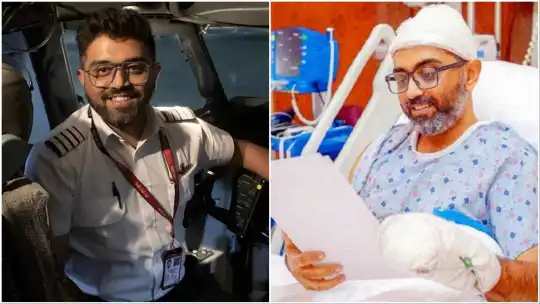
Indian pilot Smit Machchhar, captain of the flydubai flight attacked by his co-pilot while en route to Tel Aviv on September 30, has recounted the terrifying moments inside the cockpit, describing how he was repeatedly struck, lost consciousness and struggled to survive as the aircraft descended towards an emergency landing in Saudi Arabia.
Machchhar, who is still receiving medical care in the United Arab Emirates (UAE), detailed the sequence of events in an exclusive interview with Sky News Arabia.
“While I was checking the computer for timing and other things, I suddenly got a very hard hit on the back of my head,” Machchhar said, recalling how the attack began when he and the co-pilot were alone in the cockpit.
He said the flight had initially been proceeding normally, but the situation changed approximately two hours after takeoff, when the co-pilot asked another pilot on board, who was expected to lead the return flight from Tel Aviv, to leave the cockpit to pray.
Machchhar was monitoring the landing time, remaining fuel and weather conditions when he was struck.
He initially thought something had broken off from the aircraft’s roof and caused catastrophic damage. Drawing on his training, he attempted to regain his composure and get up to check the aircraft’s systems.
However, he soon realised that the attack was continuing.
“My mind was going in the direction that there was a lot of damage to the plane that hit me from behind. But within seconds I realised that the attack was ongoing,” he said, adding that the co-pilot continued hitting him while saying something he could not understand.
‘I Wanted To Protect Myself From Further Blows’
The captain said he later learnt from his doctor that the first blow had caused his field of vision to narrow within seconds to just a few centimetres.
“The first thing I wanted to do was protect myself from further blows,” Machchhar said. He recalled unfastening his seat belt, turning around and attempting to block the co-pilot’s attacks before trying to alert the other pilot still on board.
“The first thing I wanted to do was protect myself from further blows. I quickly unbuckled my seat belt, turned around and tried to block what he was doing, and then I hit my hand. At that moment, it was very clear what was going on.”
Machchhar said he shouted the other pilot’s name and tried to open the cockpit door, which was close to him.
Amid the screaming and confusion, he lost consciousness for the first time, although he remembered managing to open the door and hearing that something was happening outside.
“Then he closed the door immediately because he threatened to beat them too,” Machchhar said, describing how he felt blood running down his body and his strength rapidly fading.
‘This Is Where The Battle For Survival Began’
The pilot said he was drifting in and out of consciousness because of blood loss when he heard the sound of the aircraft’s engines decrease, followed by the sensation of the plane beginning its descent.
“Shortly afterwards I heard the sound of the engines go down, and immediately afterwards I felt the plane go into a landing,” he said, explaining that his flying experience allowed him to recognise what was happening without looking at the instruments or hearing the engine clearly.
“I was losing consciousness and regaining it due to blood loss, but there comes a moment when you say you have to fight for your life. This is where the battle for survival began,” he added.
Machchhar said parts of the incident remained fragmented in his memory. He has been speaking with doctors, psychologists and others in an effort to understand why he has not yet been able to piece together the entire sequence of events.
He recalled trying to reach the door by holding his legs against a surface and pushing himself forward. His next clear memory was of the door being open and himself stretched between the cockpit and the galley.
“When the door was opened, the scene was completely different. Of course there was panic and screaming,” he said, praising the colleague who took control and helped save the situation.
Machchhar said he would remember that colleague’s actions for the rest of his life.
Pilot Says He Felt Safe Only After Emergency Landing
Recalling what stayed with him most from the incident, Machchhar said the first blow continued to return to him in sudden flashes during the initial days after the attack.
He described how the memories would trigger a physical reaction, with his heart beginning to beat violently even when he was sitting normally.
However, he said the determination shown by everyone on board to survive was what he would remember most from that day.
“What I will carry with me the most from this day is the determination, the absolute determination of everyone to survive,” he said.
Machchhar said he did not feel safe until the aircraft had landed in Saudi Arabia. The first person he spoke to immediately after landing was his two-year-old son.
The captain also expressed gratitude for the medical treatment and assistance he received in Saudi Arabia and after being transferred to the UAE, where he continues to receive care.
“From day one, the way we were taken care of, the way I was sent back to the UAE, and even the care I received in Saudi Arabia, I will never forget it for the rest of my life,” he said, thanking the UAE government for the treatment provided to him.
UAE Investigation Alleged Plot To Crash Plane Into Tel Aviv Airport
Days after the attack, the UAE’s public prosecutor outlined the alleged motive behind the incident.
According to a report by The Associated Press, the Omani co-pilot allegedly intended to seize control of the aircraft and crash it into the passenger terminal at Israel’s main international airport, aiming to cause the greatest possible number of casualties.
The prosecutor’s statement, carried by the UAE state news agency WAM, said the suspect had allegedly drawn inspiration from the September 11, 2001, attacks in the United States.
Investigators said he had used two earlier flights from Dubai to Tel Aviv to familiarise himself with the route and the airport.
The AP identified the suspect as 29-year-old Hamam al-Hammami.
According to the publication, the prosecutor said the suspect had admitted to acting alone and provided a detailed confession outlining his motives and the planning and execution of the alleged attack in the presence of his lawyer.
The statement also suggested that he had been radicalised at a mosque in Australia while attending the Royal Melbourne Institute of Technology in 2017.
Authorities said the airline’s security and professional checks had not indicated that the co-pilot harboured extremist views or intended to carry out an attack.
The incident unfolded over Jordan and Saudi Arabia on September 30, when the co-pilot allegedly attacked Machchhar with a crash axe in the cockpit. The aircraft reportedly plunged approximately 14,000 to 16,000 feet in less than a minute.
The AP reported that most of the 174 passengers on board were Israeli nationals.