Bolsonaro, Like The Shah Of Iran: America's 'Welcome' For Defeated Leaders Raises Questions
When a defeated political leader seeks refuge in the United States, Washington faces a dilemma that goes well beyond immigration. What may be presented as a humanitarian decision can be interpreted abroad as political in
Oleh Pragati Ratti··33K dibaca
Bolsonaro, Like The Shah Of Iran: America's 'Welcome' For Defeated Leaders Raises Questions
When a defeated political leader seeks refuge in the United States, Washington faces a dilemma that goes well beyond immigration. What may be presented as a humanitarian decision can be interpreted abroad as political interference, an endorsement of a disputed leader or even an attempt to influence the future of another country.
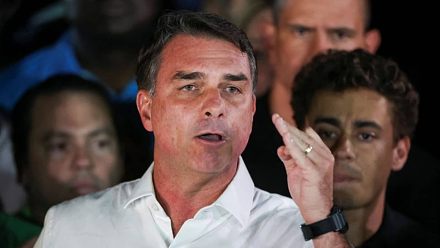
That dilemma is back in focus after Brazilian Senator Flavio Bolsonaro, son of former president Jair Bolsonaro, reportedly left Brazil following his defeat to incumbent Luiz Inacio Lula da Silva in the October 25 presidential runoff. The US State Department has said it will issue entry visas to Flavio and his family, a decision that threatens to deepen an already strained relationship between Washington and Brasília.
The episode has revived memories of another controversial American decision: President Jimmy Carter’s admission of Iran’s deposed Shah, Mohammad Reza Pahlavi, in October 1979, ostensibly for medical treatment. Within weeks, Iranian revolutionaries seized the US Embassy in Tehran, beginning a 444-day hostage crisis that transformed American-Iranian relations.
The circumstances surrounding the two cases are dramatically different. Yet the historical parallel raises an uncomfortable question: when does admitting a foreign political figure become a diplomatic liability?
1979: How Admitting The Shah Became A Diplomatic Flashpoint
The story of the Shah’s arrival in the US began months before the Iranian hostage crisis. Mohammad Reza Pahlavi, whose monarchy had been a key American ally in the Middle East, was forced into exile in January 1979 as the Islamic Revolution swept Iran. Ayatollah Ruhollah Khomeini returned from exile, the monarchy collapsed and Iran became an Islamic Republic.
The Shah moved between countries, including Morocco, the Bahamas and Mexico, as he sought somewhere to stay. His health was deteriorating, and American officials were told that he needed medical diagnosis and treatment that few countries were willing to provide.
President Carter faced competing pressures. There were humanitarian grounds for admitting a seriously ill man, but US diplomats were also concerned about the safety of American personnel in Tehran. Iran’s leadership warned that allowing the Shah into the country would provoke a sharp reaction.
The Carter administration eventually agreed. The Shah arrived in New York on October 22, 1979, for medical treatment.
On November 4, Iranian student militants seized the US Embassy in Tehran, taking American personnel hostage. The revolutionaries cited the Shah’s admission to America as justification, demanding his return to Iran to face justice. The takeover received the backing of Khomeini’s government, and the hostages were held for 444 days. The crisis ended on January 20, 1981, the day Ronald Reagan took office.
The Shah’s entry was not the sole cause of the crisis: the revolution had already transformed Iran’s relationship with Washington, and hostility towards American influence ran deep. But the decision became a potent symbol of what many Iranians saw as the United States protecting a discredited ruler who had long enjoyed its support.
The episode also exposed the limits of a superpower’s ability to separate a seemingly personal humanitarian decision from the political history surrounding it. Washington saw a sick former monarch in need of treatment; Iranian revolutionaries saw an old ally being sheltered by the power they believed had helped sustain his rule.
2026: The Bolsonaro Family And Washington’s Political Signal
Nearly five decades later, the political circumstances are different, but the question of American intentions has returned.
Flavio Bolsonaro, a 45-year-old senator and presidential candidate, lost the October 25 runoff to Lula, Brazil’s incumbent left-wing president. Although Flavio had been favoured to win after the first round, Lula secured a comeback victory. Flavio did not concede immediately and said he would seek to challenge the result over alleged voting irregularities. His party subsequently acknowledged Lula’s victory.
The election defeat was followed by a legal complication. Brazil’s Supreme Court had ordered Flavio to surrender his passports within 24 hours in connection with a money-laundering investigation. He denies wrongdoing. After he failed to comply, his Brazilian passports were cancelled, and authorities sought to establish his whereabouts.
Reports said that he and his family had travelled through Argentina, with the flight plan indicating a subsequent journey to Ecuador. By October 28, reports said he had reached Miami. The US State Department had meanwhile announced that Flavio, his wife and their two daughters would receive visas allowing them to enter the country.
Flavio had said he intended to remain in Brazil and lead the opposition. On Monday, he had declared: “I have never thought about leaving the country,” adding that he would defend himself against what he called a travesty. His subsequent departure surprised even his campaign manager, Senator Rogerio Marinho, who said the opposition had expected Flavio to use his electoral support to lead its political fight.
Lula, meanwhile, called the departure shameful and argued that Flavio should have stayed in Brazil to prove his innocence. The dispute is not merely about where a defeated candidate will live. It concerns whether a foreign government is giving political comfort to someone facing legal scrutiny at home.
President Donald Trump has openly expressed sympathy for the Bolsonaro family. Criticising the election, he said: “The election was very strange, and I thought it was terrible.” He also said Jair Bolsonaro had been treated badly. Trump has previously portrayed the elder Bolsonaro as a victim of judicial persecution.
Jair Bolsonaro, Brazil’s former president, had himself travelled to the United States after refusing to concede defeat to Lula in 2022. He later returned to Brazil and was sentenced to 27 years in prison for attempting to overturn the election result. The conviction followed investigations into efforts to undermine the transfer of power after his supporters stormed government buildings in Brasília.
The younger Bolsonaro’s case therefore carries a particular political charge: his family has close ideological ties to Trump, while the Brazilian government sees Washington’s actions against the backdrop of tariffs, diplomatic tensions and American support for the Bolsonaro camp.
The Shah Comparison
The most important distinction is that a US visa is not the same as asylum, immunity from prosecution or a guarantee of permanent refuge. The State Department’s decision to issue entry visas does not, by itself, establish that Washington has granted Flavio political asylum or intends to shield him from Brazilian legal proceedings.
Nor is Flavio Bolsonaro in the same position as the Shah. The Shah was a deposed monarch fleeing a revolution and was admitted for medical treatment. Flavio is a defeated presidential candidate who remains a senator and is under investigation in a functioning democratic state. The allegations against him have not been established as guilt, and his decision to leave Brazil does not itself prove wrongdoing.
Yet the political consequences of Washington’s decision could extend well beyond the visa question. Lula’s government has already accused the Trump administration of interfering in Brazilian politics. The visa announcement may reinforce the perception that Washington is more willing to support political allies than accept the outcomes of democratic contests when those outcomes go against its preferences.
This perception has strategic costs. Brazil is Latin America’s largest country, and its relationship with the US matters for trade, regional stability and wider geopolitical competition. A dispute over one politician’s entry could become another source of friction between two major powers.
The Shah episode offers a warning, not a prediction. Admitting the Iranian monarch did not single-handedly cause the hostage crisis, just as admitting Flavio does not guarantee a diplomatic rupture. But both episodes demonstrate how decisions made in Washington can acquire meanings far beyond their stated purpose.
In 1979, Carter’s administration believed medical necessity justified admitting an ailing former ally. The decision became entangled with revolutionary anger, memories of American influence and the struggle over Iran’s political future.
In 2026, Trump’s administration is making its own calculation as a defeated Bolsonaro seeks entry into the US. Whether this is simply a visa decision or a broader political signal will depend on what Washington does next, and how Brasília responds.