US Midterms: Trump Not On Ballot, But His Presidency Faces The Voters | Homework
Donald Trump may not be on the ballot in the US midterm elections, but his presidency is. From Washington to Ohio and Georgia, the message emerging from the campaign trail is that Americans are increasingly voting with t
लेखक Aman Sharma··88K पढ़े गए
US Midterms: Trump Not On Ballot, But His Presidency Faces The Voters | Homework
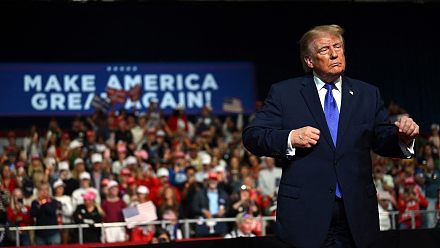
Donald Trump may not be on the ballot in the US midterm elections, but his presidency is. From Washington to Ohio and Georgia, the message emerging from the campaign trail is that Americans are increasingly voting with their wallets in mind. Rising food and fuel prices, affordability concerns and the political fallout of the Iran war are dominating conversations with voters, turning the midterms into what could become a major referendum on Trump’s presidency.
Speaking on Homework, journalists reporting from across the United States said the election was shaping up as a crucial test for Trump and the Republican Party.
Sanjay Suri, joining from Washington DC, said Trump himself had ensured that the election was being seen through the prism of his presidency.
“It is a referendum and we have Trump’s word for it. At rally after rally, he says, ‘Please vote as if he is on the ballot.’”
While Trump is not contesting the election, the stakes are enormous for his administration. The entire House of Representatives and a section of the Senate are up for grabs, and Democrats need only a few additional seats to take control of the House.
Suri said a Democratic victory could dramatically change the political landscape for Trump.
“Once that happens, they will have a lot of influence in two ways. One is in passing legislation on accounts and the budget. They have the money. The purse strings are in their hands. Second, they will have the power to subpoena officials and leaders from the government to face them and to face inquiries.”
And that, he warned, could “change the scene for Trump entirely”.
The Price Americans Pay Every Day
But beyond the political battle in Washington, the bigger question for many Americans appears to be affordability.
Suri said voters were feeling the pressure from the moment they began their day.
“What voters are feeling in their pocket is pinching them at home every day. From breakfast, when they have their cereal, the price of everything has gone up, to when they step into the car, the price of fuel has gone up.”
He linked the growing frustration to tariffs and the rising cost of fuel amid the Iran war.
“Tariffs are very inextricably linked to the cost of living crisis. They have made just about everything more expensive in the US.”
The anger, he said, was particularly intense because many voters believed these economic difficulties were avoidable.
“The problem is they feel that this is needless, this is unnecessary, that it’s a huge mistake from the Trump administration – and a lot of them are determined to make Trump pay for it.”
In Ohio, Affordability Is the Big Issue
In Cleveland, Ohio, CNN correspondent Omar Jimenez said inflation and affordability had come up repeatedly in conversations with voters.
“We’ve heard it everywhere we’ve been. Inflation has been top of mind for everyone, but even more so specifically affordability.”
The concerns cut across age groups and economic backgrounds.
“Students have wanted lower prices of tuition and they just want job markets to be in a place where they can get a good-paying job. We were just talking to another person here who felt specifically the price of food was too high.”
Jimenez said many Americans felt that the cost of simply living in the country had changed dramatically.
“We’ve heard from others who just have felt that, generally speaking, the price to live in this country has just been astronomically different than what it was during the aftermath of COVID.”
With the Iran war adding pressure on fuel prices, the issue of affordability has become difficult for Republicans to escape.
“You combine all that together and across the board, affordability seems to be the number one issue for voters heading into these midterm elections here in the United States.”
Ohio is also being closely watched because of Vivek Ramaswamy and what the result could mean for his political future.
A controversial attack advertisement featuring his opponent’s estranged mother was taken off air after facing bipartisan criticism.
Jimenez said the campaign insisted that the advertisement had simply “run its course”, but voters appeared to have reacted negatively.
“We were just talking to two independent voters here in Cleveland, Ohio, who told us that they saw that ad and it just fit into a larger pattern of them not liking any of the attack ads going out. But that one in particular did seem to make an impact — and it does not seem to be the impact that the campaign may have wanted.”
A Ramaswamy victory could boost his national ambitions, but a loss could have implications beyond one candidate.
“If he wins, it obviously sets the stage for anything he wants to do in the future. But a loss would also indicate that the Democrats are surging in a way that we haven’t quite seen in at least recent years.”
That would be particularly significant in Ohio, which has become increasingly Republican over the past decade.
Georgia’s Voters Want Change
In Georgia, CNN correspondent Ryan Young said the election was increasingly becoming a referendum on whether politicians in Washington were listening to ordinary Americans.
“I’ve talked to more than 10 families this morning who talked about the rising prices and the fact that it’s hard to make the decision between getting gas for their car or paying for food or getting medicine.”
For older voters, particularly those living on fixed incomes, the anxiety was even more pronounced.
“There are a lot of older people here and they are concerned about these rising prices because they have a fixed income. Every month they only have a few dollars that are coming in.”
Young said the economy and rising prices were now impossible to separate.
“Today, the economy is what stands out and the rising prices are sort of linked together because they’re not sure if they can afford the next five years of their life based upon the fact that things are getting so expensive.”
Georgia has witnessed massive voter mobilisation, with more than 2.5 million people casting their votes early.
“People are excited not only about this, but the idea that they can make a change in DC. They’ve really talked about all the time that they feel like the politicians in DC aren’t listening enough to the people here in Georgia — and they’re trying to send a message with this vote.”
The political importance of Georgia is evident from the star power deployed by both parties. Trump has visited the state twice, while Barack Obama and Kamala Harris have also campaigned aggressively.
Young described the campaign atmosphere in one of America’s key battlegrounds in dramatic terms.
“The Avengers have basically descended on Georgia because they’re all trying to get the word out here. Millions of dollars have been spent.”
The state has seen huge campaign spending as both parties battle for political control and influence in Washington.
“We’ve heard from several voters here that they want checks and balances for President Donald Trump.”
Young said Democratic enthusiasm appeared particularly strong, although Republican voters were also being mobilised across the state.
Iran War Adds to Trump’s Political Troubles
The Iran war has emerged as another major political vulnerability, particularly because Americans are seeing its consequences at the petrol pump.
Young said fuel prices had made the conflict a deeply personal issue for voters.
“That is where people really feel it on a day-to-day basis. But you add food prices at the same time. We just talked to a woman who said she had to make a decision between filling up her gas tank and getting food — and that was something that didn’t feel good to her.”
Suri said the combination of the war and the cost-of-living crisis had created a difficult political environment for Trump.
“The gas prices are a consequence of that Iran war… Iran has used strategic measures and moves quite effectively to keep the price of fuel high, and Americans are feeling it every single day.”
What a Democratic Congress Could Mean
If Democrats take control of the House – or even both chambers of Congress – Trump could face a far more difficult second half of his presidency.
Democrats would gain greater control over government funding and stronger oversight powers. Suri said this could lead to increased scrutiny of Trump’s administration and those close to the president.
For India too, the outcome could carry implications, particularly on trade and tariffs.
Suri pointed to the connection between the American cost-of-living crisis and Trump’s trade policies.
“There is a rather interesting link between the cost-of-living crisis and the India policy. The cost-of-living crisis is a consequence principally of the tariffs.”
He said a Democratic majority could potentially act as a check on further tariff action.
“If it’s a Democrat majority in the House and possibly the Senate, they are likely to put the brakes on any moves for added Trump’s tariffs upon India.”
The November 3 vote, therefore, is about far more than who controls Congress.
For Republicans, it is a test of whether Trump’s agenda is working. For Democrats, it is an opportunity to convert voter anger over affordability, rising prices and the Iran war into political power.
Donald Trump is not on the ballot. But as America votes, his presidency is very much on trial.